
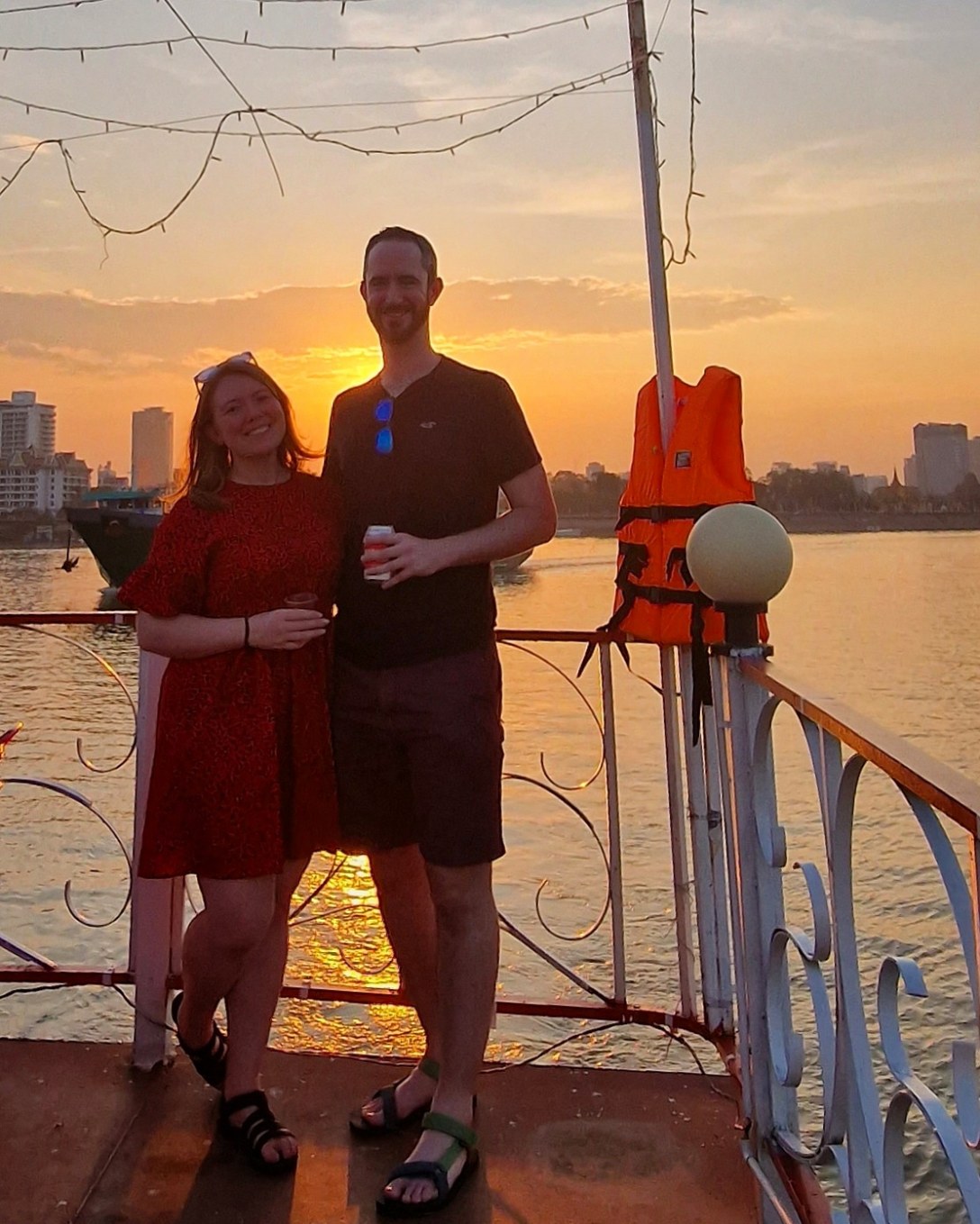
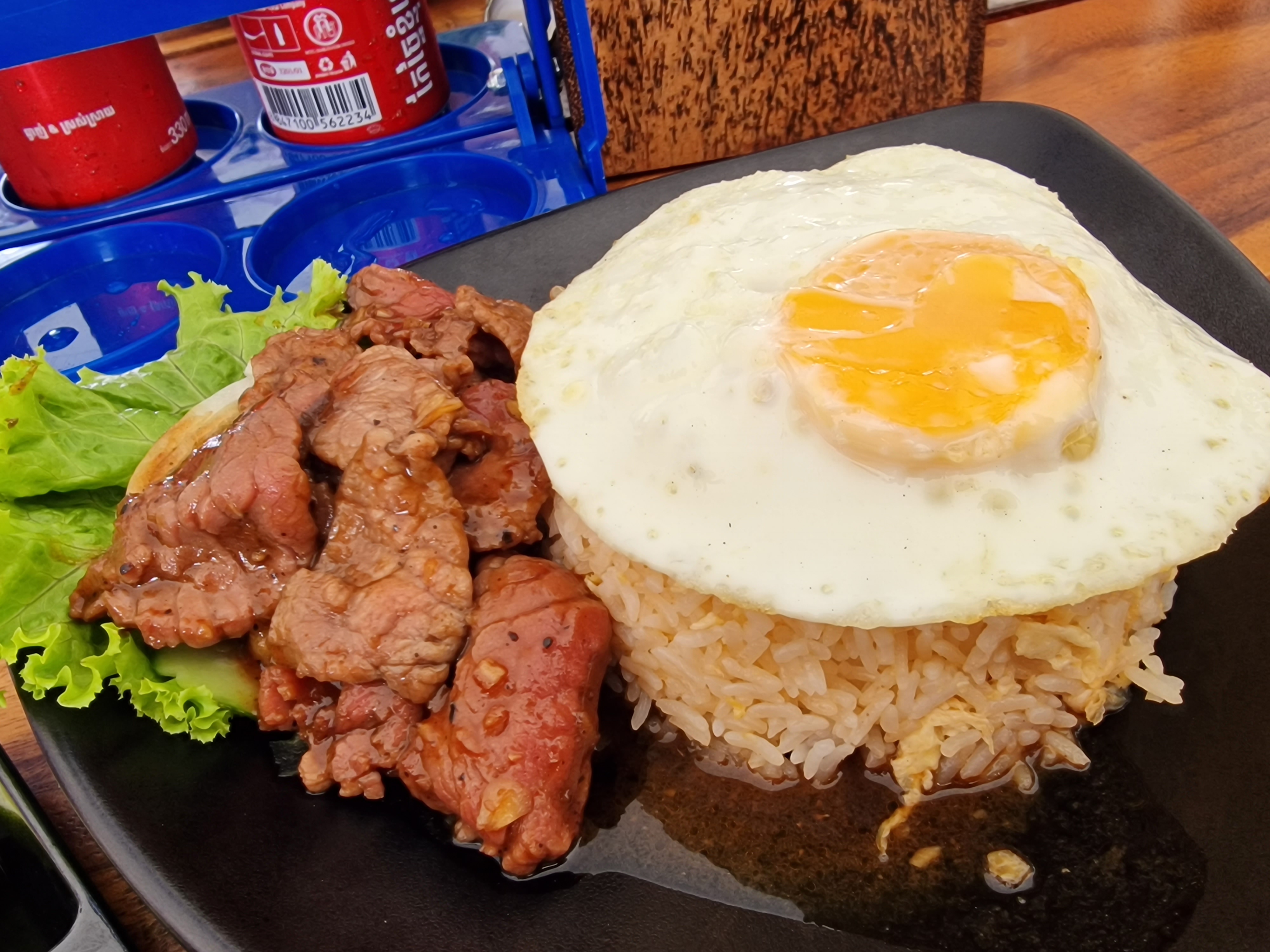
So far, we’ve been travelling everywhere by plane, but today, as we head into Cambodia, we’re going by bus. The journey to the border was uneventful, but the border itself was an absolute nightmare. As a group, we had to decide whether to support the corruption and slip some money into our passport, or not give anything and risk being stuck at the border for hours. As we were keen to get going, we decided to put $2 in and hope for the best. We got into 2 queues, and people were trying to push past, and everyone was shouting at each other. We all had to put our elbows out and block people with bags at one point. Someone managed to sneak past in our queue and gave the guard about 20 passports and a large wad of cash, therefore meaning we had no chance of getting through any time soon. We left that queue and joined the others from the group, and our leader passed all our passports to the guard. Around the same time as we joined, a group of Canadian mature ladies tried to get passed. As I got to the front, the guard kept saying I hadn’t put my Vietnam visa in, which I 100% had! I, therefore, had to find it on my phone whilst I had a Canadian woman in my ear making comments about me delaying her. In the end, I told her to shut up and that she was a silly old woman 😬 not my finest moment.. but she deserved it! I managed to find my visa, and they let us through. You then have a 10 minute walk across ‘no man’s land’ to get to the next set of checks. The guards here were very pleasant, and this next leg went quickly and smoothly. We were now in Cambodia! We stopped for some lunch where I had my first taste of the local dish Loklak – beef fried rice with an egg on top. It was actually very nice! Mark had noodle soup, which had some suspicious looking balls on the top…

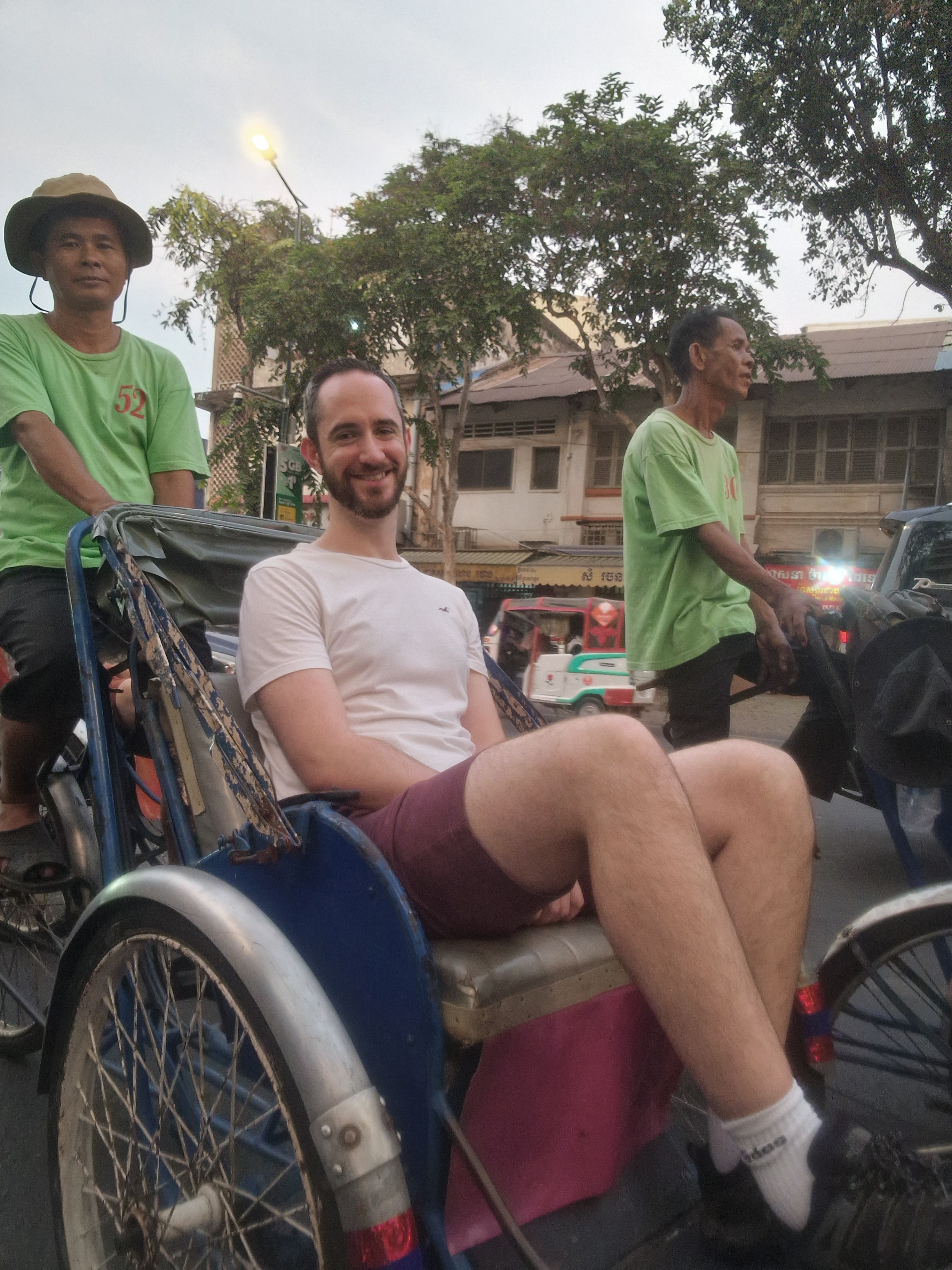
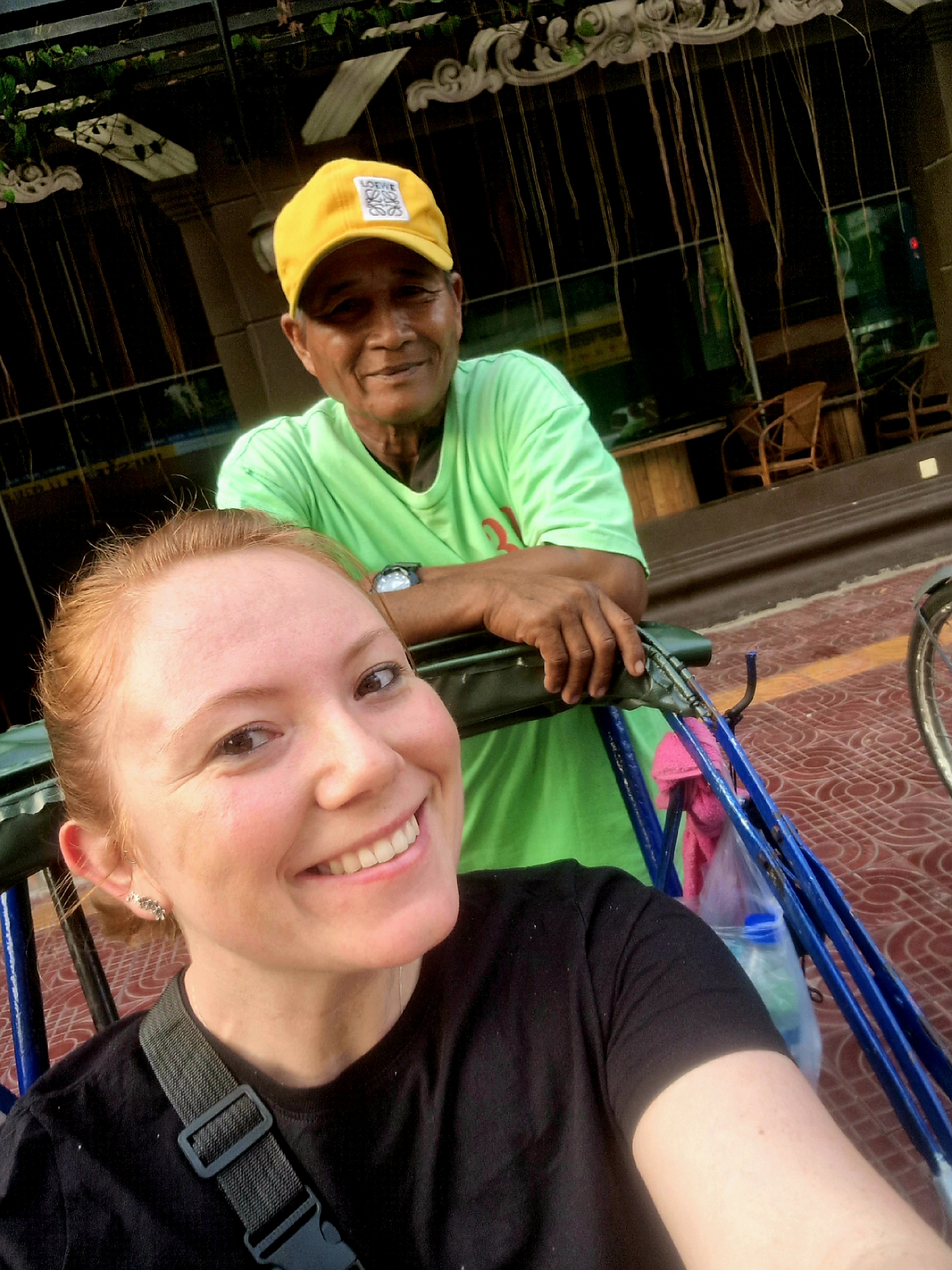
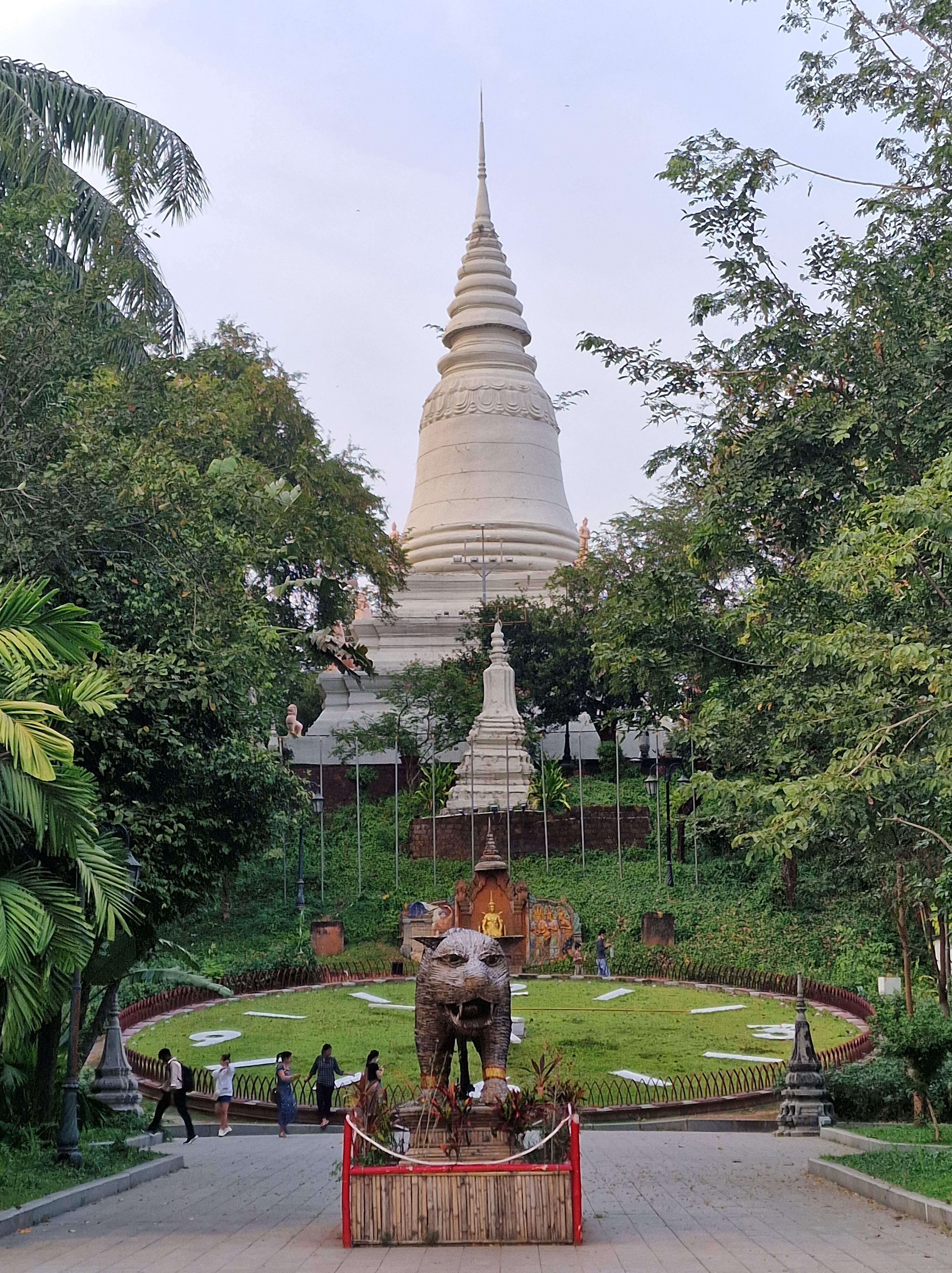
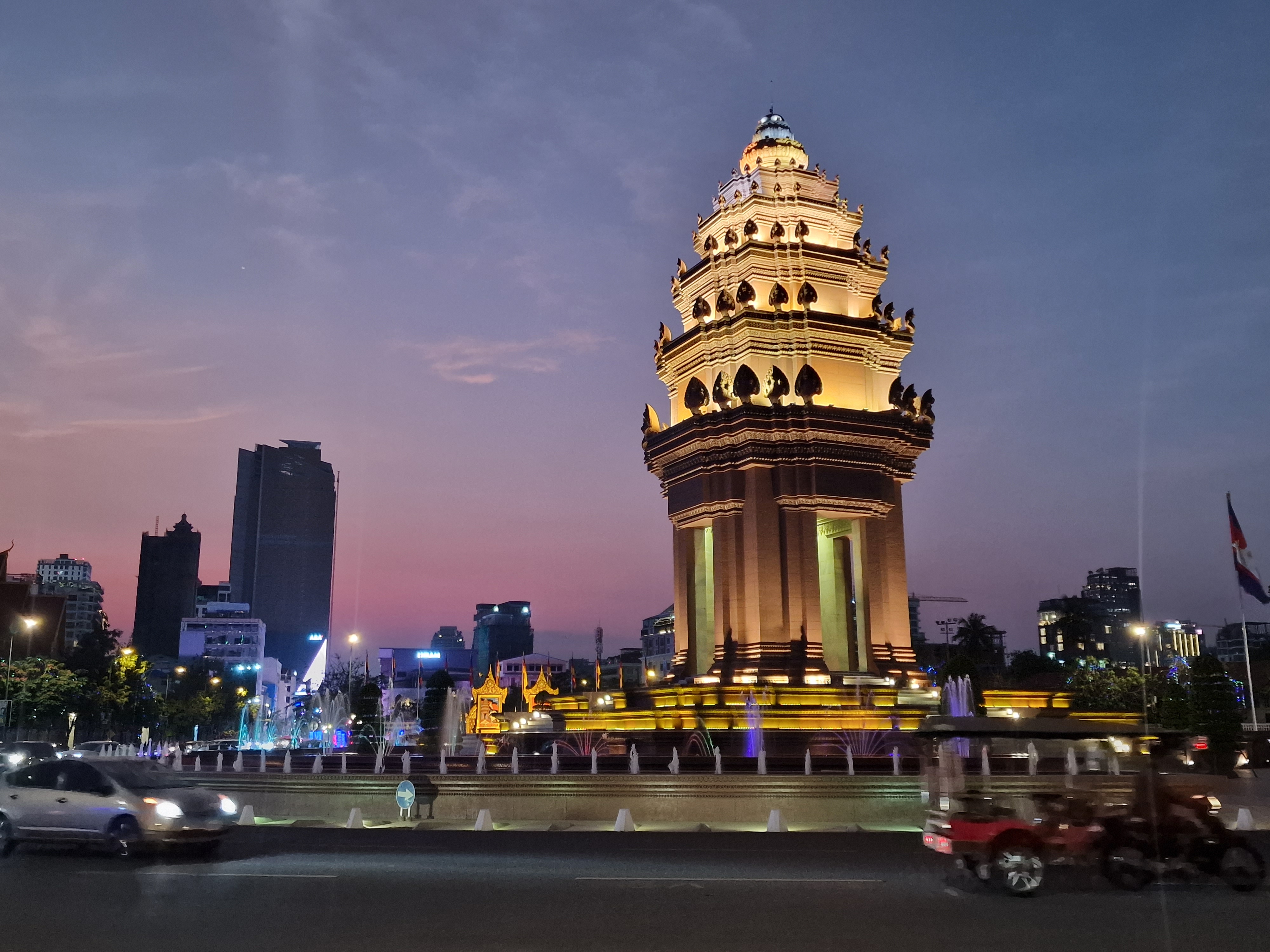
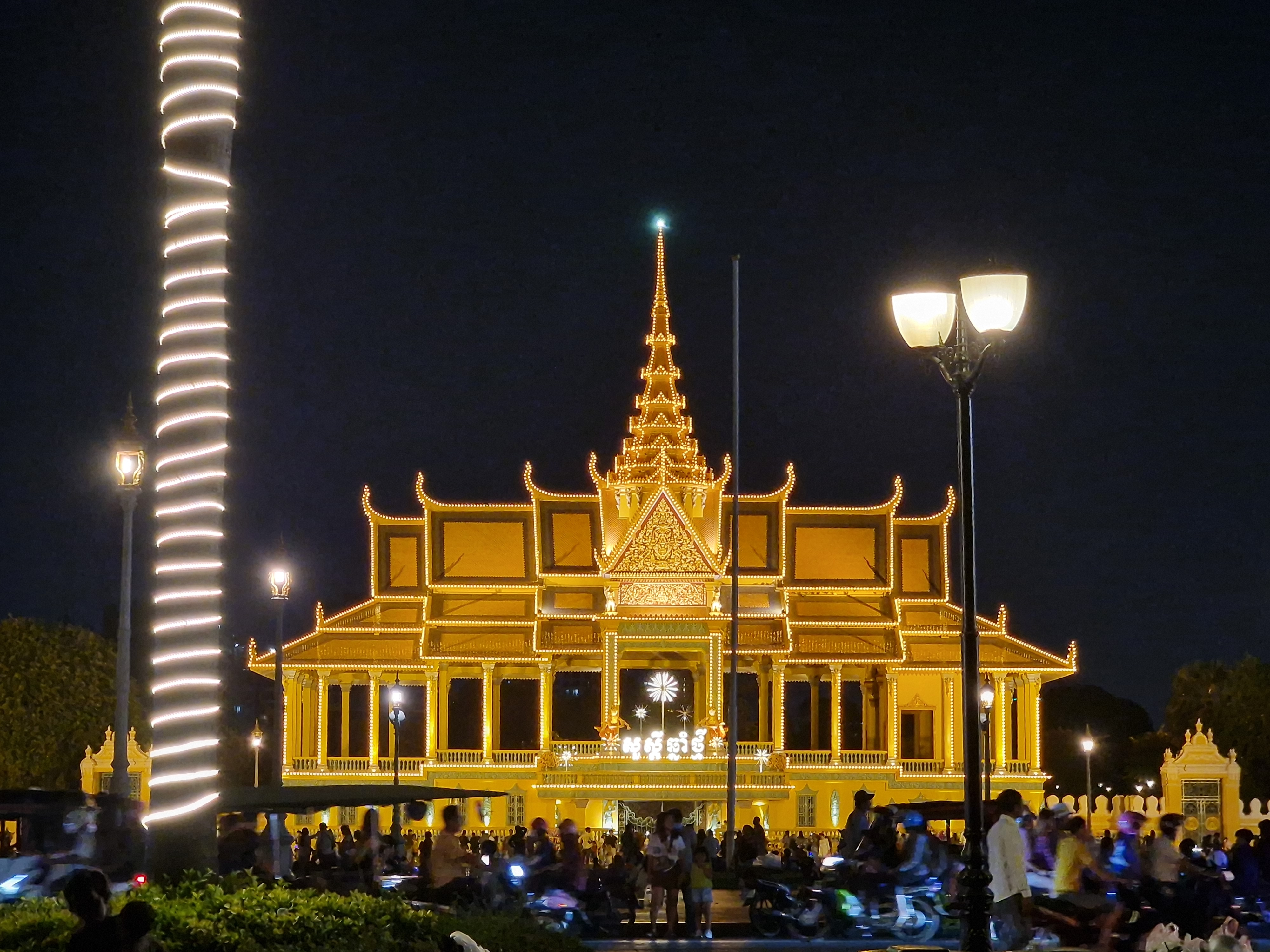
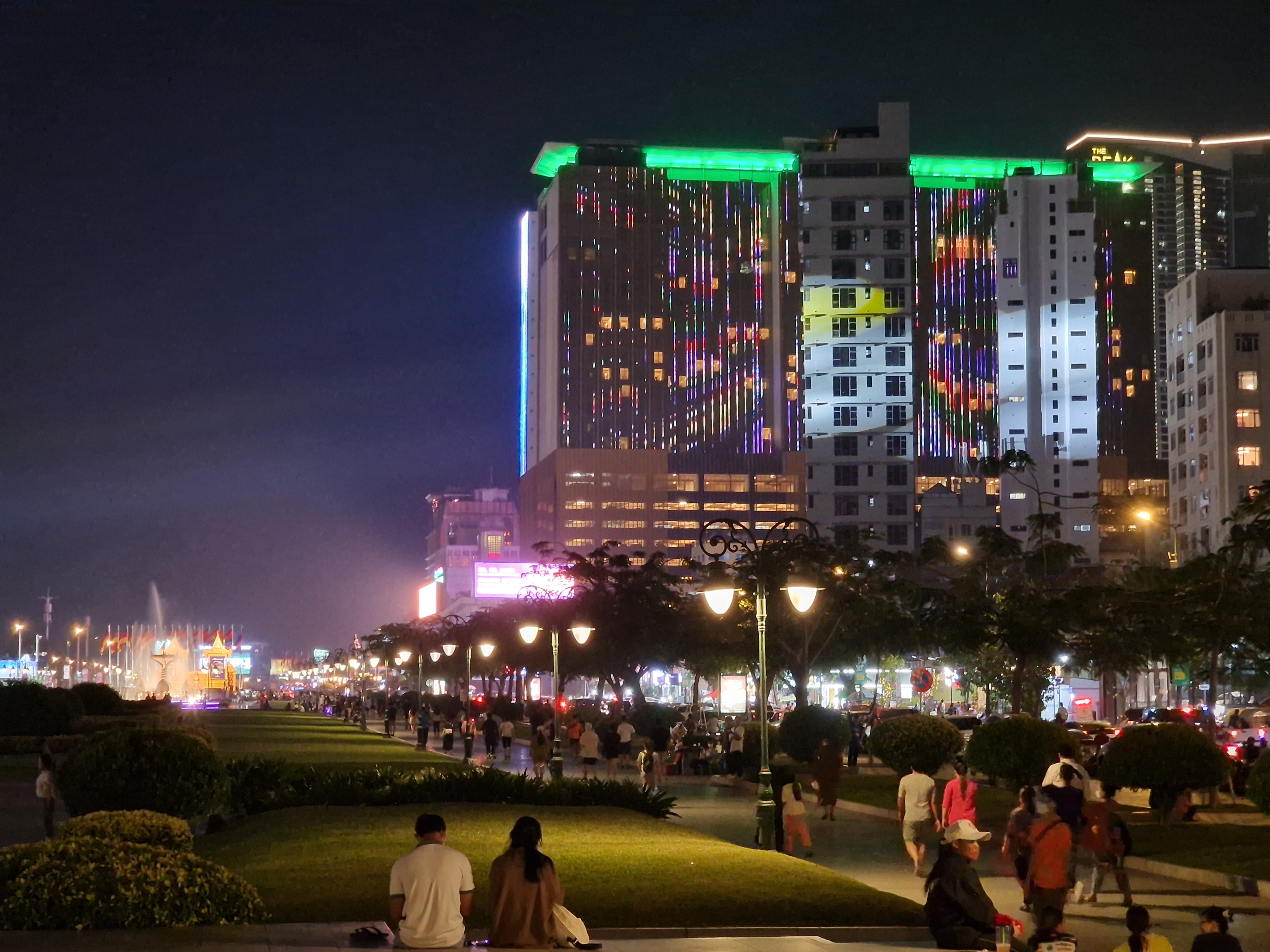
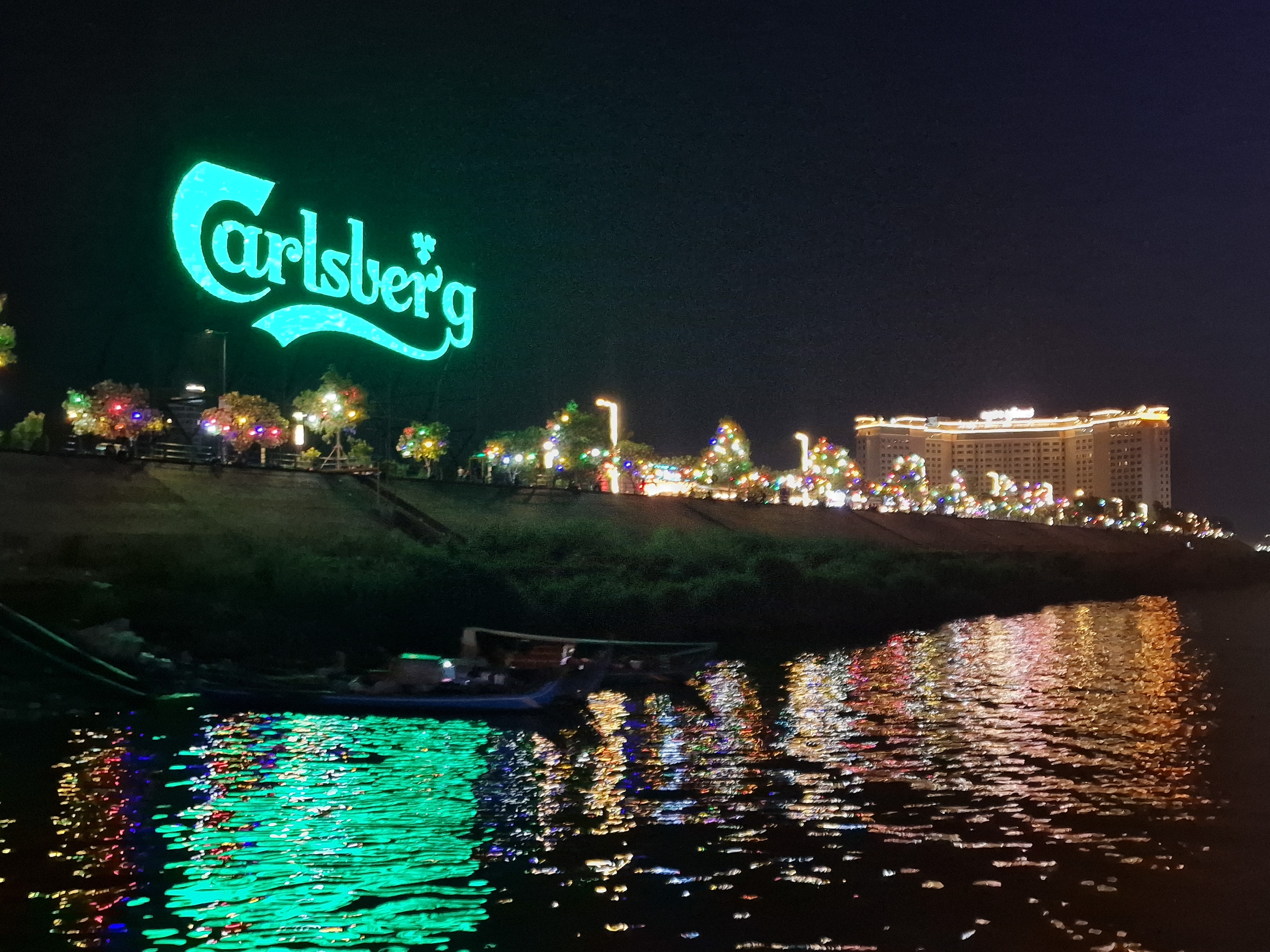
We had a minibus waiting for us to take us to our first city – Phnom Penh. I don’t really know what I was expecting, but it certainly wasn’t high rise buildings, casinos and Rolls Royce cars! Turns out the Chinese have put a lot of money into PP over the last few years which is why the main areas now look like that. Locals however are not allowed to use the casinos. We dropped our bags off and met our guide for the evening cyclo tour of the city. This was such a fun experience and a great way to see all the main landmarks, and as the sun set, the amount of money that’s been put into PP became more apparent. The city dazzles with lights, flashy signs and even more expensive cars. The Royal Palace was also complete lit up with gold light, which apparently doesn’t happen very often, so we were very lucky to see this. We walked back to the hotel after a lovely dinner with the group and it became very apparent about the rich and poor divide. Expensive cars on one street, and begging people on another.
As a little warning, the next part of the blog is about the killing field and the S21 prison. I’m going to be graphic, and also include a few photos. It’s very upsetting so you may want to scroll past. Travel isn’t always about having fun and exploring beautiful places, its also about exposing ourselves to the uncomfortable past to enhance our learning and understanding.
According to estimates, during the rule of the Khmer Rouge from 1975 to 1979, two million people (around a quarter of the whole population) lost their lives. Why? To create a classless society. If you had a degree, if you spoke another language, even if you wore glasses! All traces of capitalism were abolished. Hospitals, schools and shops were shut down. These 2 places are the most historic places in PP and stand as a cruel reminder of the atrocities inflicted upon the masses of Cambodia.
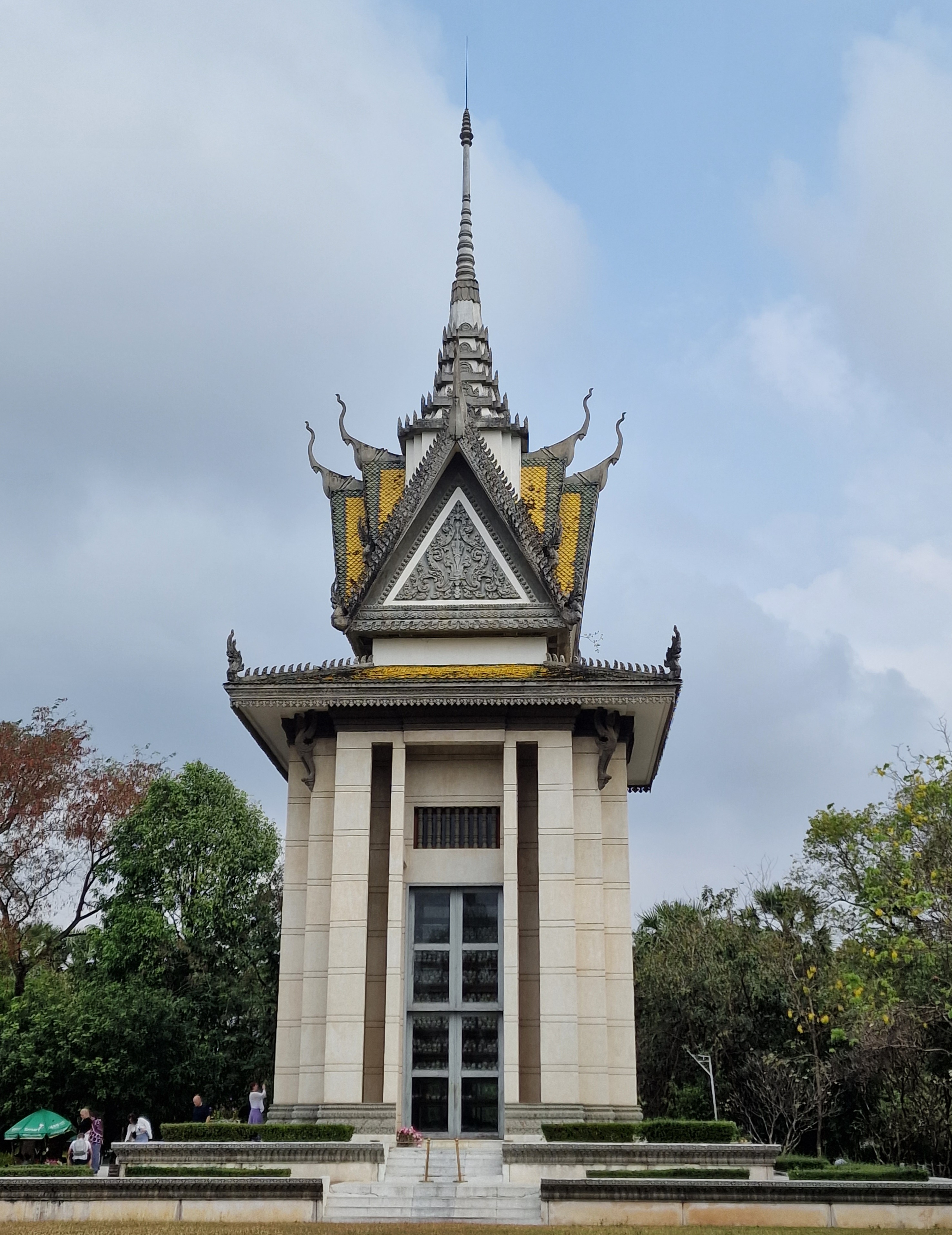
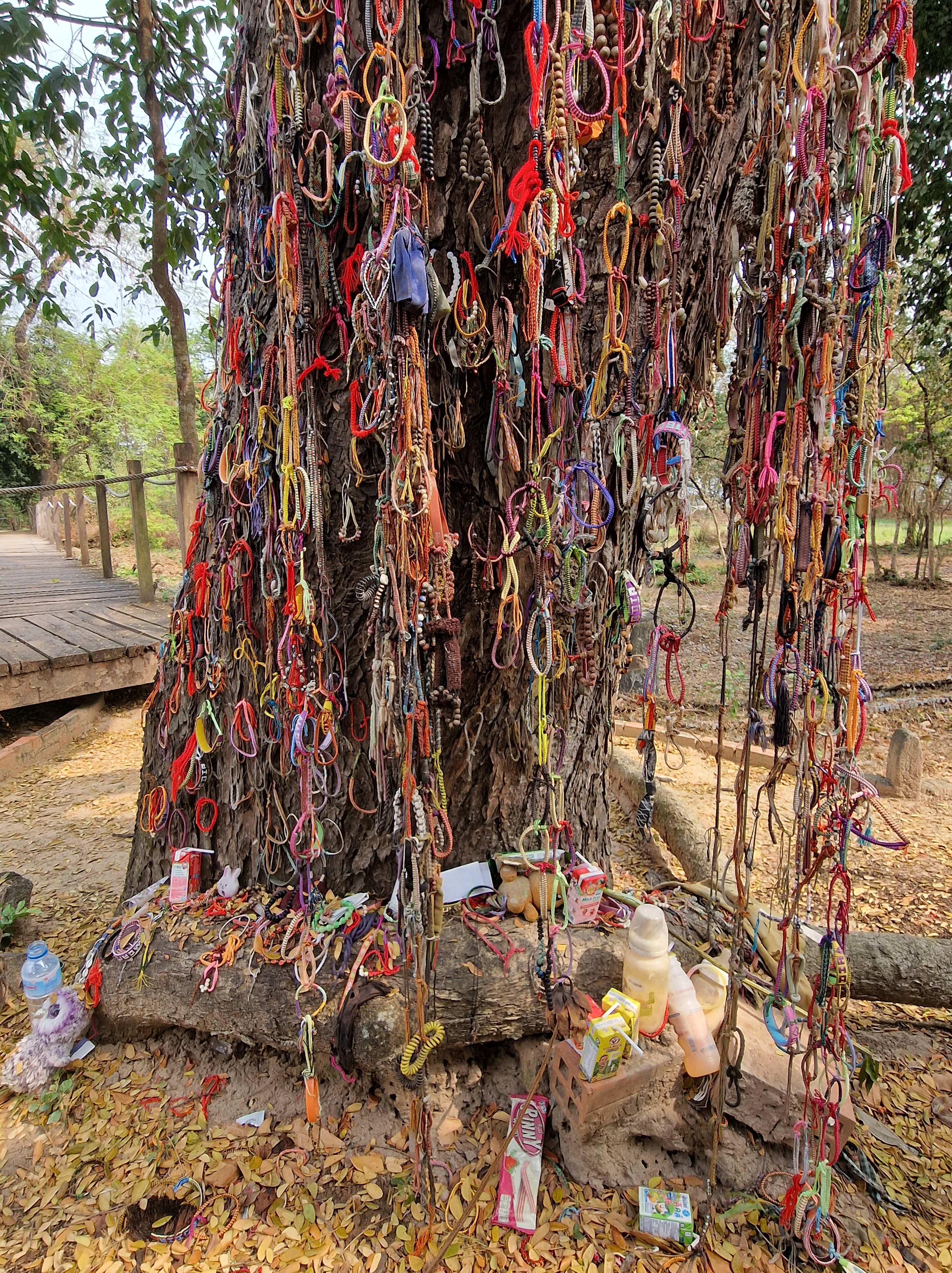
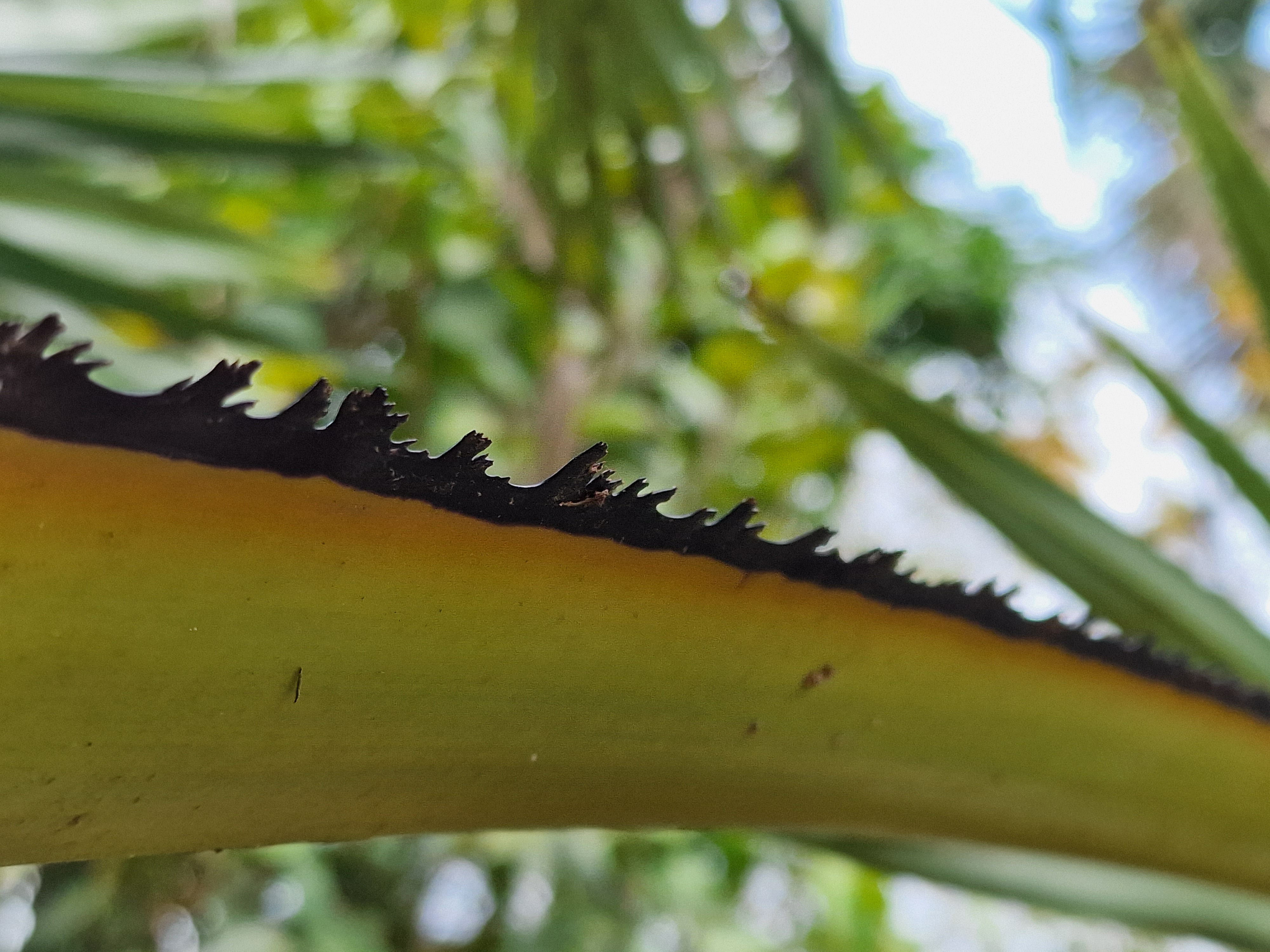
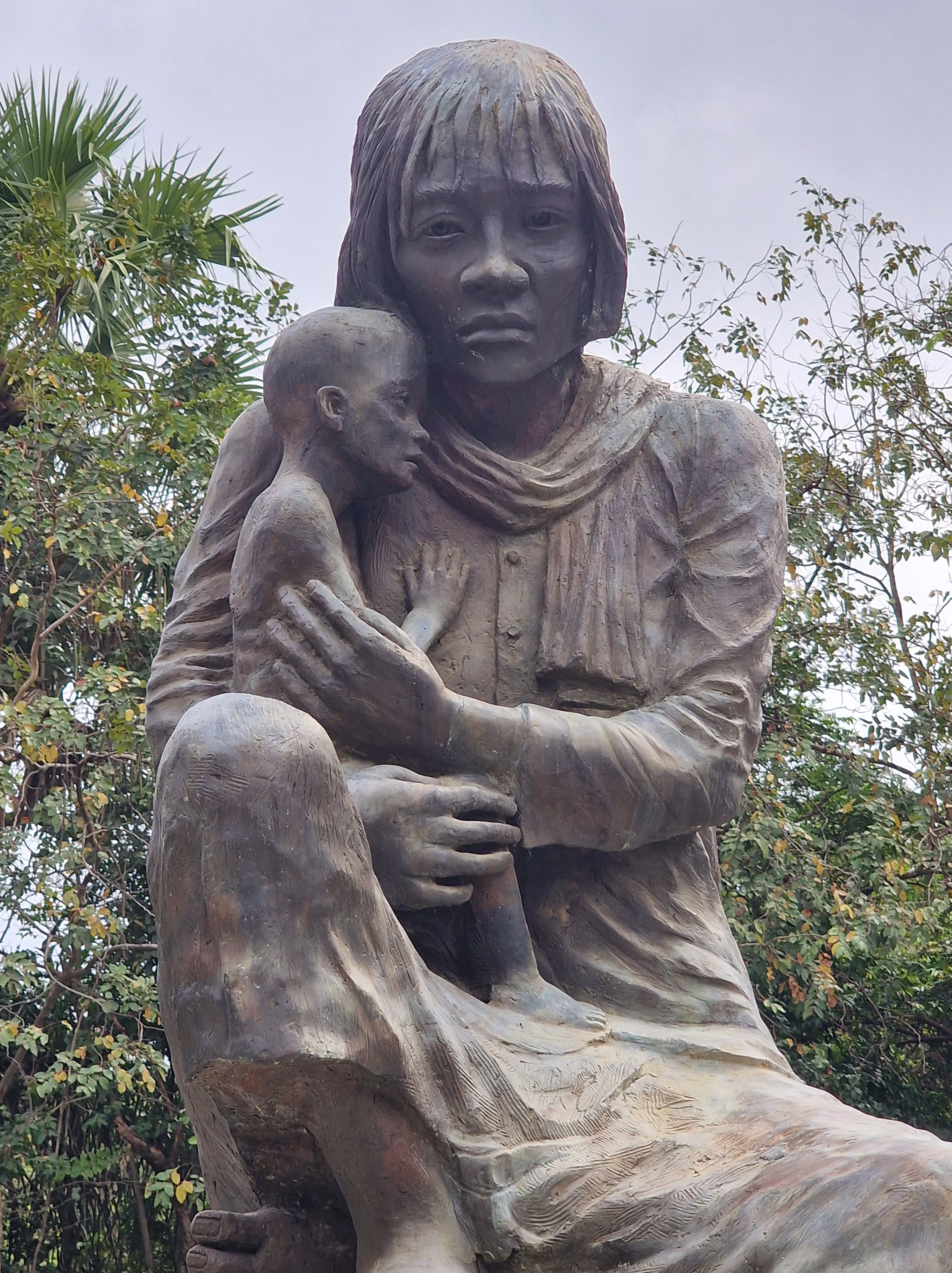
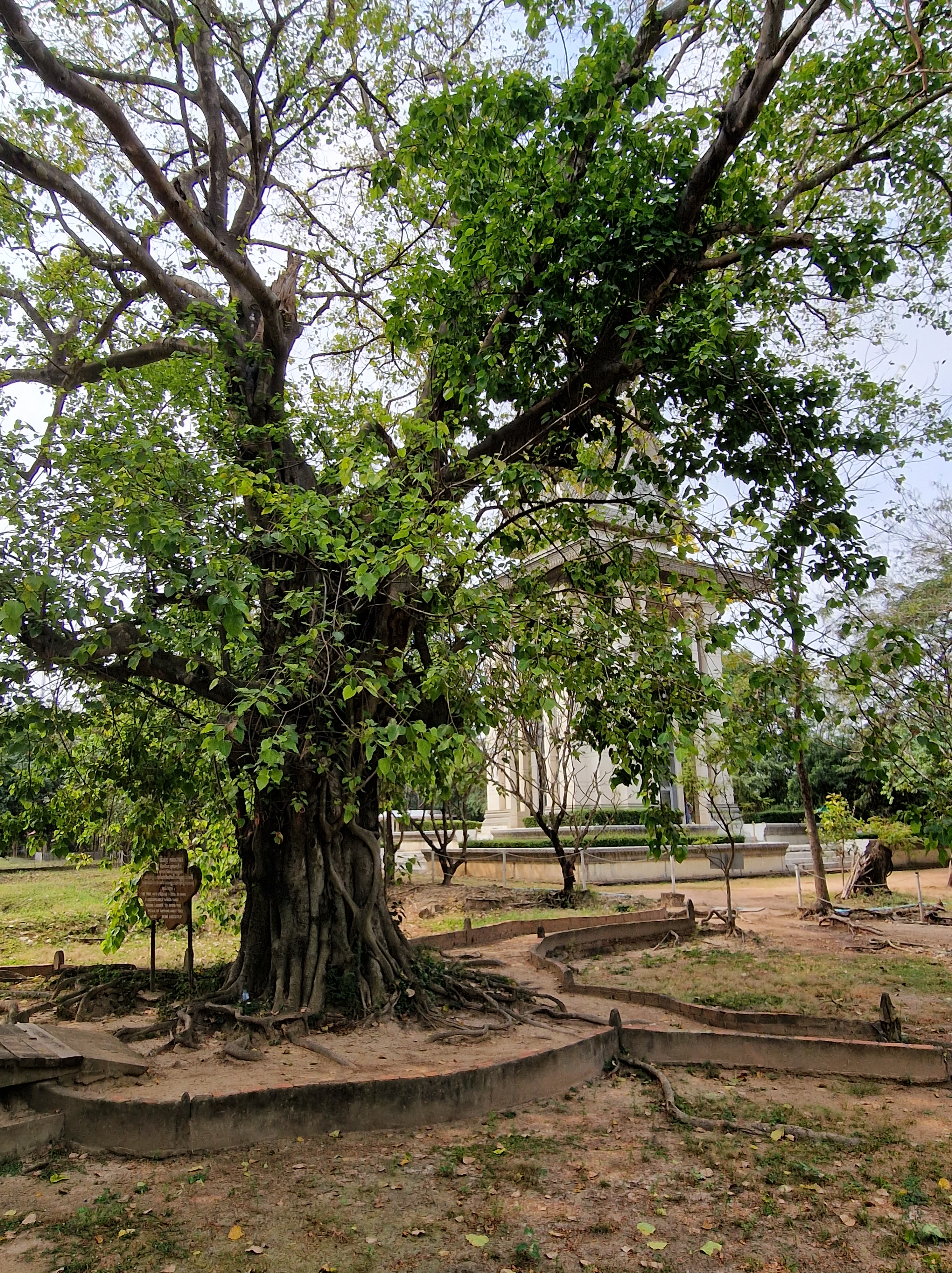
We went to the killing fields of Choeung Ek first. Just like Auschwitz, it’s quiet (apart from the chickens!), and you can feel the strange energy straight away. As you walk in, you’re met with a huge memorial stupa filled with around 5000 skulls. Each skull has a coloured dot on it, which represents the trauma they suffered, including spades, wooden clubs, bayonets, and farming hoes. Bullets were not used as this was too loud and too easy. There is a magic tree that was used to hang speakers on to drown out the screaming. The next pit we came to was by far the worst – the mother and baby pit. Mothers were made to watch their newborns and children be killed, either by someone holding them by the legs and smashing their head around a tree or throwing them in the air and catching them on spikes. This was done so they couldn’t take revenge for their parents’ death. The mother was then brutally killed, sometimes having their throat cut using the rough part of a palm tree, and they were thrown into the pit together, often with no clothes on. There was not a dry eye during the explanation of this pit. You can hang a bright bracelet on the tree as a sign of remembrance, but there are also children’s toys and bottles, etc, around the bottom. In 1980, remains were exhumed, but 43 of the 129 communal graves remain untouched. During the rainy season, bones, teeth, and clothes come to the surface. These are collected by people who work there and put them into memorial boxes. As you leave, there is a memorial statue of a mother holding her baby. Where I work, there is a similar statue, but one symbolising the happiness and joy of a new life. This really affected me, to think that I am privileged to be there at the start, and these awful people took new, and all lives, in such a disgusting and inhumane way.
We then went to Security Prison 21 (S21), the site of a former secondary school. This became the largest centre of detention and torture in the country. Over 17,000 people held here were taken to Choeung Ek to be executed; detainees who died during torture were buried in mass graves in the prison grounds. Like the Nazis at the concentration camps, they kept records of what they did, often taking photos of the victims after their death. Each prisoner who passed through S21 had their photo taken which are on display. The cells at the prison are open to visitors and they still have the same beds (if you were ‘lucky’ enough to get one) and shackles in place, and even blood stains on the floor. If you had a smaller cell, you were shackled to the wall or concrete floor, and those in large mass cells were shackled to a long piece of iron bar. The all slept on the floor next to each other without mats, mosquito nets or blankets. They were forbidden to talk to each other. Prisoners received 4 small spoonfuls of rice porridge daily. They had strict regulations and received beatings if they disobeyed. If they spilt any contents of their very small toilet box (which they could only empty every 4 days) they had to clean it up using their tongue. When they were taken for interrogation, they were beaten, electrocuted and cut with knives in order to get them to name family members and close associates, who were then also tortured and killed. The vast majority of prisoners were Cambodian, but some were foreigners including one British and two Australian. They were blindfolded and burned alive.
On the day the prison was liberated by the Vietnamese army, of the estimated 20,000 people imprisoned, there was only 12 survivors; 5 of those were children. They found 14 others who had been tortured to death, still shackled in bed, and their individual graves are in the grounds of the prison.

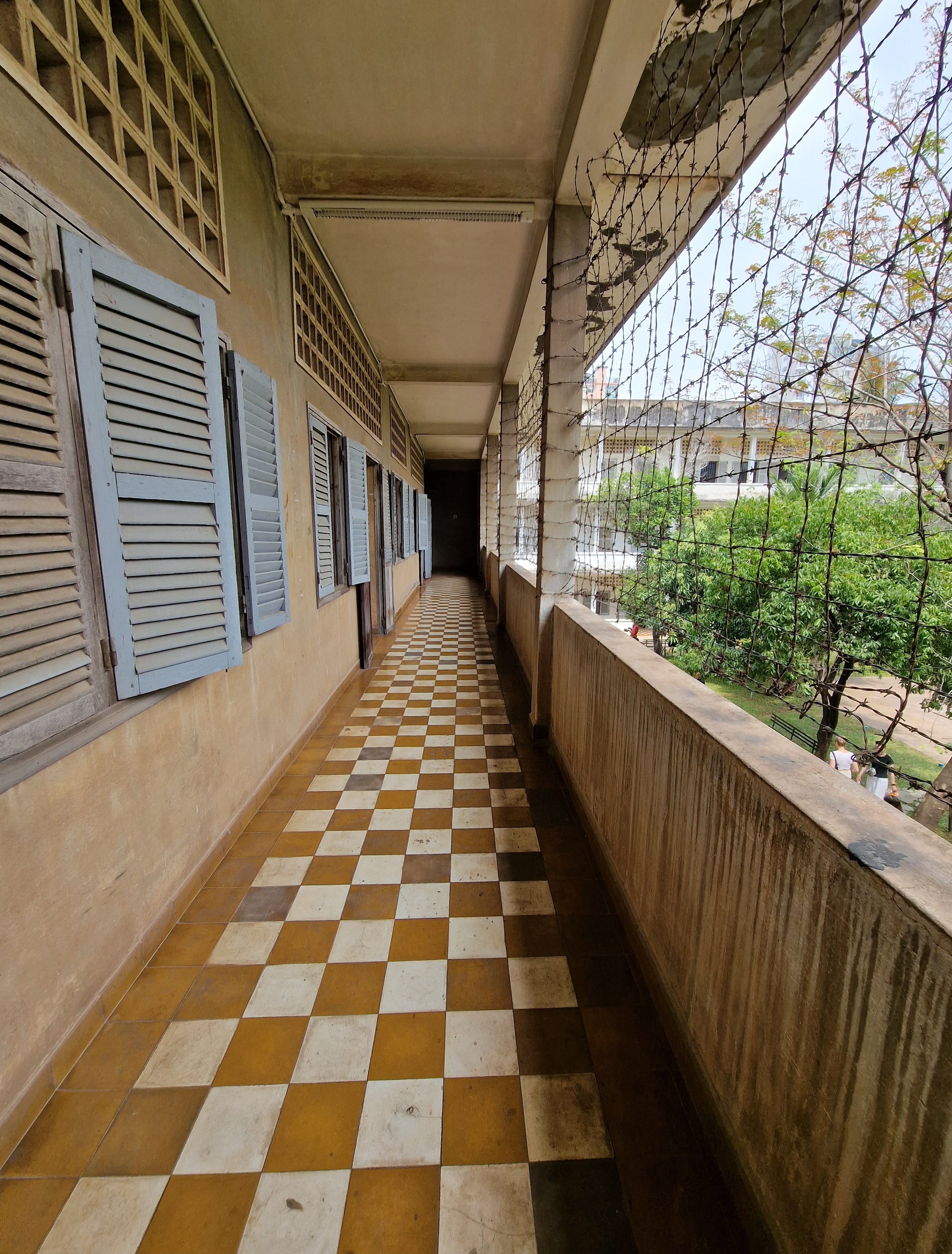
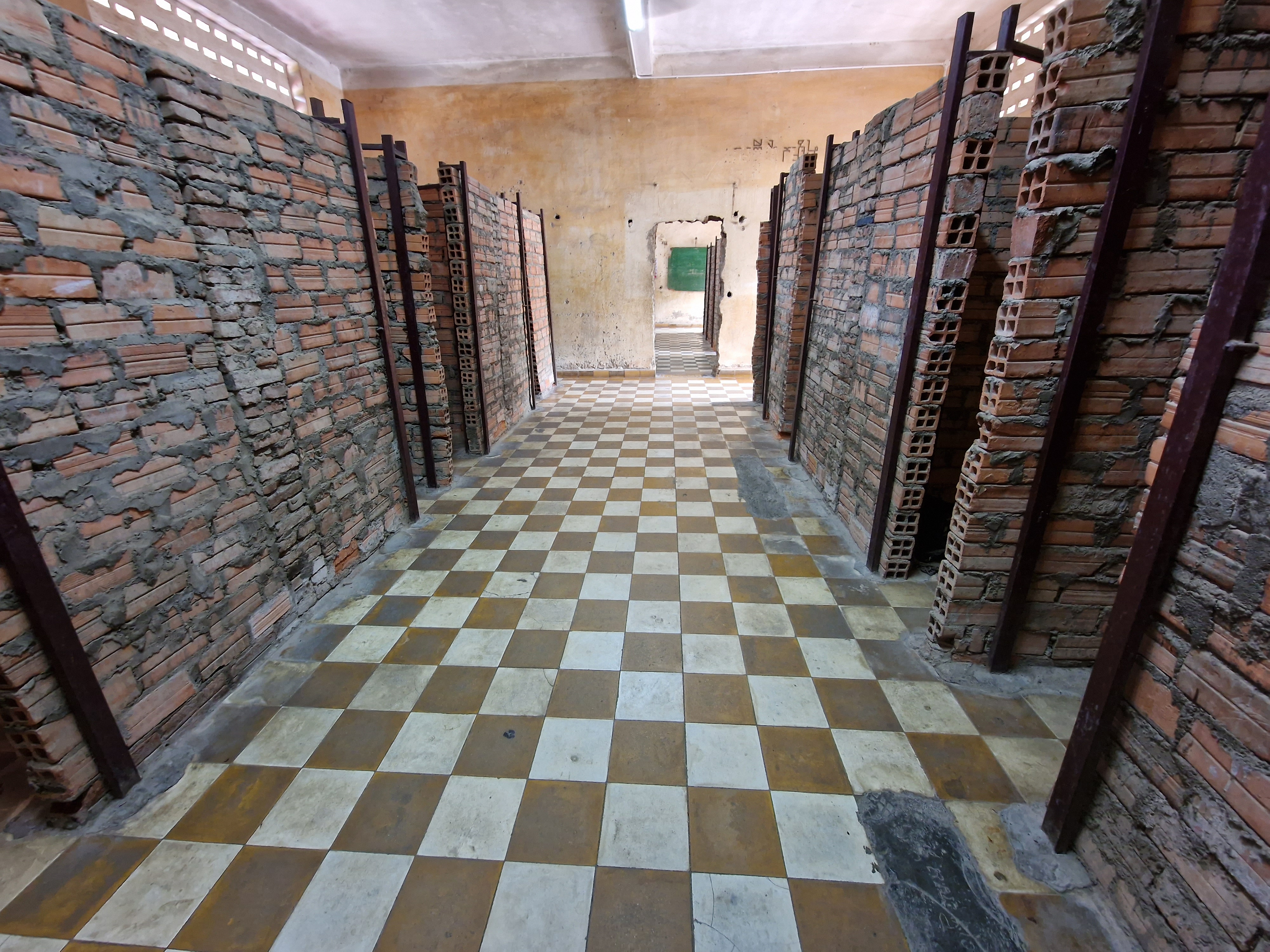
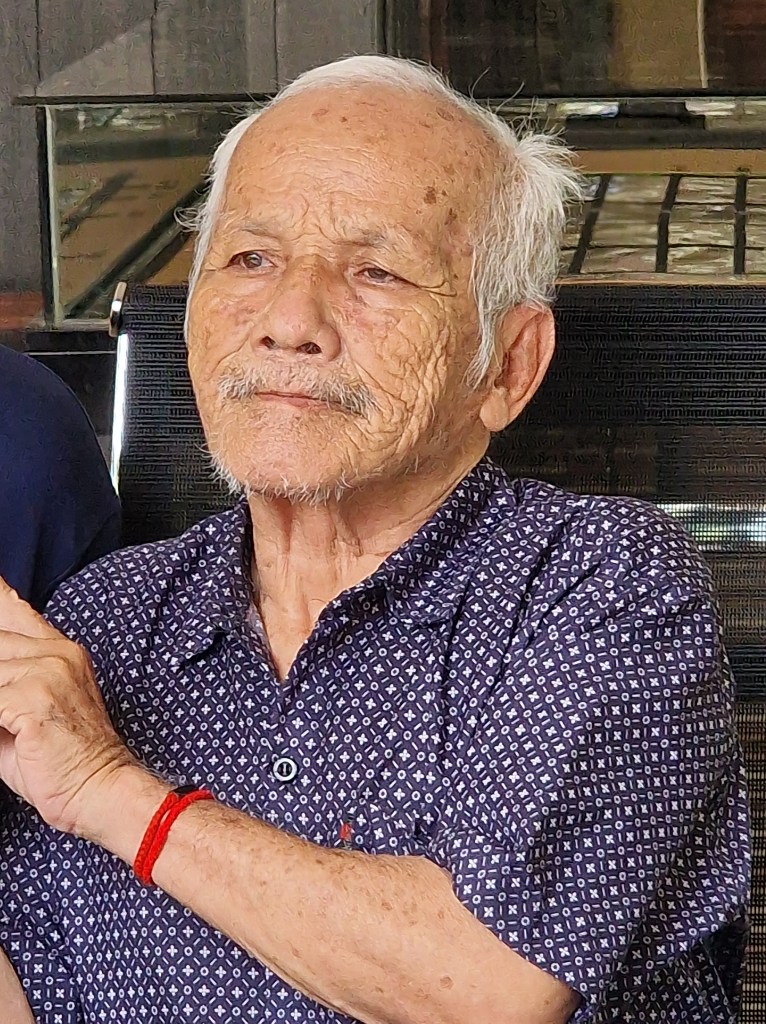
2 of the prisoners are still alive today, and they were both at the prison that day for us to meet. One of them is Bou Meng, who is now 87 years old. He was kept alive because he is an artist and was able to produce portraits of the Khmer Rouge leader, Pol Pot. He was also tortured on a regular basis but given more food and water to keep him alive as he was useful to them. When he arrived at the prison, they took his wife and two children away, and he later learned that they had all been killed; his wife had her throat cut and his children of starvation. He was regularly beaten and had salt water rubbed into his wounds. Guards would sit on his back and make him crawl up the stairs. He has no teeth left after he was regularly kicked in the face. As he’s an artist, he has drawn everything that happened to him and the other prisoners. We bought a copy of his book, which he signed for us. I don’t know how mentally he could step back into the prison grounds again, but he’s made it his duty to make sure that people never forget the horror that went on during those years and use his memory as a tool in the search of truth and justice.
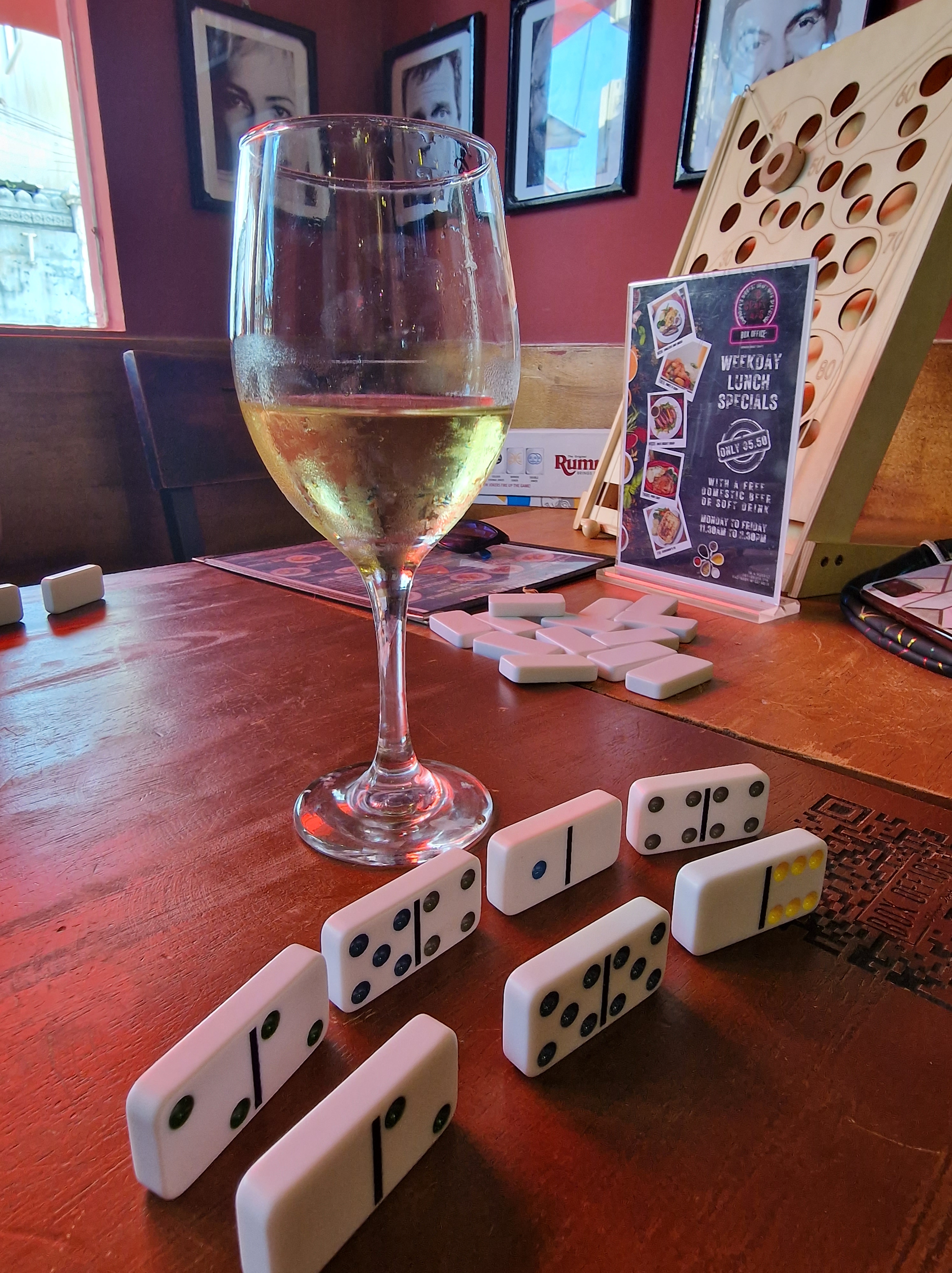
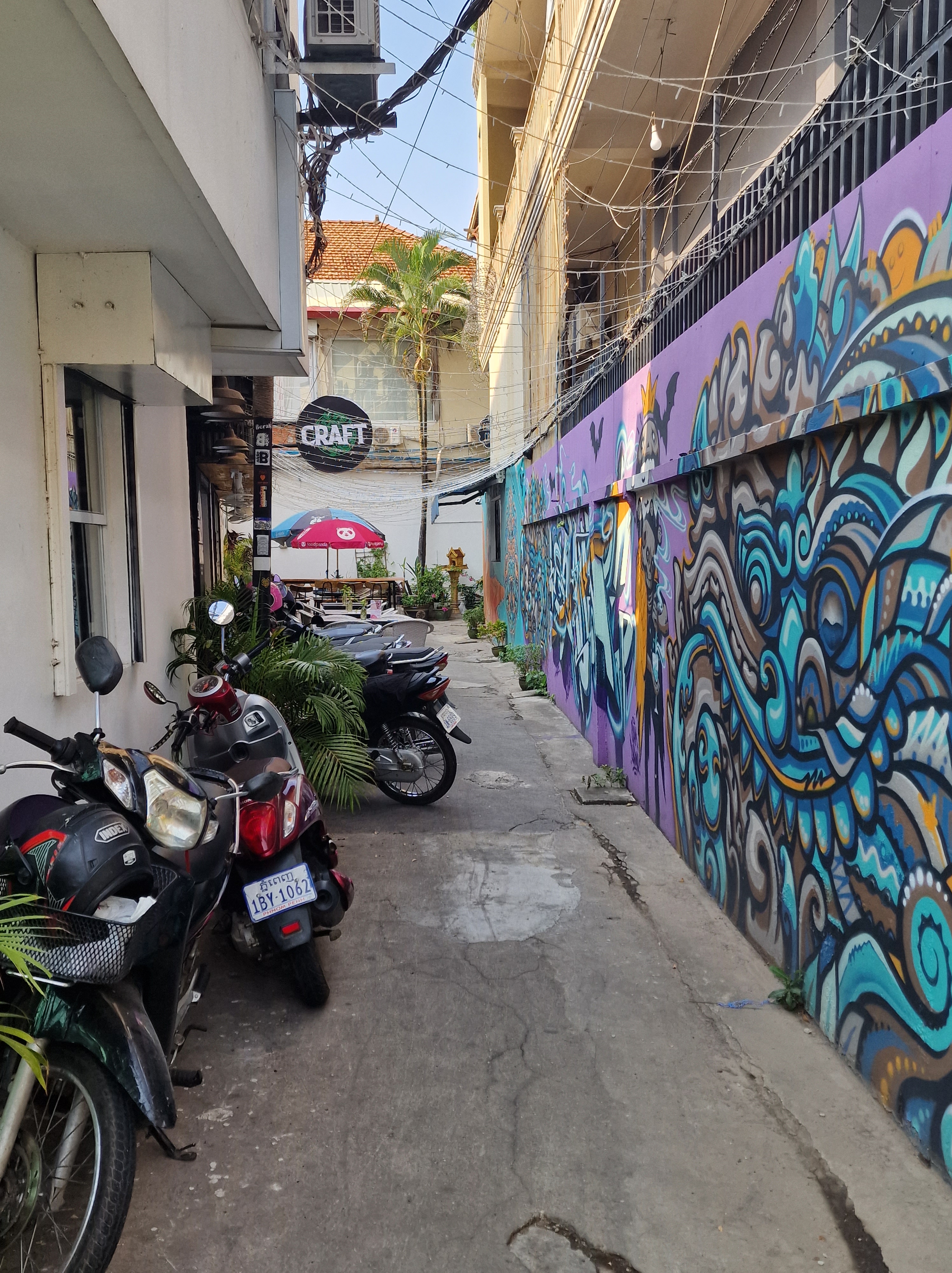
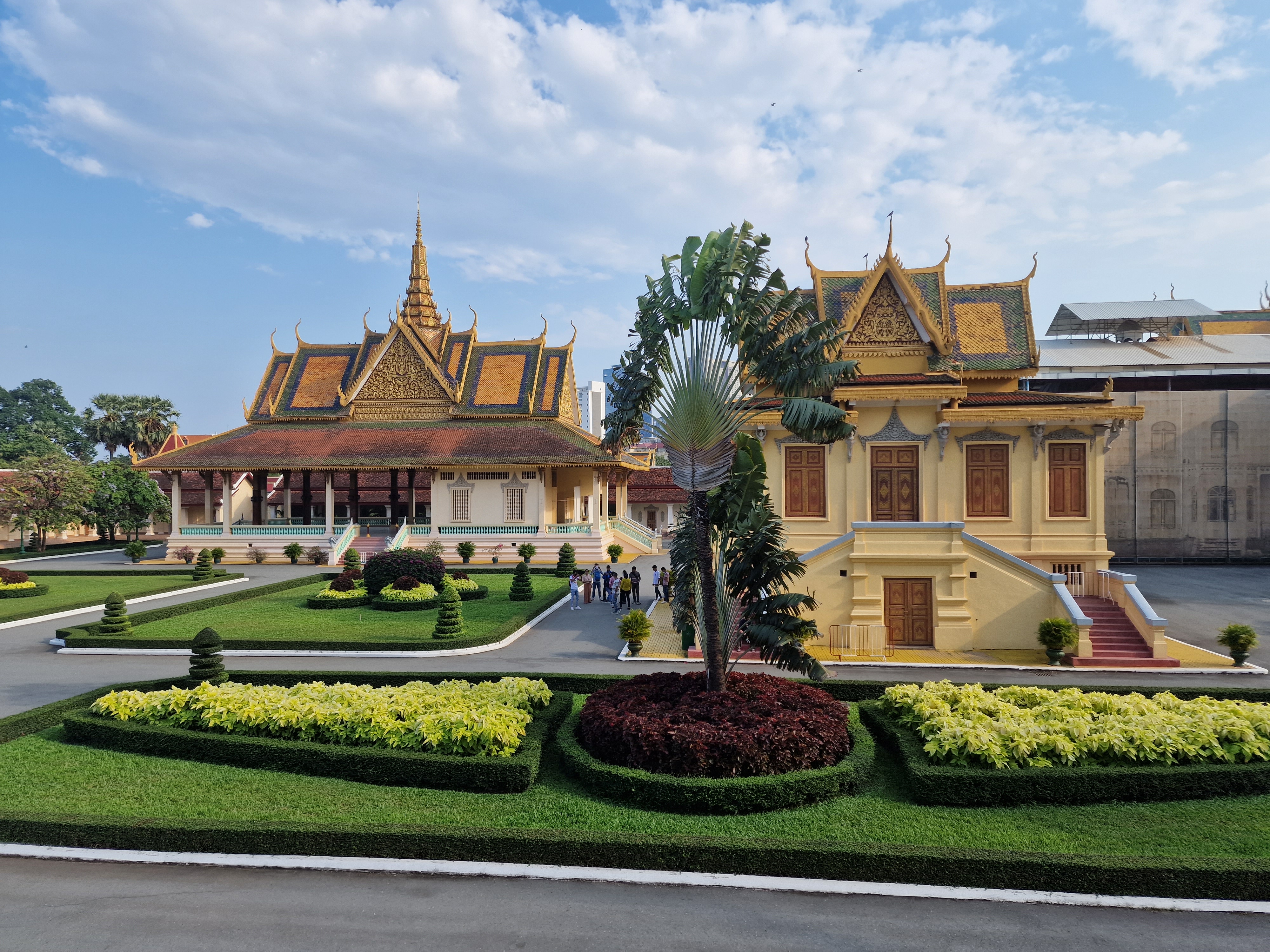
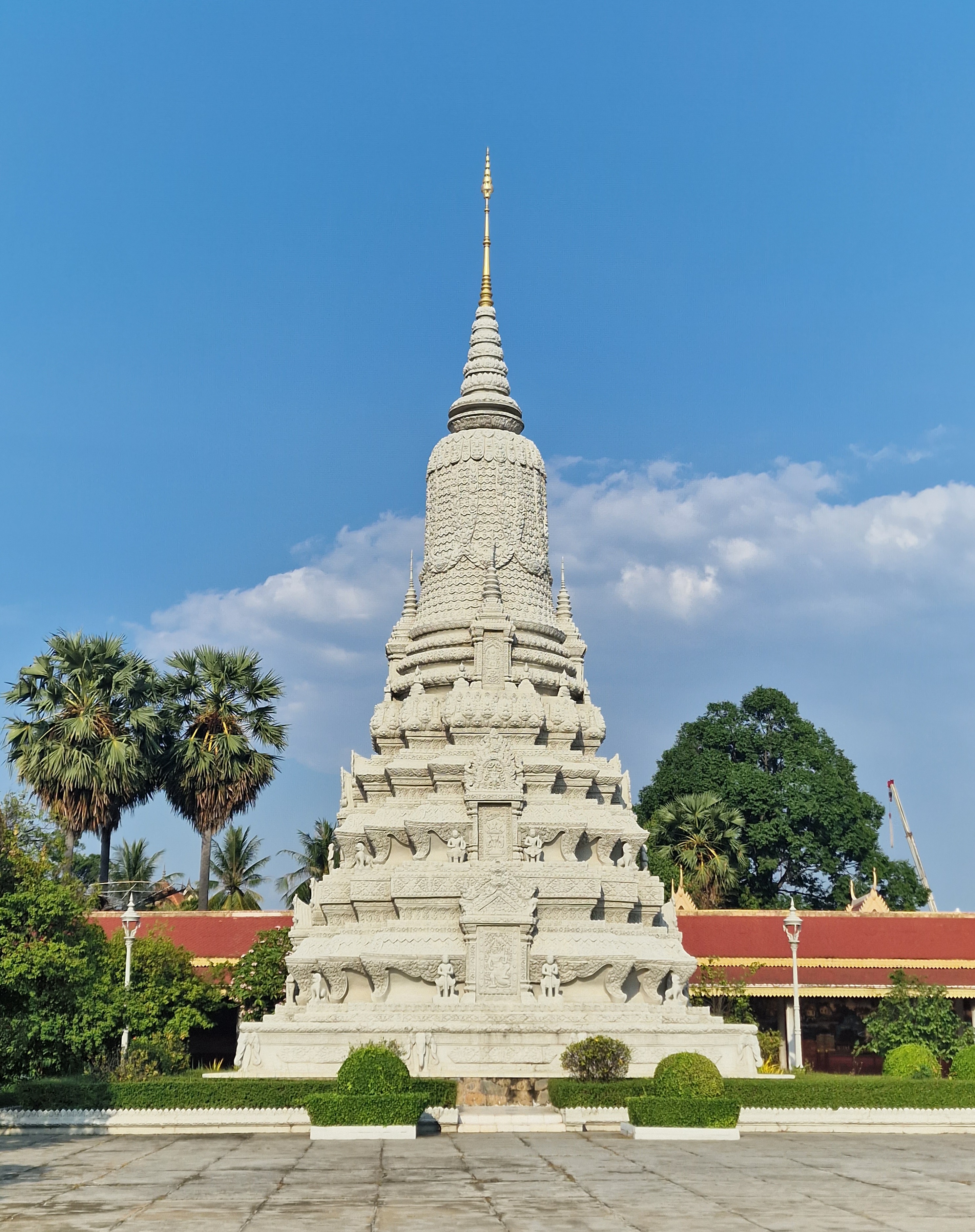
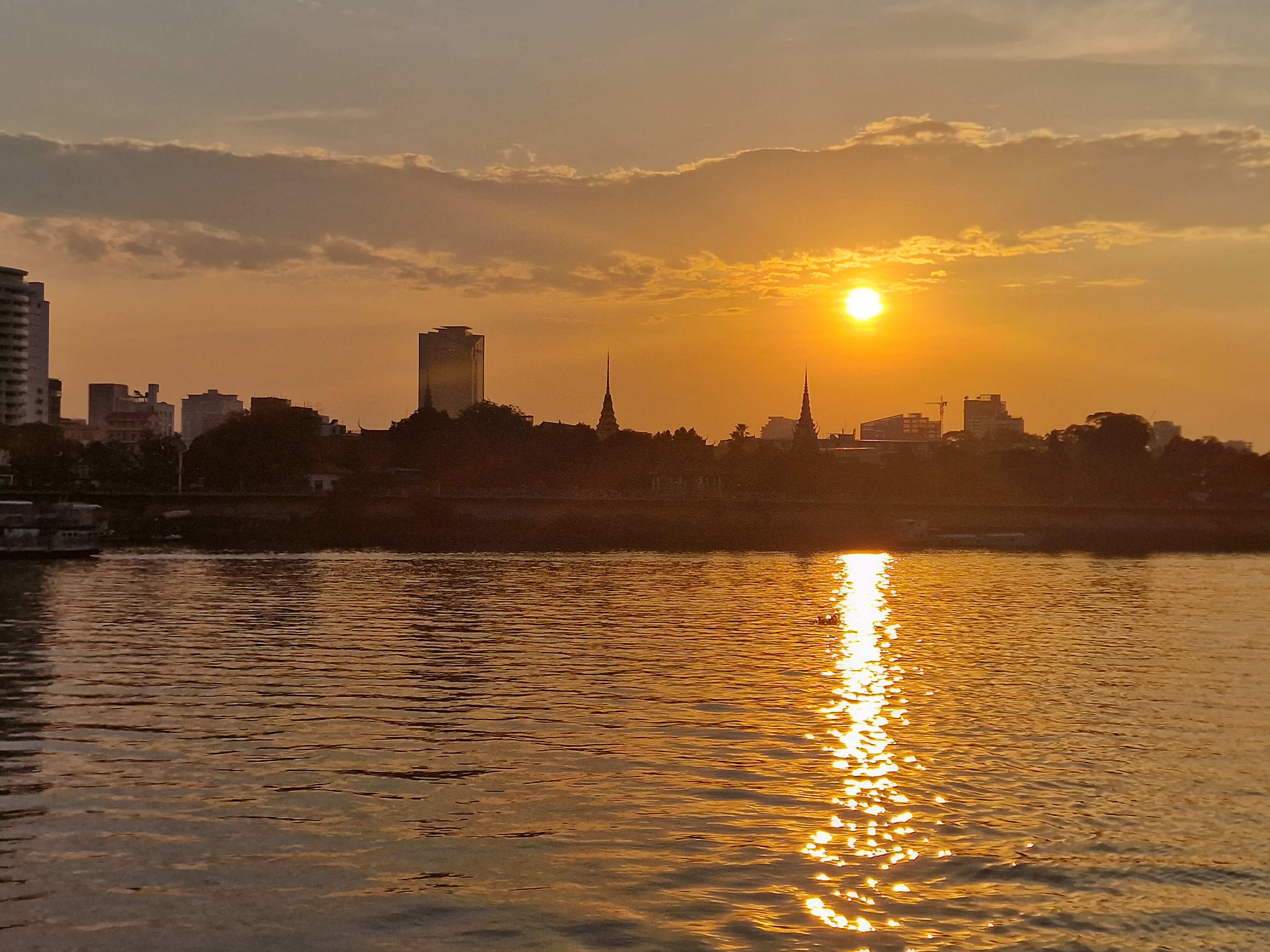
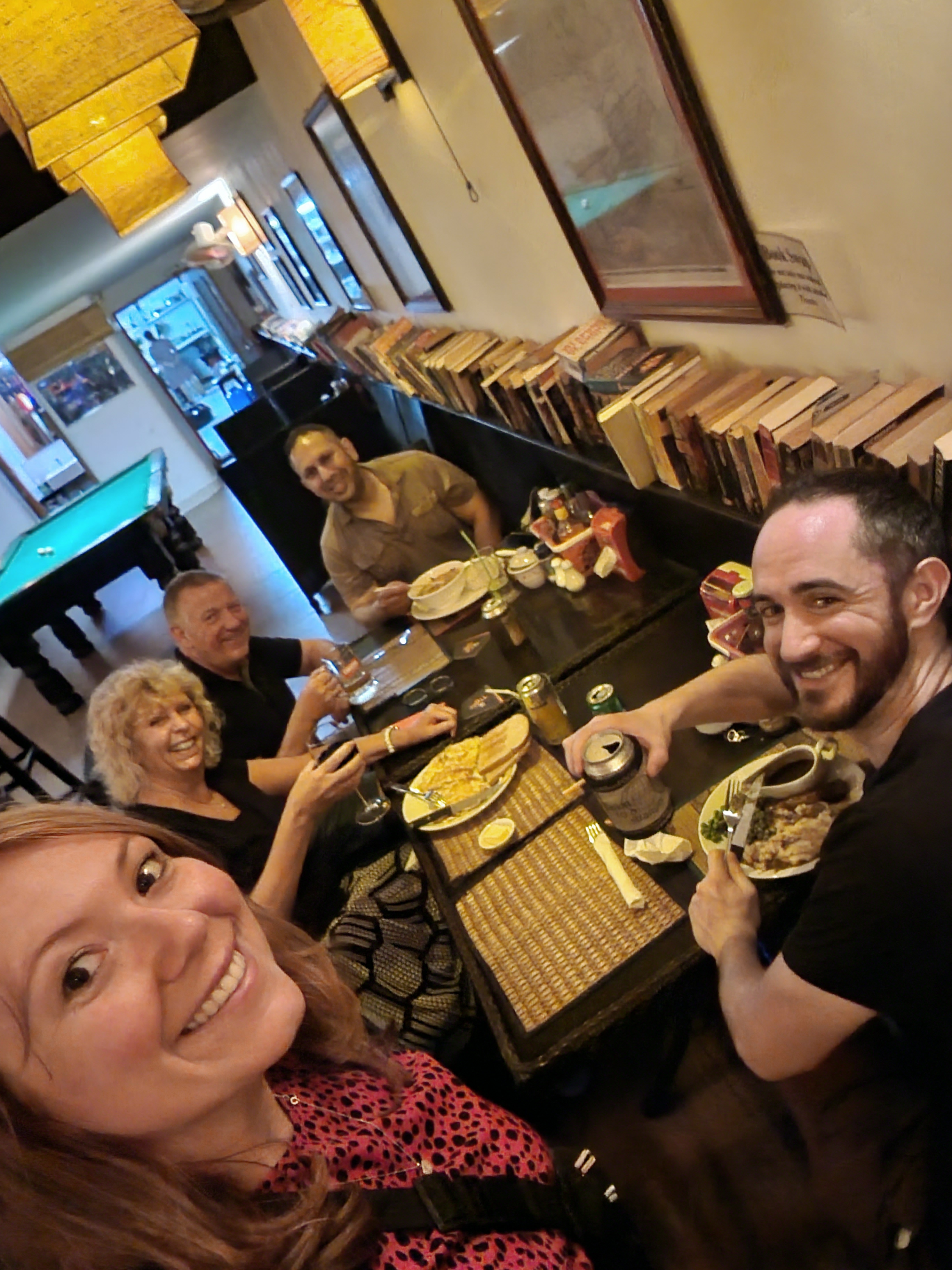
After an incredibly draining morning, we were brought back to Phnom Penh centre for some free time. It’s hard to know what to do with yourself after such an emotional morning. We decided to grab some food at a highly rated bagel shop and go for a drink at a local brewery, and have time to gather our thoughts and reflect on what we had seen. As we hadn’t had much time in PP itself, we decided to have a quick look at the Silver Pagoda as a Google search said it was free. It wasn’t… as it’s part of the Royal Palace grounds, you have to pay $10 to get in. It’s a huge complex and one we would have liked to have spent much longer in, but we that evening we had a boat ride with the group for sunset so we had to rush back to get ready. It was beautiful. We had drinks and fresh fruit and was a great way to watch the hustle and bustle on the river and on land, too. The next challenge was finding somewhere to eat.. the first place we tried was extortionate, the 2nd place had cow’s penis and all sorts of weird and wonderful on the menu, so we settled for ‘The Pub’. It’s always suspicious when there are minimal people in there, but we had a great time! The food was great, the drinks were cheap, and the owners were so friendly and welcoming. It was then back to the hotel to pack, and get ready for the long drive to Siem Reap in the morning.

 The Travelling Ginger
So interesting, Hannah. Thank you for such an informative piece. Vital and powerful. Would love to read Bou Meng’s book, when you’re back and you’ve read it. Xx
LikeLike
Wow – love reading your blogs anyway but massive thank you for sharing such personal n emotional recollection of your trip to Killing Fields. I was as deeply touched and affected by a trip to Bergen-Belsen POw camp – even 9yrs on. Whilst travel isn’t for everyone – each to their own, I think learning about such events is important so we keep remembering how horrific humans can be, to avoid allowing such things to happen again. Thank you x
LikeLike