
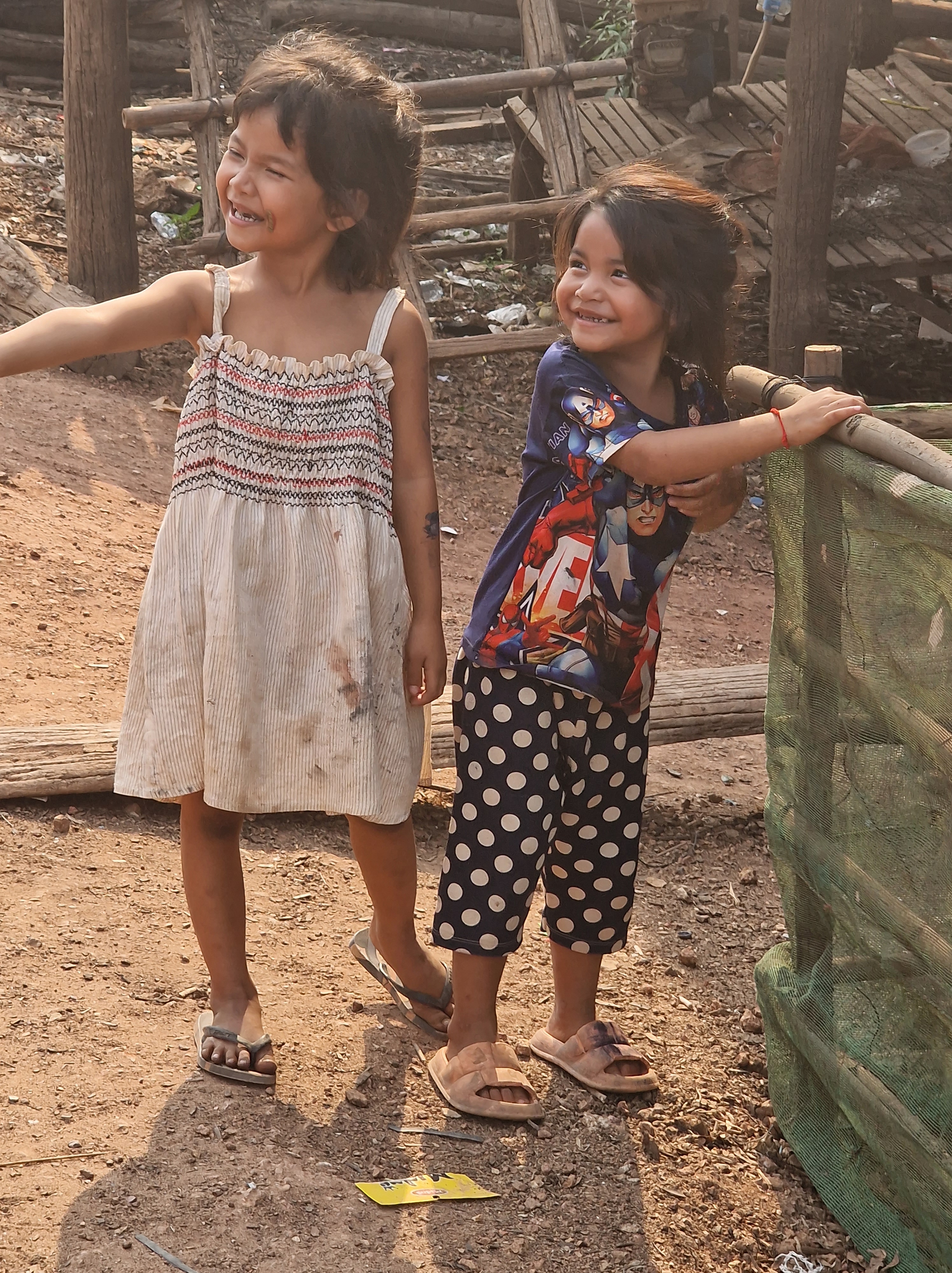
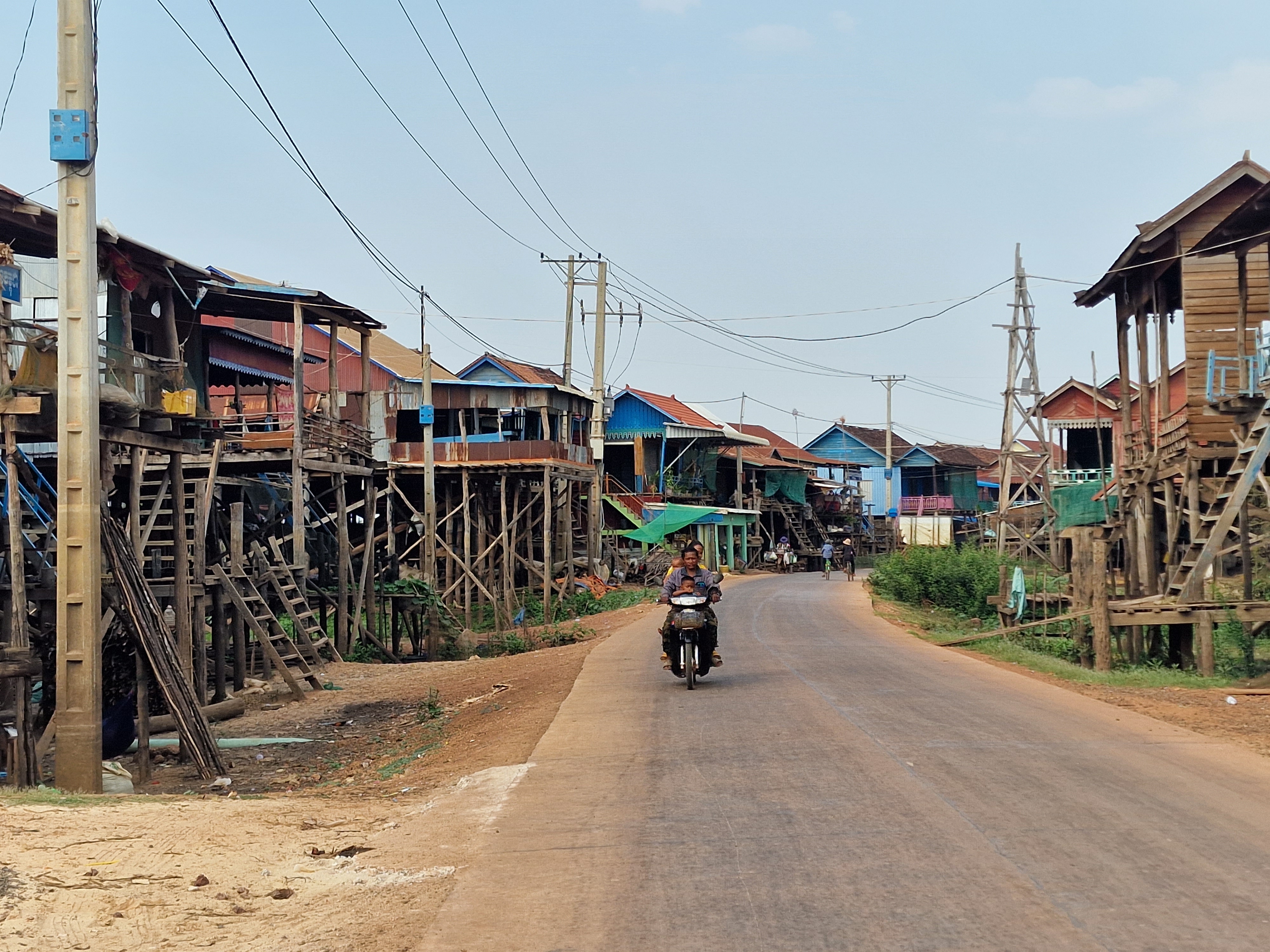
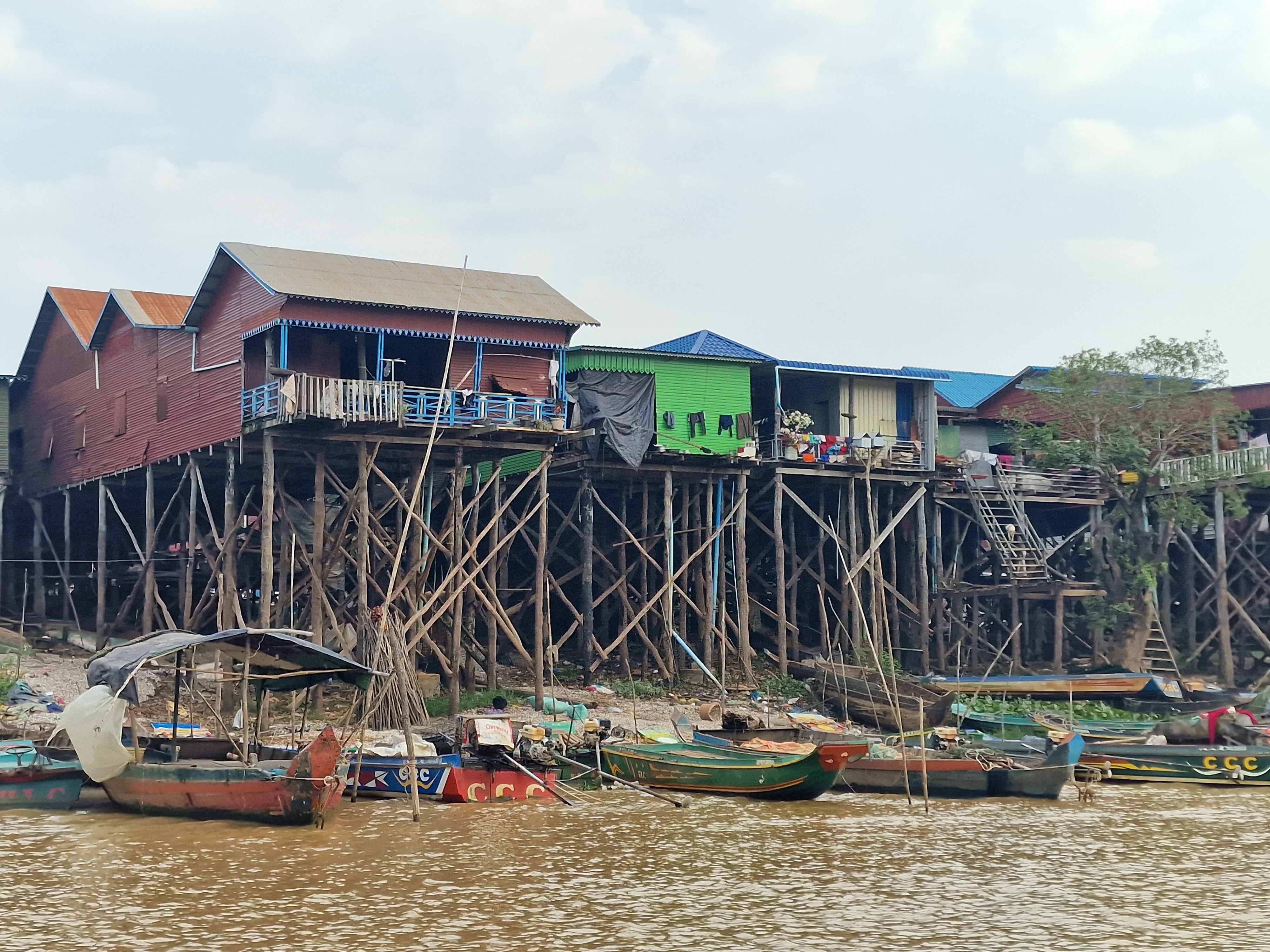
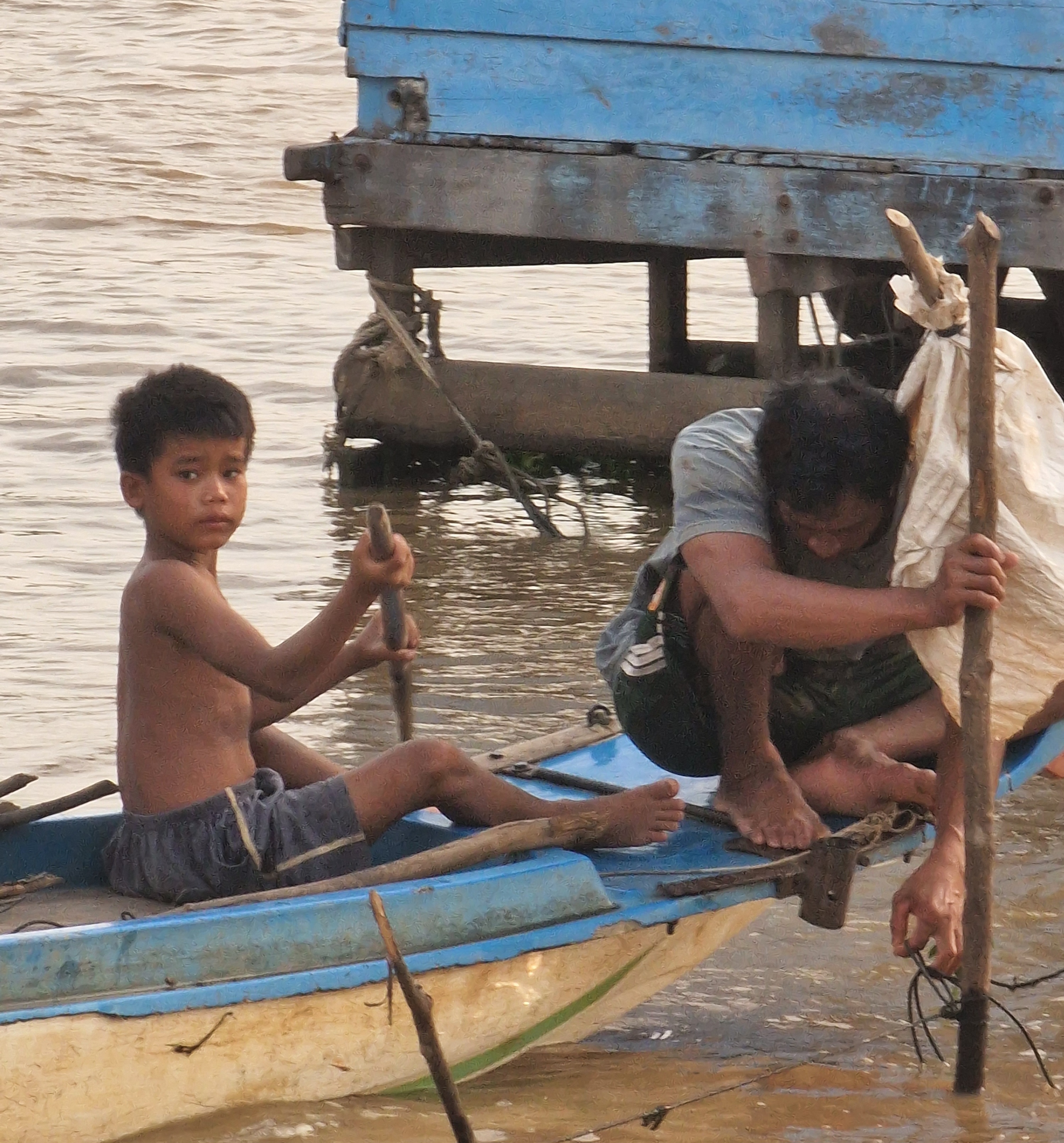
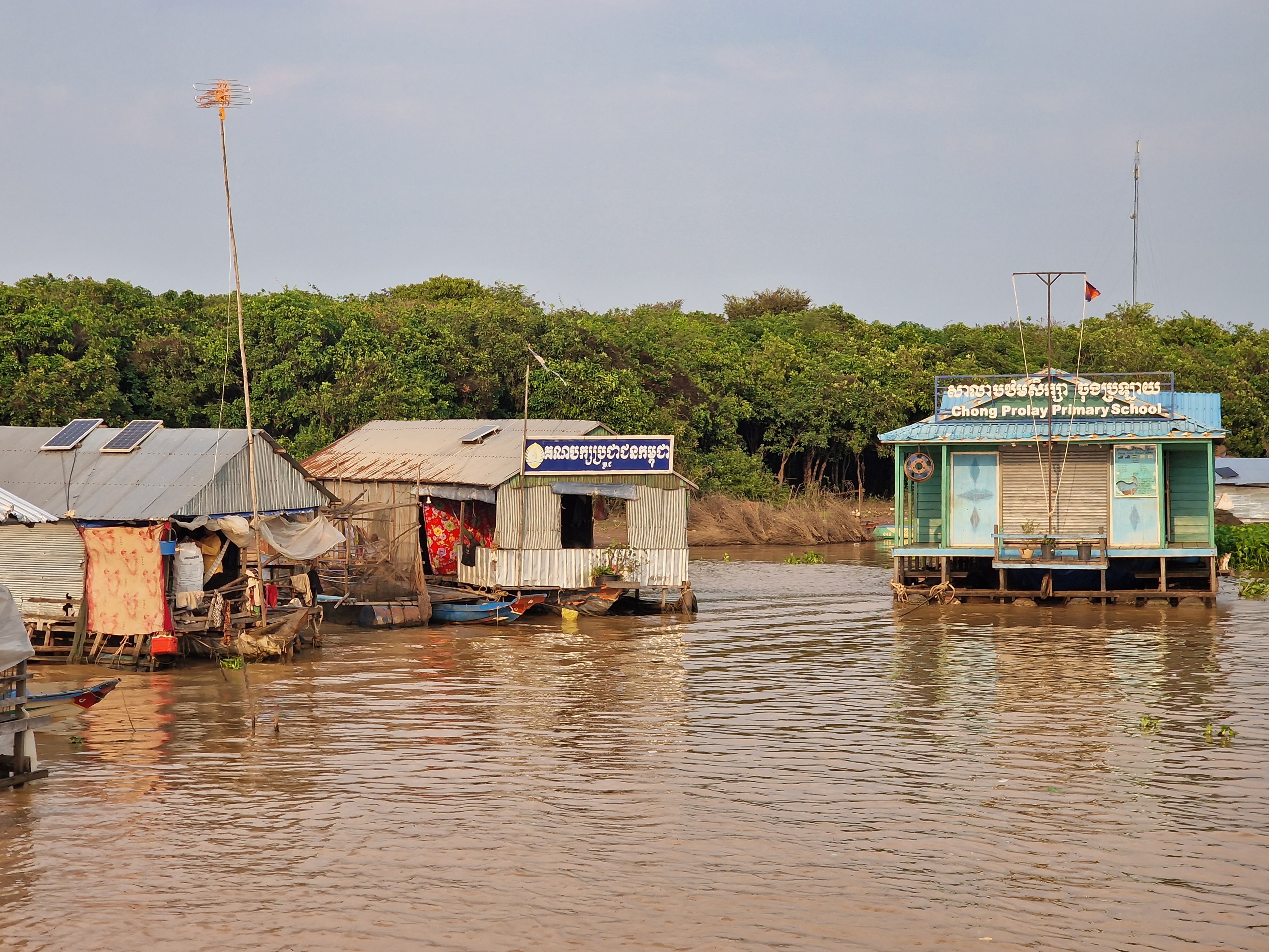
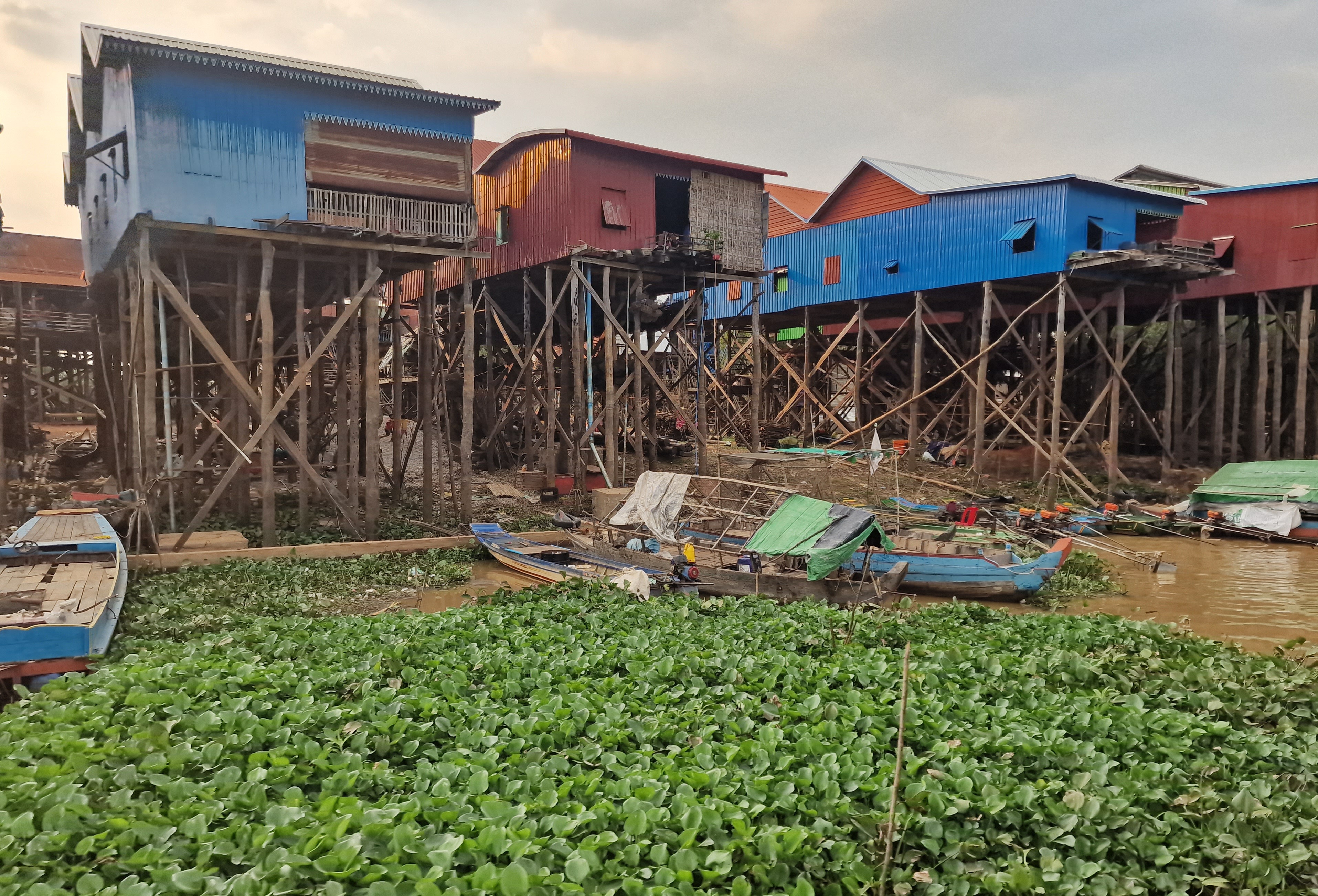
We’ve been doing the majority of Cambodia travel on a very small minibus. Luckily, one of Mark’s fellow BFG’s had a little word with our guide, and we got a huge coach with a seat each for our long drive to Siem Reap. After a spot of lunch at the place where all travellers seem to stop (they have 400 seats!), we headed to one of the floating/stilted villages. This is where rural communities live in floating/stilted houses, travel to floating/stilted schools, and eat in floating/stilted restaurants. We visited Kampong Khleang, which has a community of around 6000 people. Being the furthest away from Siem Reap, it’s the least touristy, which gave us a much more authentic experience. As we arrived, we were greeted by 100s of waving children who looked genuinely happy to see us, a welcome change from the usual begging to buy some mouldy bananas. As we were here during the dry season, we got to see the houses all their glory standing at 10M tall! During the wet season, the water will rise significantly up the buildings. The economy here is based largely on fishing in the flooded forest on Tonle Sap Lake – the largest inland freshwater body in Southeast Asia. When we got on the boat, we were able to see the proper construction of these houses as we floated slowly down the river. We got to see the locals at work, the school they go to, and the children playing in the river. It was an incredible experience. As the boat service is still owned by the locals (unlike some of the other floating villages), all the money spent goes into the community. When we got off the boat, we were greeted by more children shouting hello, giving us high fives and fist pumps. Despite the poverty, they all looked so incredibly happy.
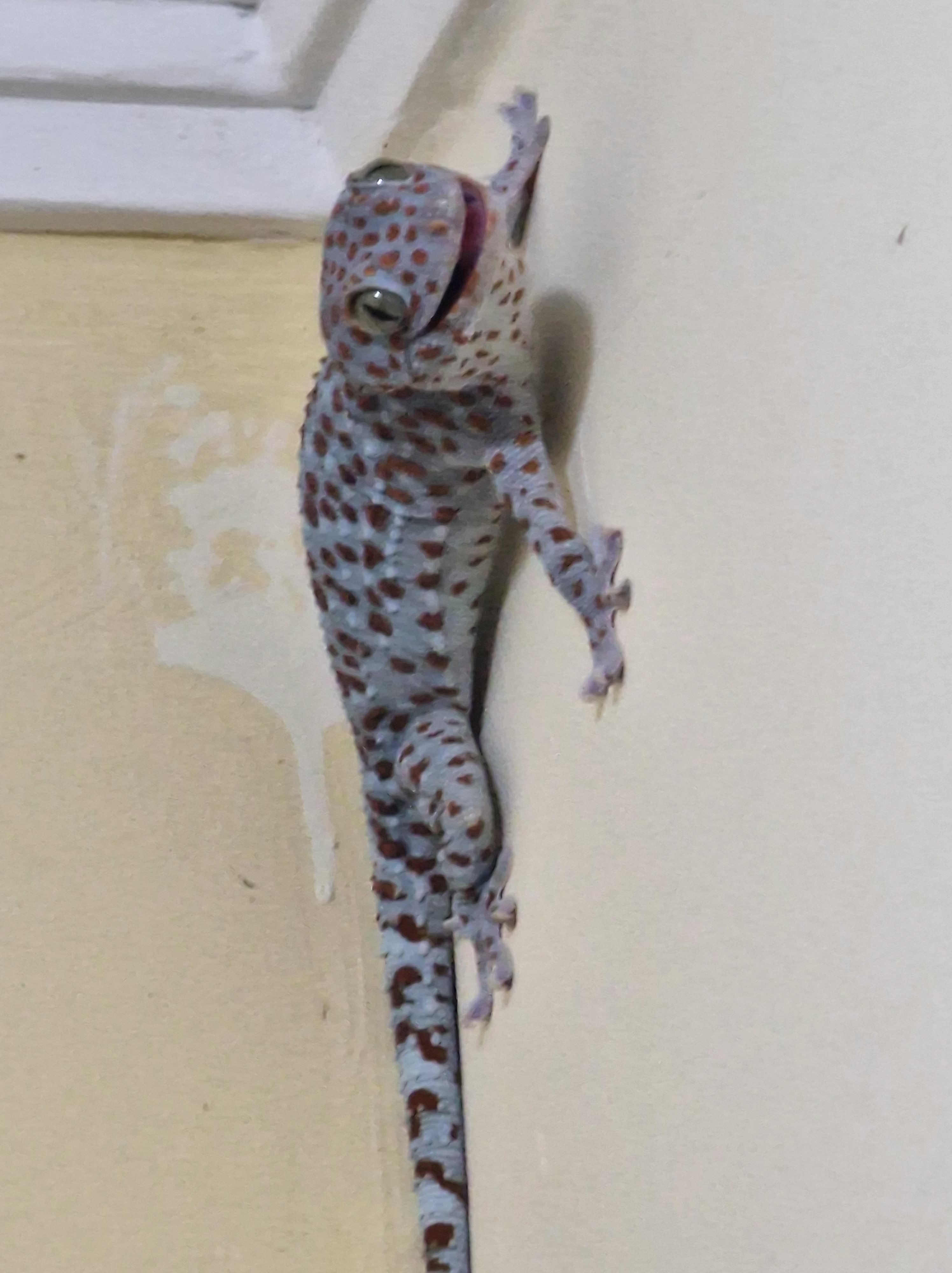
As we drove into Siem Reap, we immediately thought, “Yep, we’re going to like this place.” We got ready to go out, and as we opened the door, we heard a loud thud and saw something running off.. turns out it was a massive Tokay gecko! An Australian lady came to see what we were looking at, who was obviously not in the slightest bit arsed about the size of it. We had a free evening, so we decided to consult the Lonely Planet guide and chose an Italian. It was absolutely delicious, but as per usual, we ordered far too much. It needed to be a quick one as alarms were set for Angkor Wat sunrise.
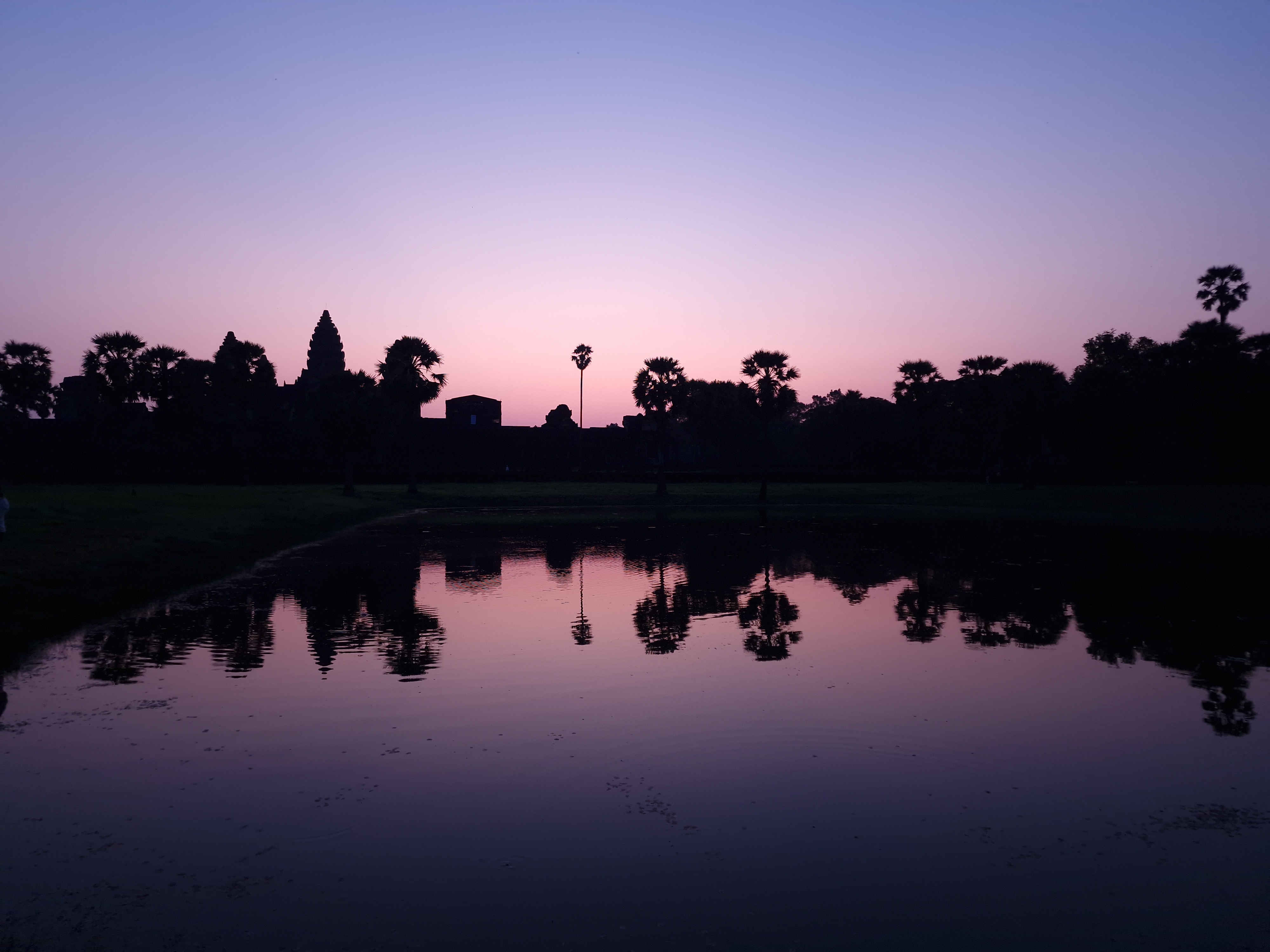
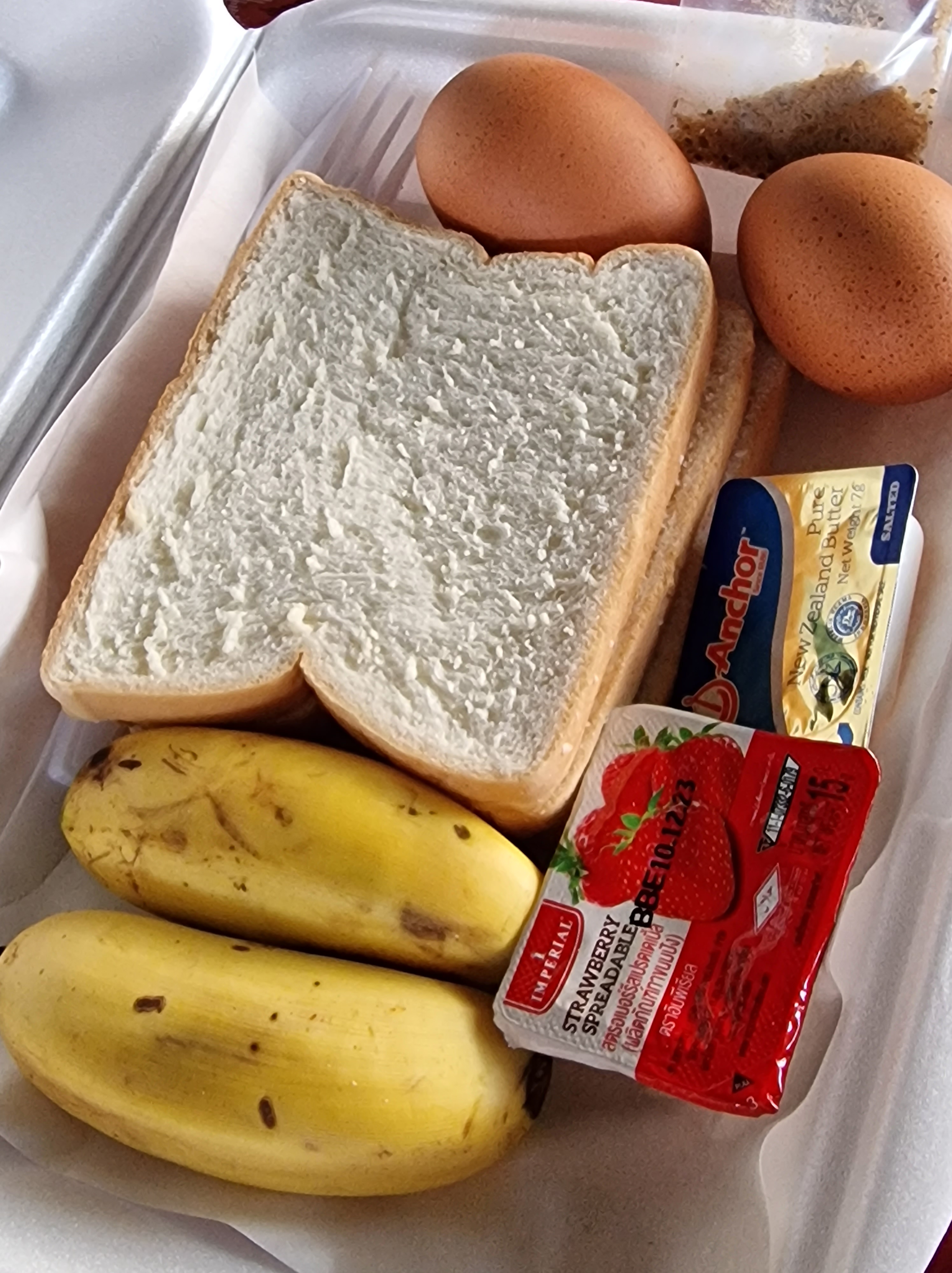
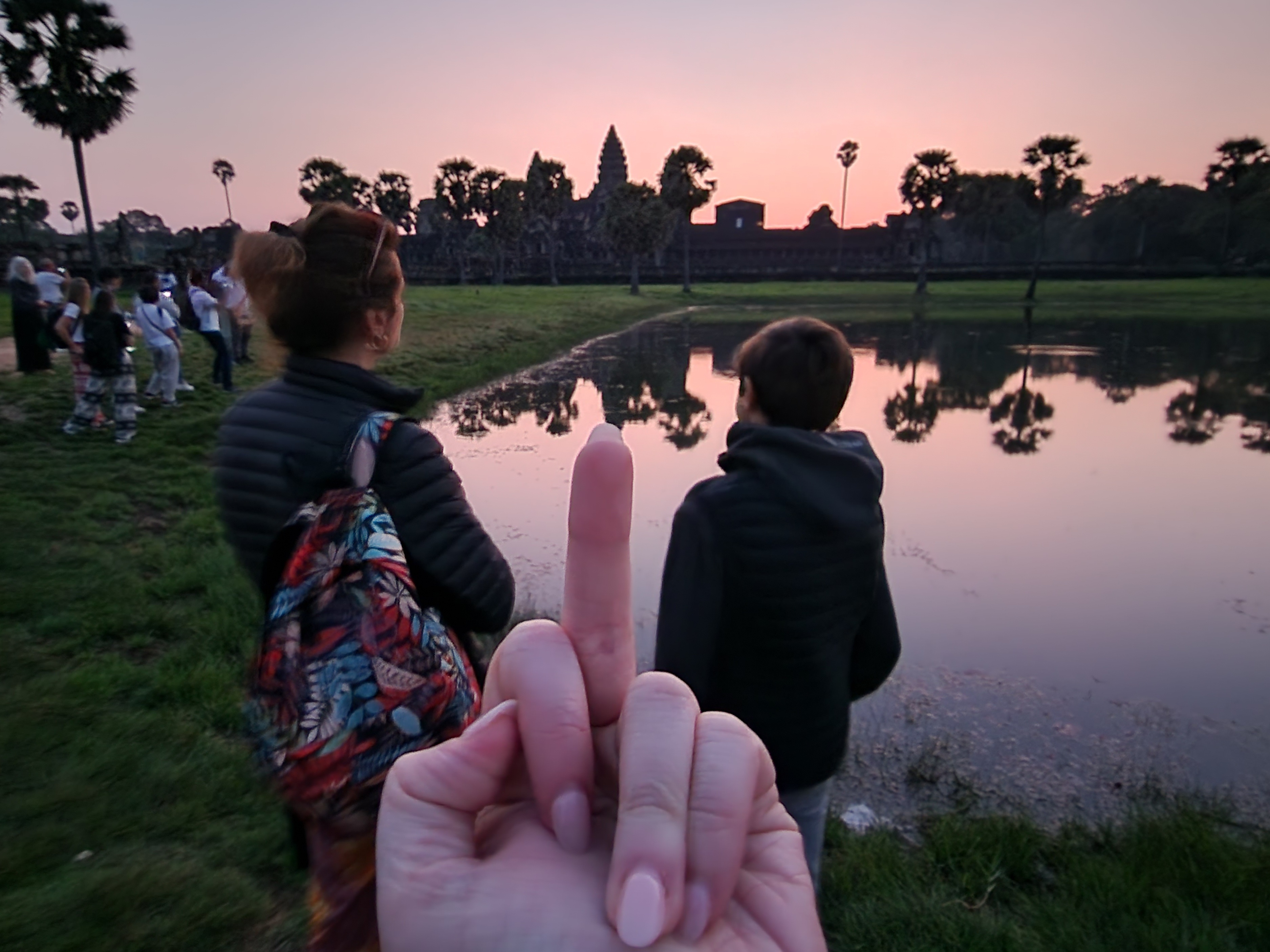
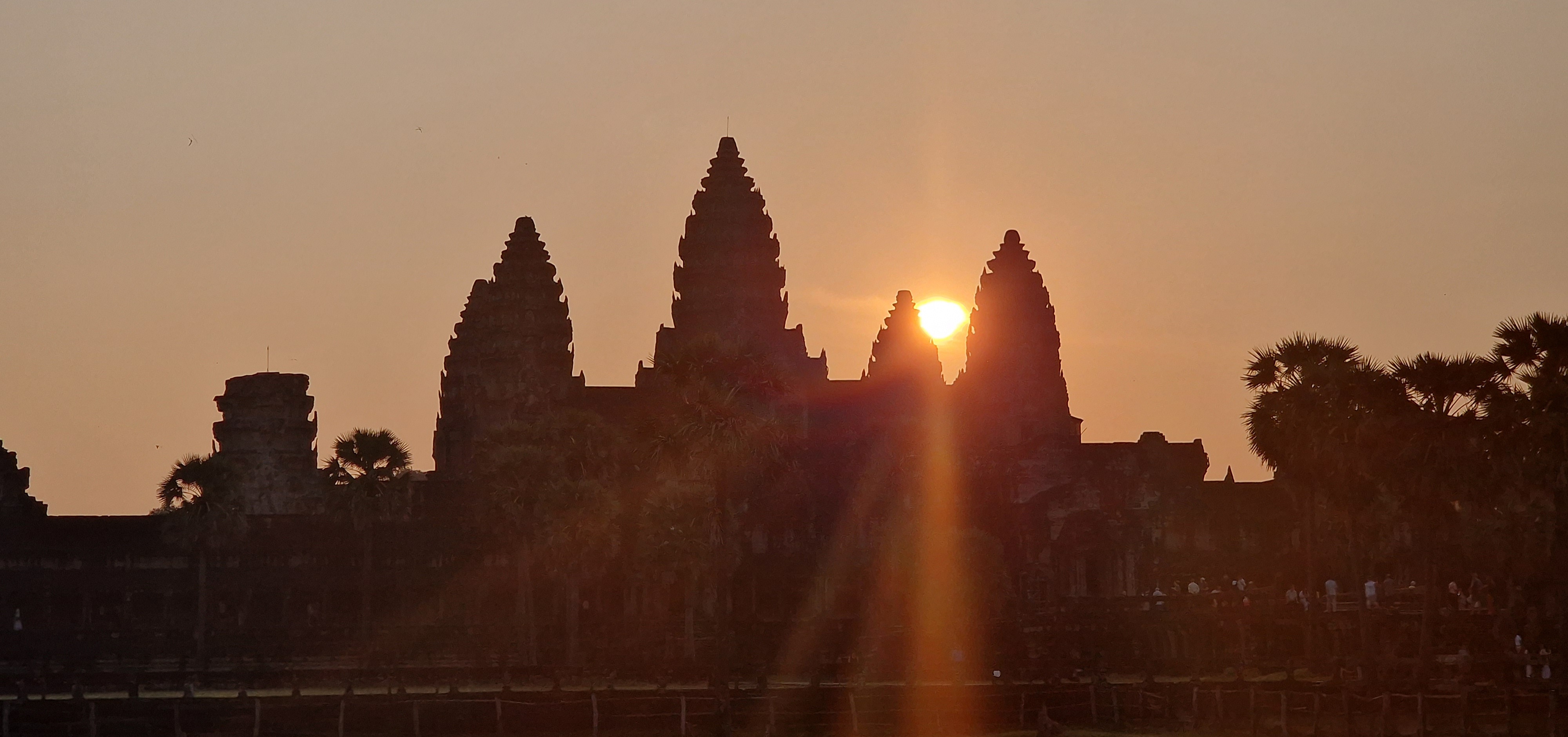
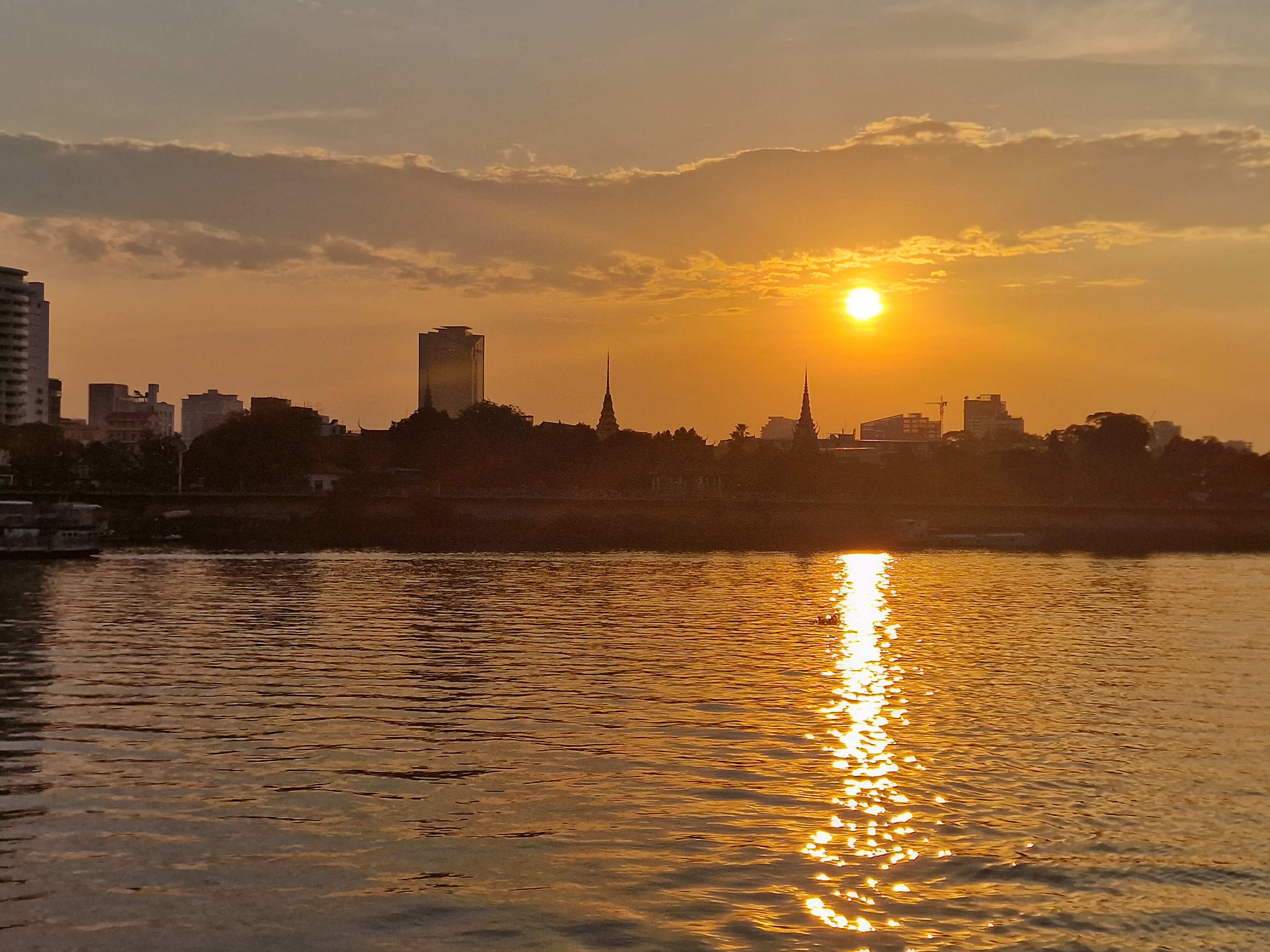
At 0330 the alarms went off 😴 it was a quick scrabble around to get everything ready and onto the minibus to get our temple passes; something that you need to buy to visit any of the sites. We arrived at Angkor Wat around 5am and joined all the other tourists around the lake waiting for the magic to happen. Our managed to get stood right at the front, but then a woman and her son had the audacity to just come and stand right in front of us all! Luckily it’s a group of gobby people and they very quickly got told. It still took them ages to move though. We were told the sun would be up by 06:30 and to be honest we were all very underwhelmed. The phone cameras were able to pick up a bit of colour but visually it just went from darkness to daylight, with no evidence of the dramatic sky you hope to see. As we were all walking to the breakfast area, the sun started peaking up above the temple, and we finally started getting some orange sky. We all abandoned the breakfast (for now) and continued to watch the silhouette of Angkor Wat instead. Once the sun was fully up we got to enjoy our hotel breakfast box, of 2 boiled eggs and some bread a butter.
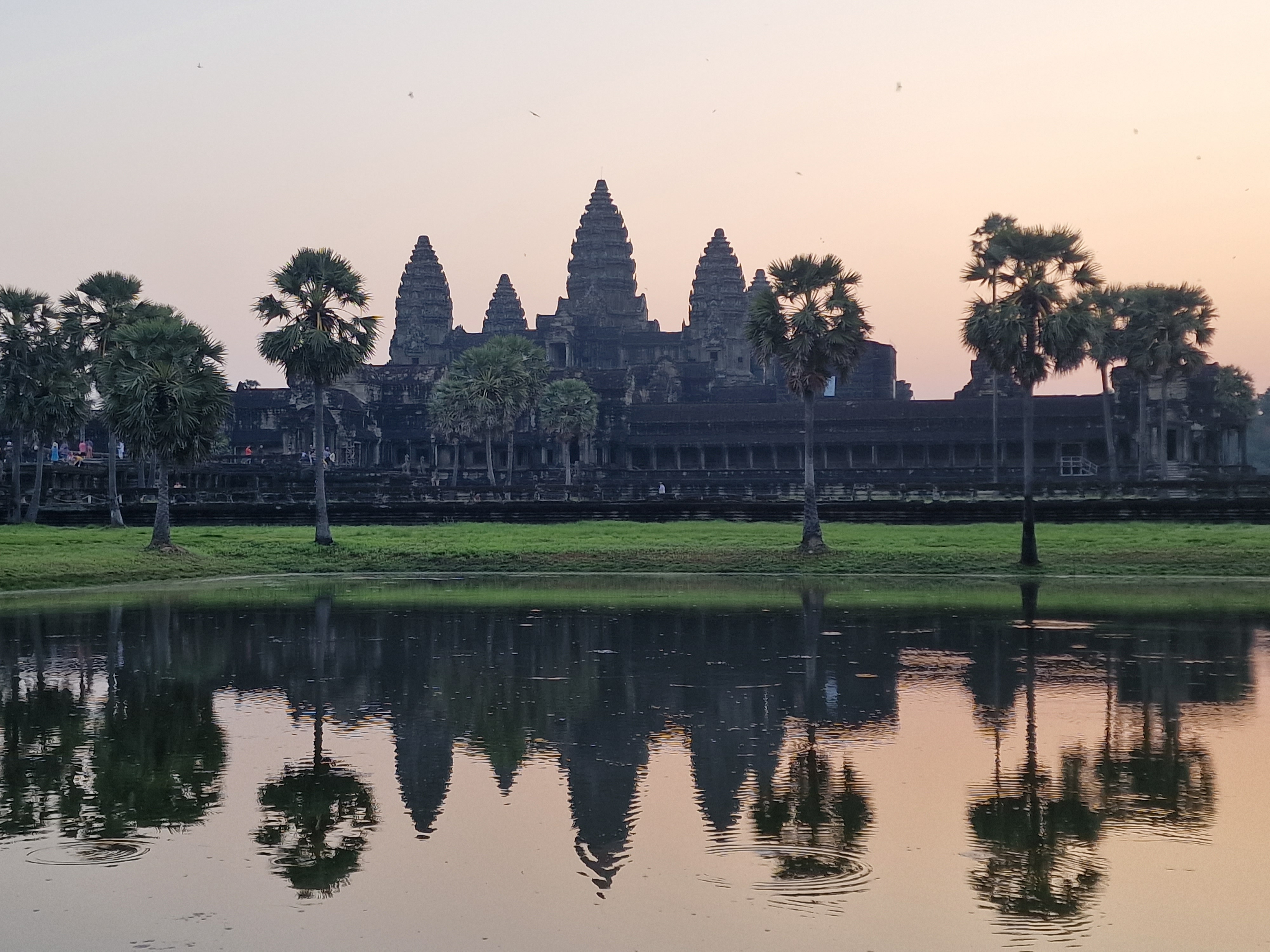
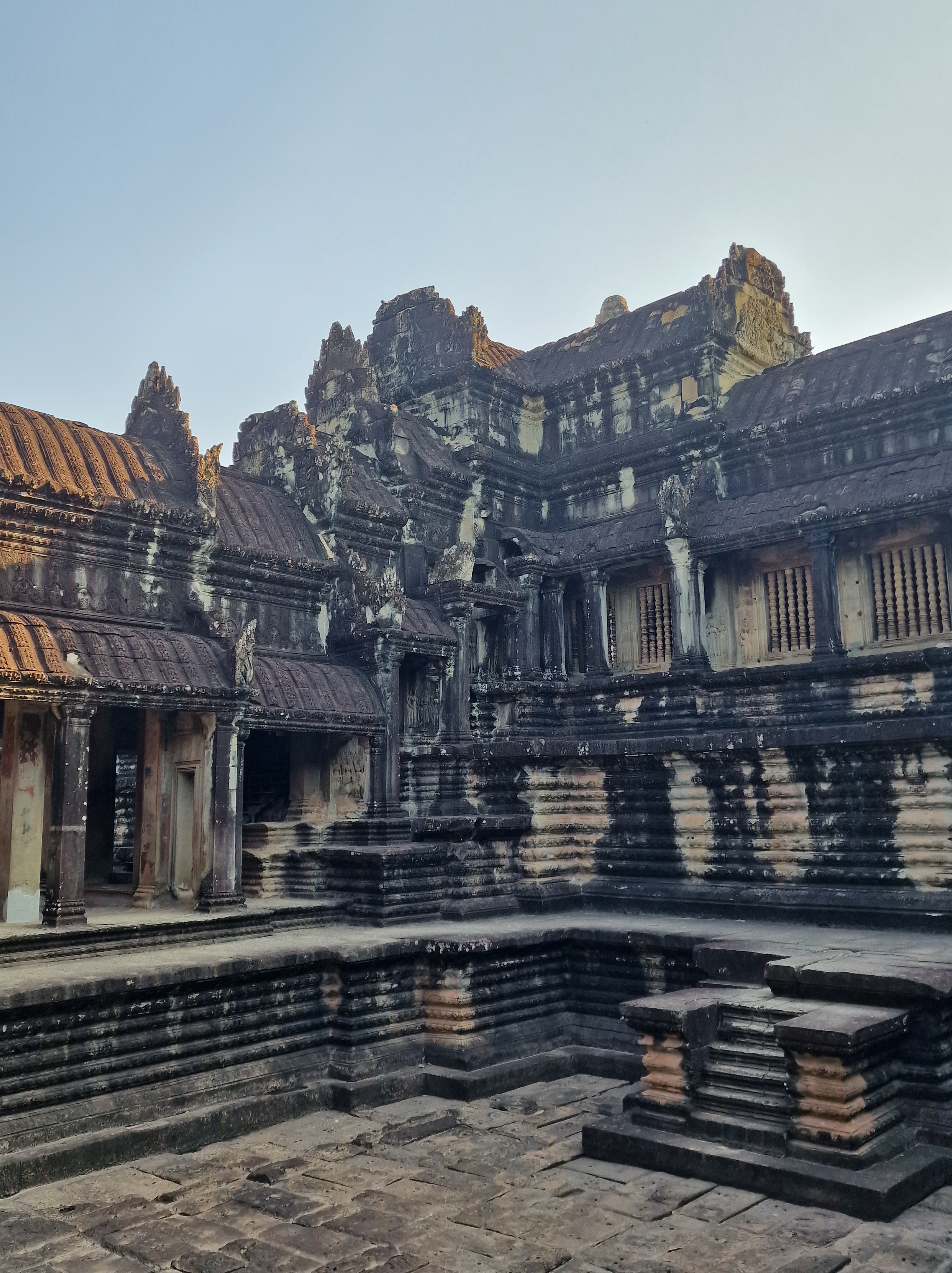
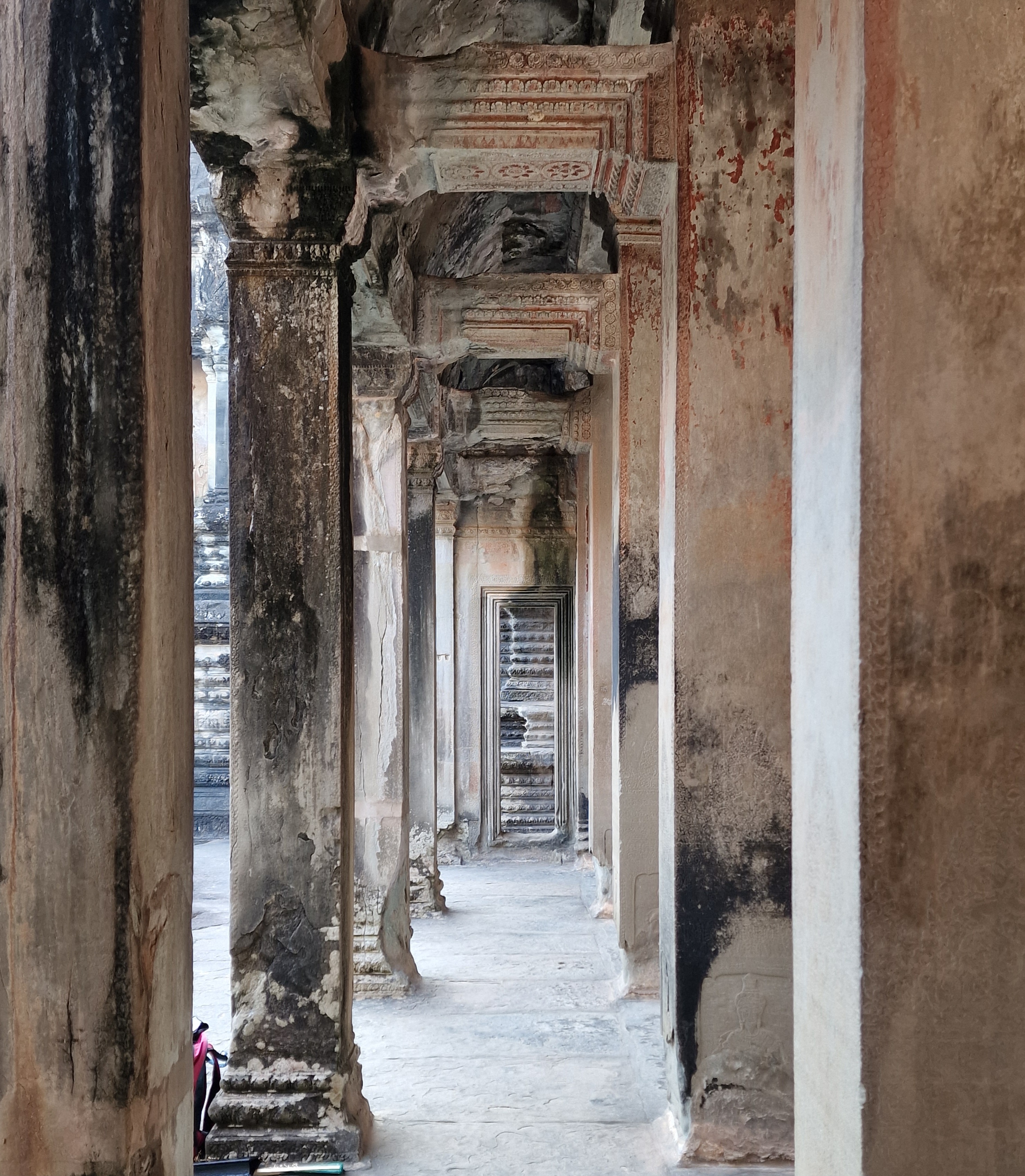
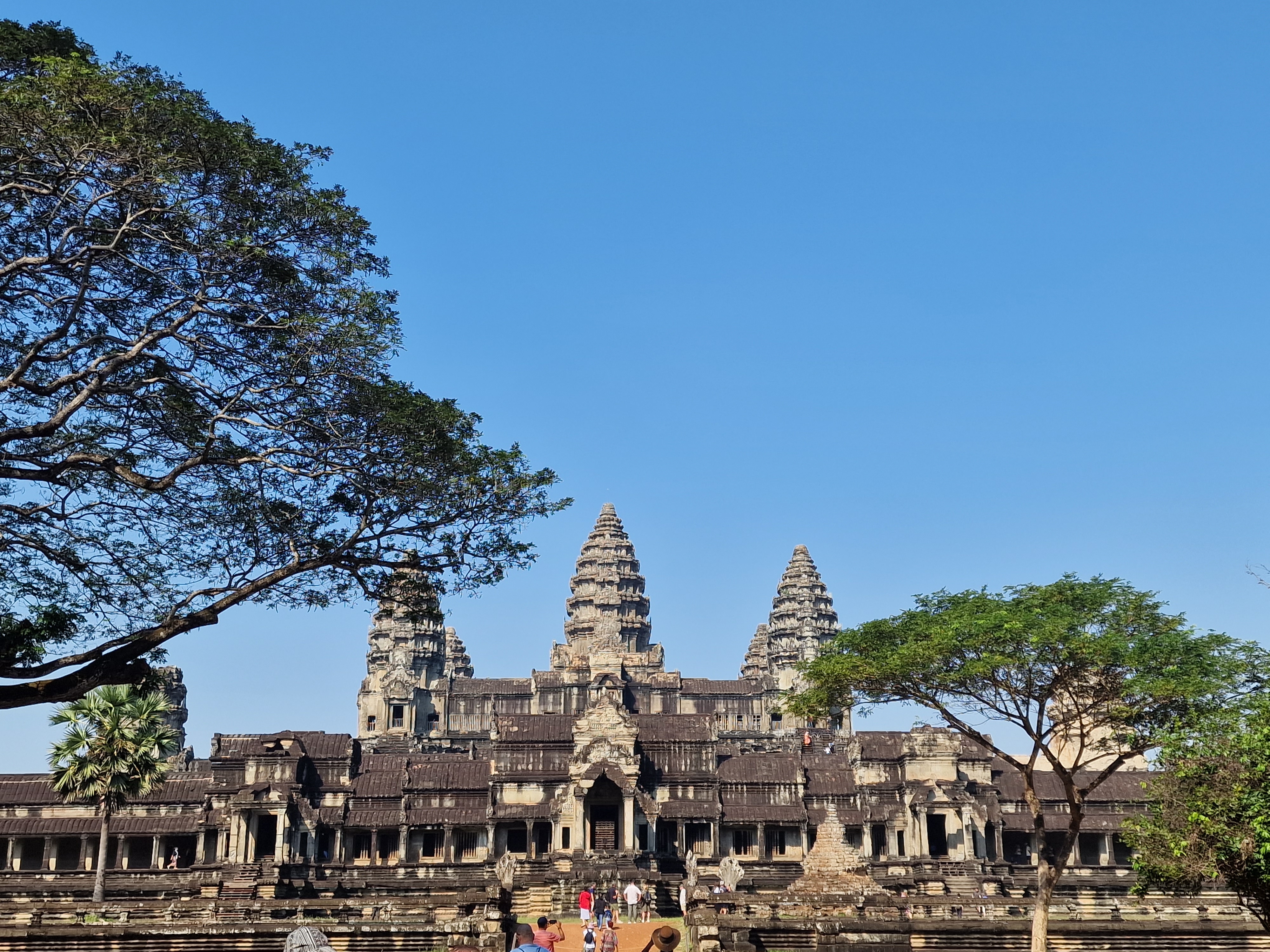
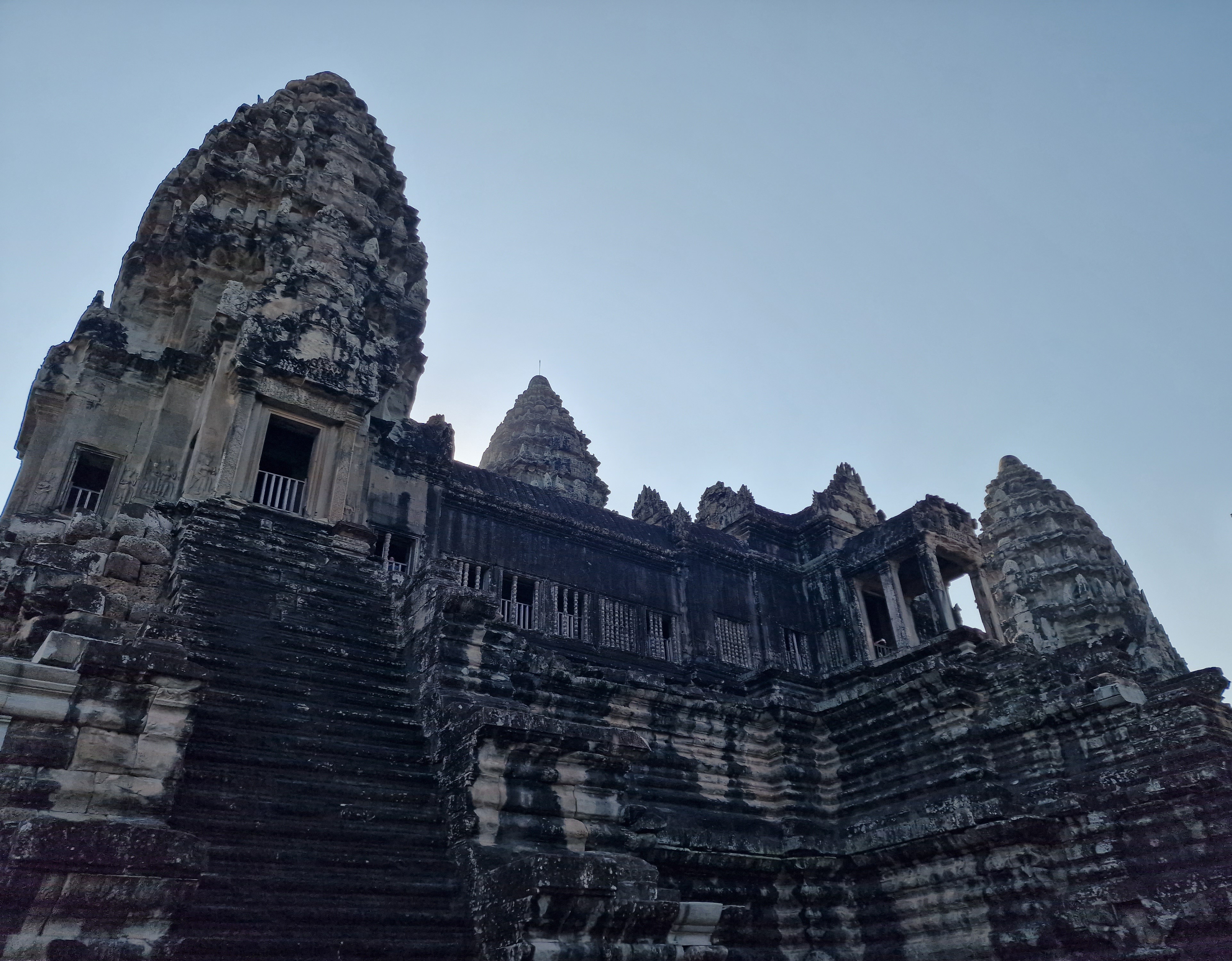
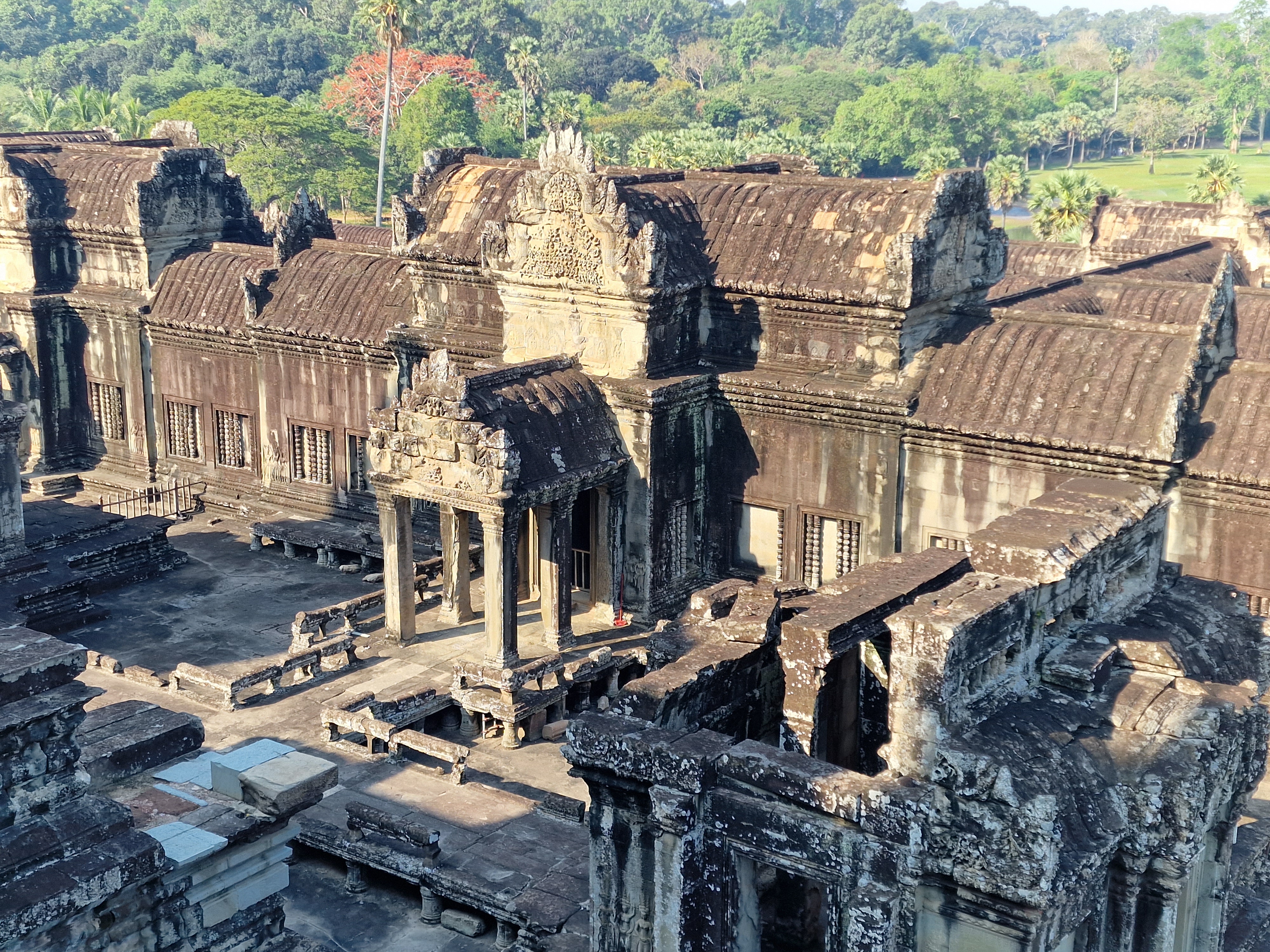
I’ve been so looking forward to seeing Angkor Wat and was so excited to get in and explore. We met our guide and he walked us to the steps of the temple and sat us down whilst he gave us some history. Unfortunately, because he wasn’t the most engaging of people, half the group, including myself, were nodding off. We got inside and he went on and on and on about the stone used. We had been inside 20 minutes and not gone anywhere! As a keen National Truster and English Heritager, I really appreciate an info board with a visual on of what something once looked like and what it was for. There was none of that inside the temple, just long endless corridors of nothing. The guide continued to chat absolute shite, and unfortunately we were all so bored with what he was saying that the majority of us had walked off to explore ourselves. We climbed some steps and got a really good view of the site itself, which is absolutely huge! It was the general consensus that it was a massive shame with the guide we got, but that it’s still worth the visit.
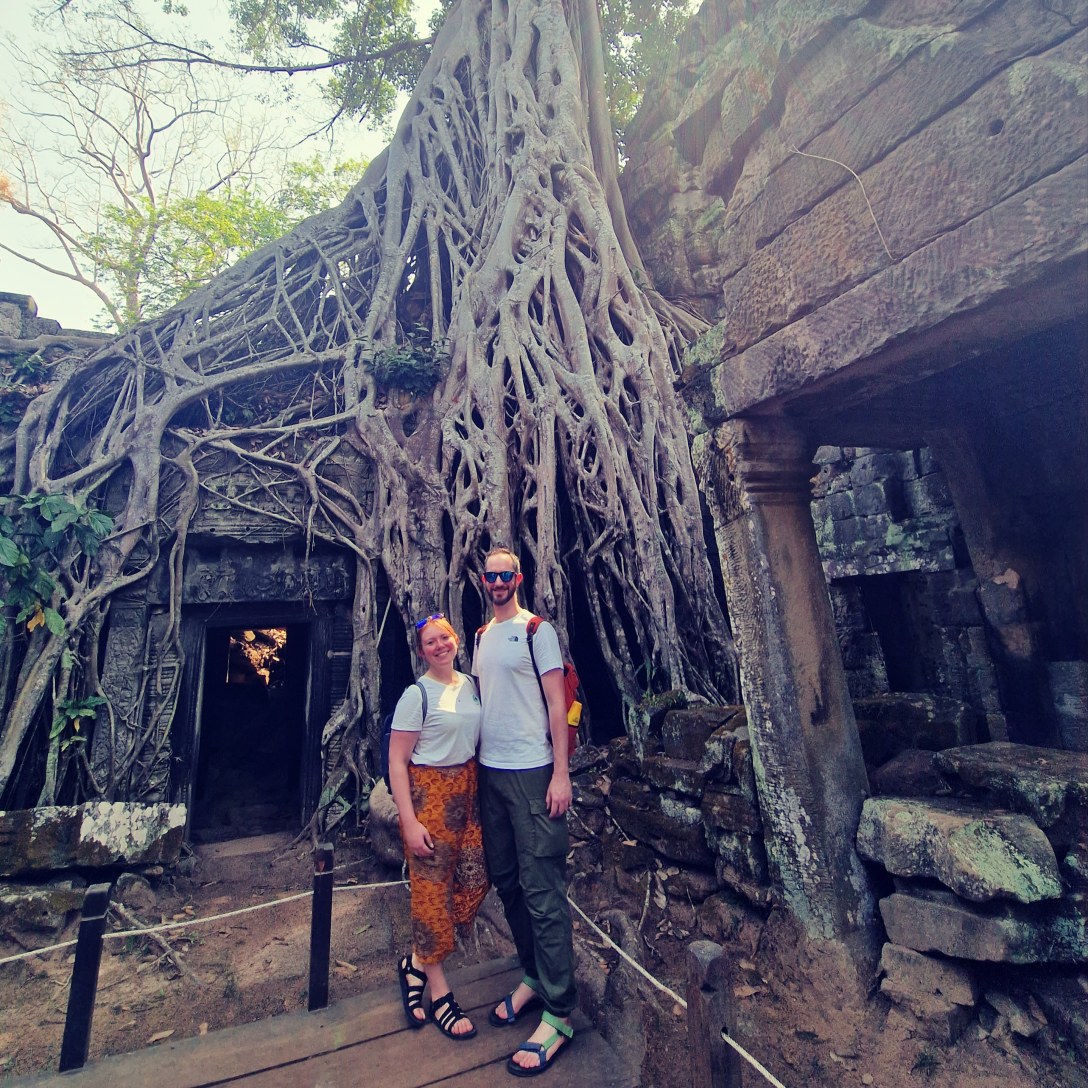
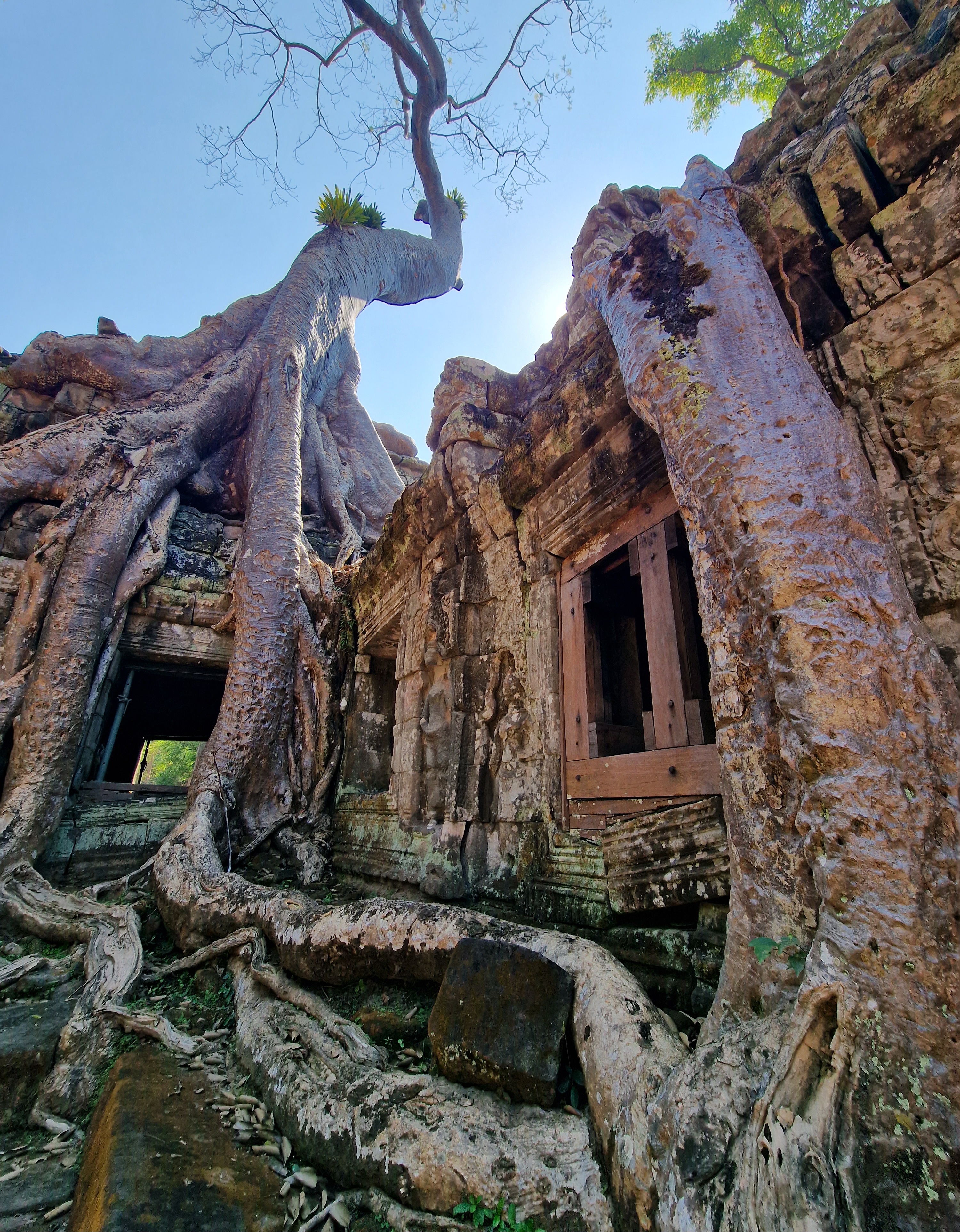
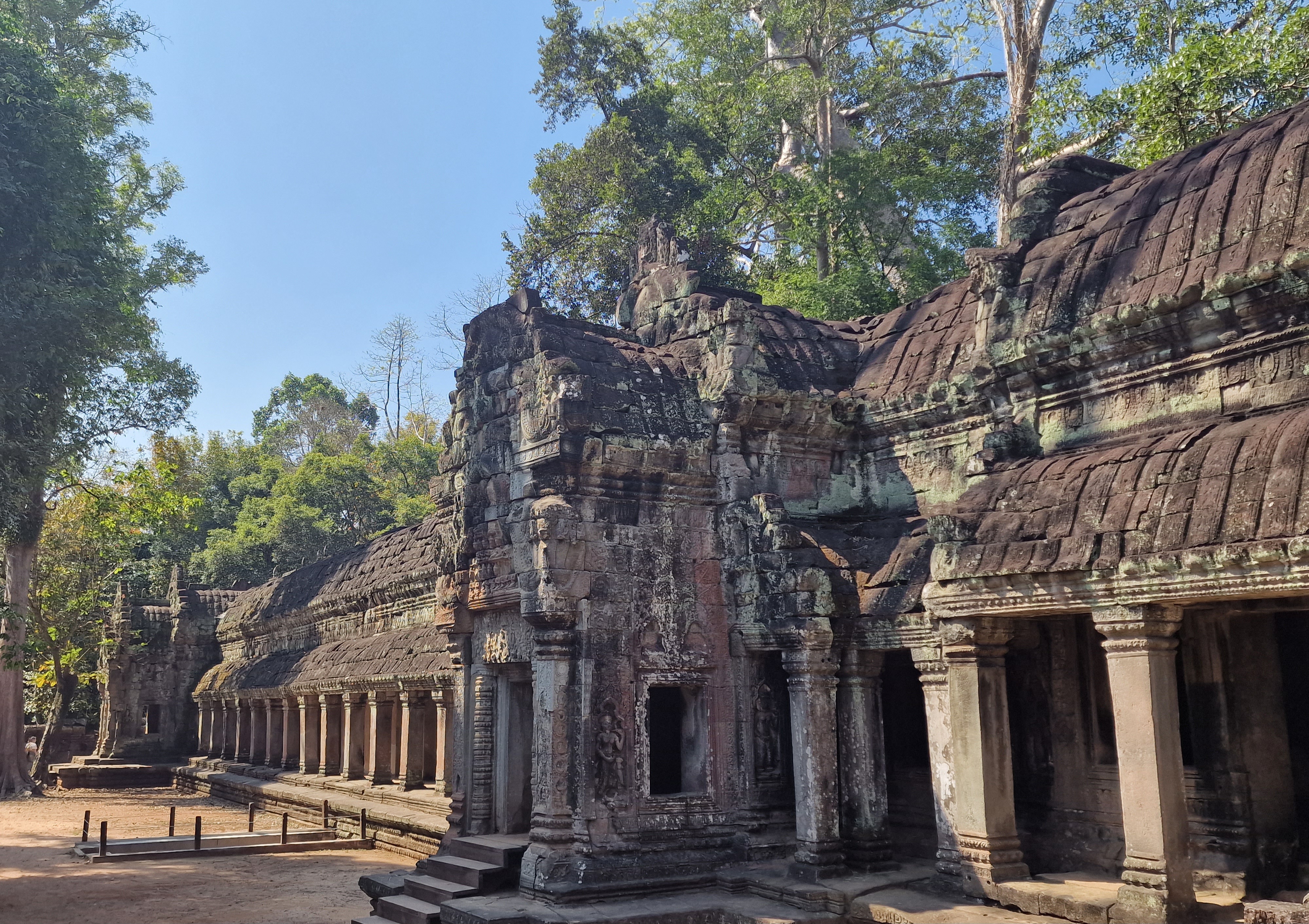
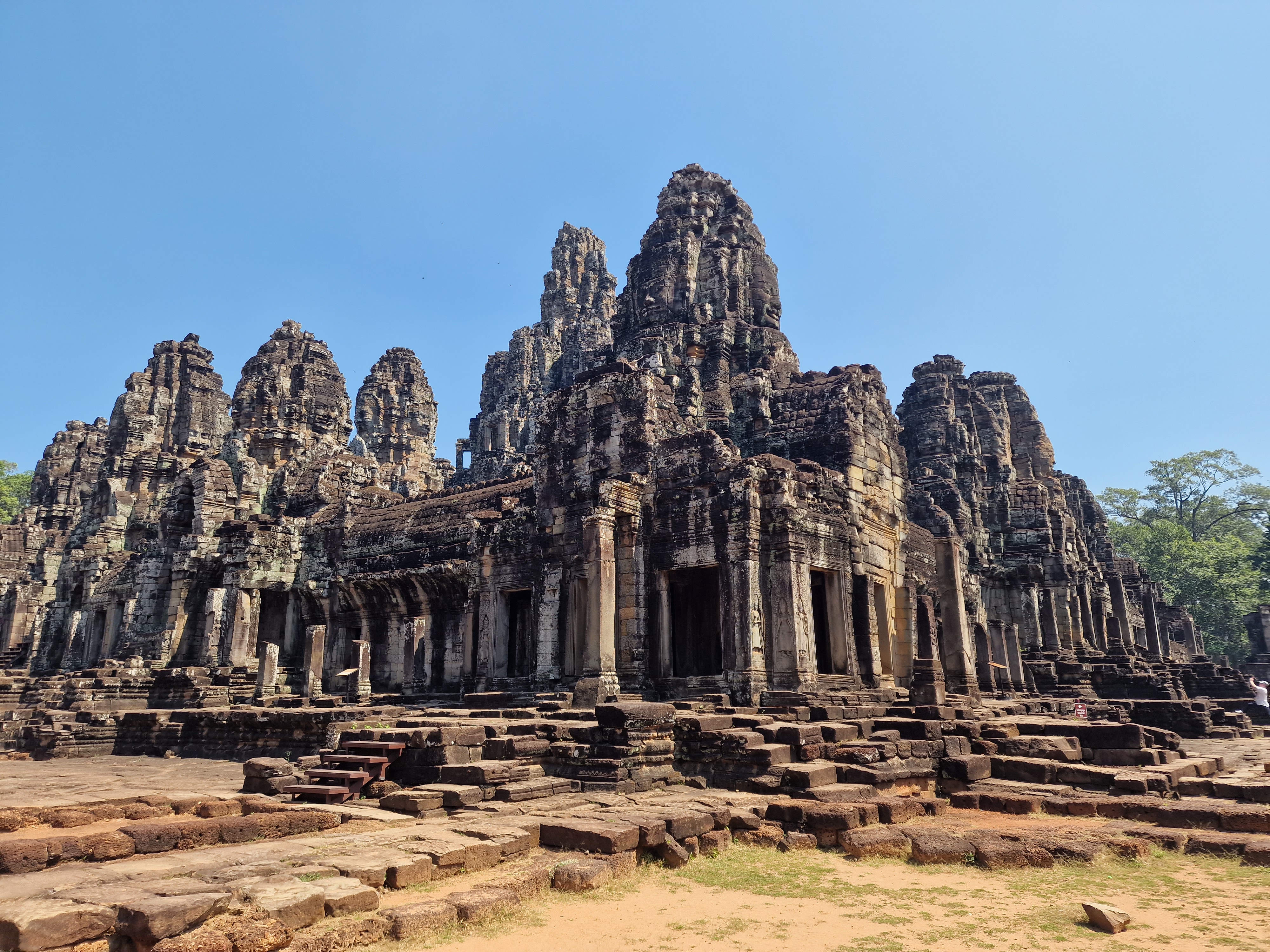
The next temple we visited was Ta Prohm from the late 12th century, and the backdrop for Lara Croft: Tomb Raider. This temple is in a lot worse state than Angkor Wat, but I have to say I enjoyed this one more. The way the trees have claimed the ruins as their own was incredible. The Fig, banyan, and kapok trees have spread their gigantic roots over the stones, and their branches and leaves intertwine to form a roof over the structures. The last temple of the day was Bayon Temple, and by this point, it was nearly midday and therefore far too hot to be slowly walking around ruins with absolutely no shade whatsoever. This meant it was a quick whip round and back on the minibus to go back to the hotel. We were given an option to return the following day to repeat the last temple and do a few more, and as fascinating as they are, we very much felt templed out, and the thought of having that guide again the next day was a big no no. It turns out, however, he’s got over 20 years experience and is the one who delivers training to other guides!! Mind blown..
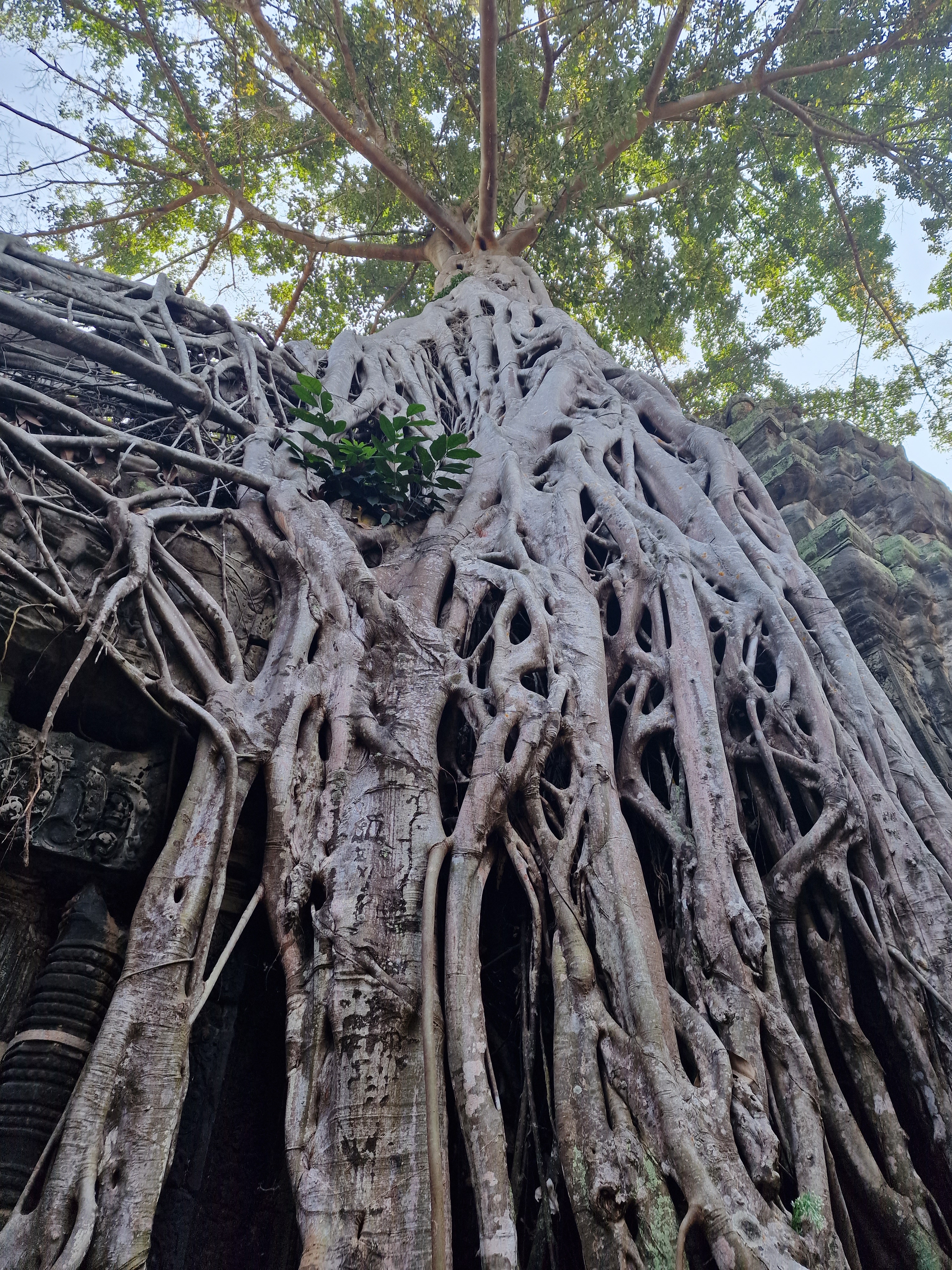
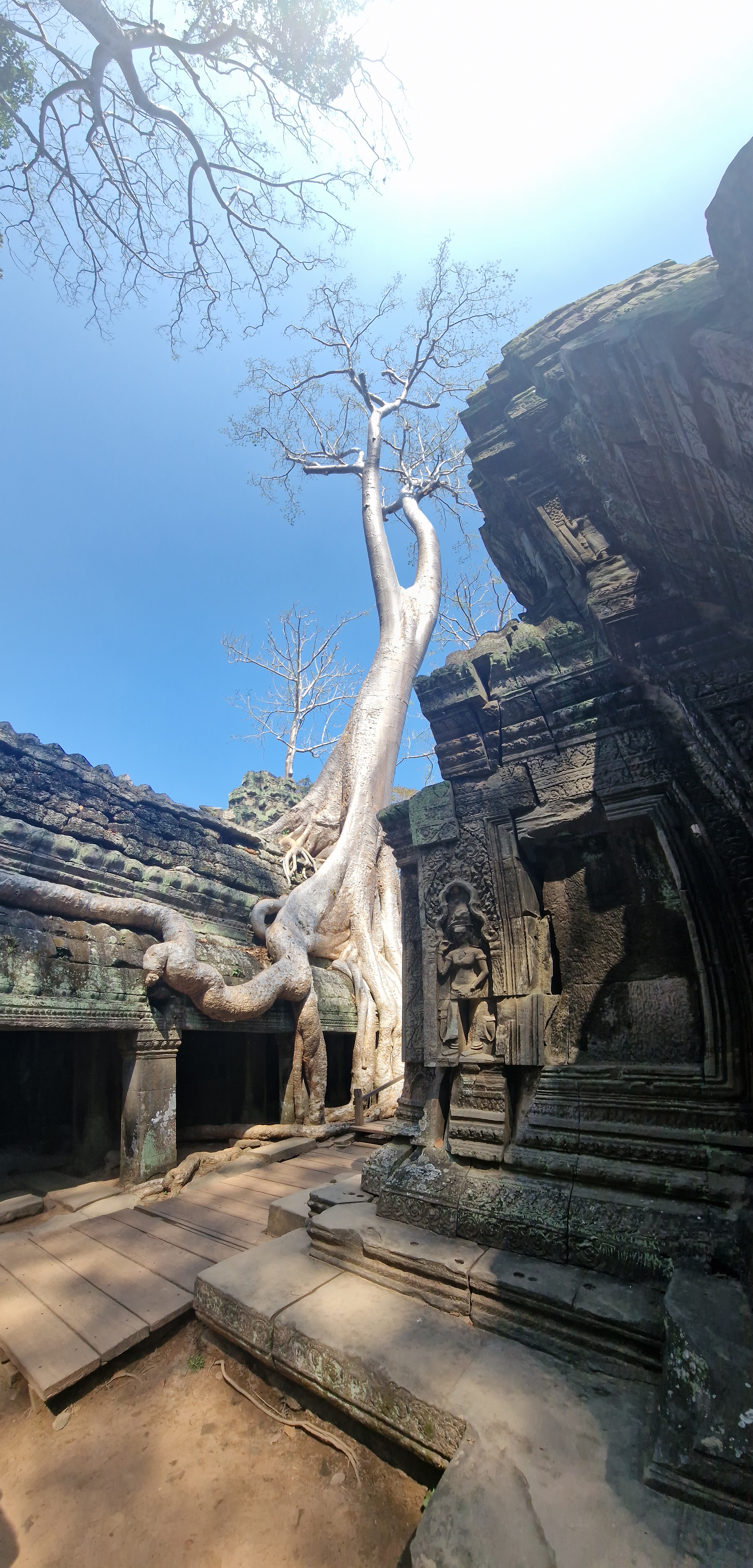
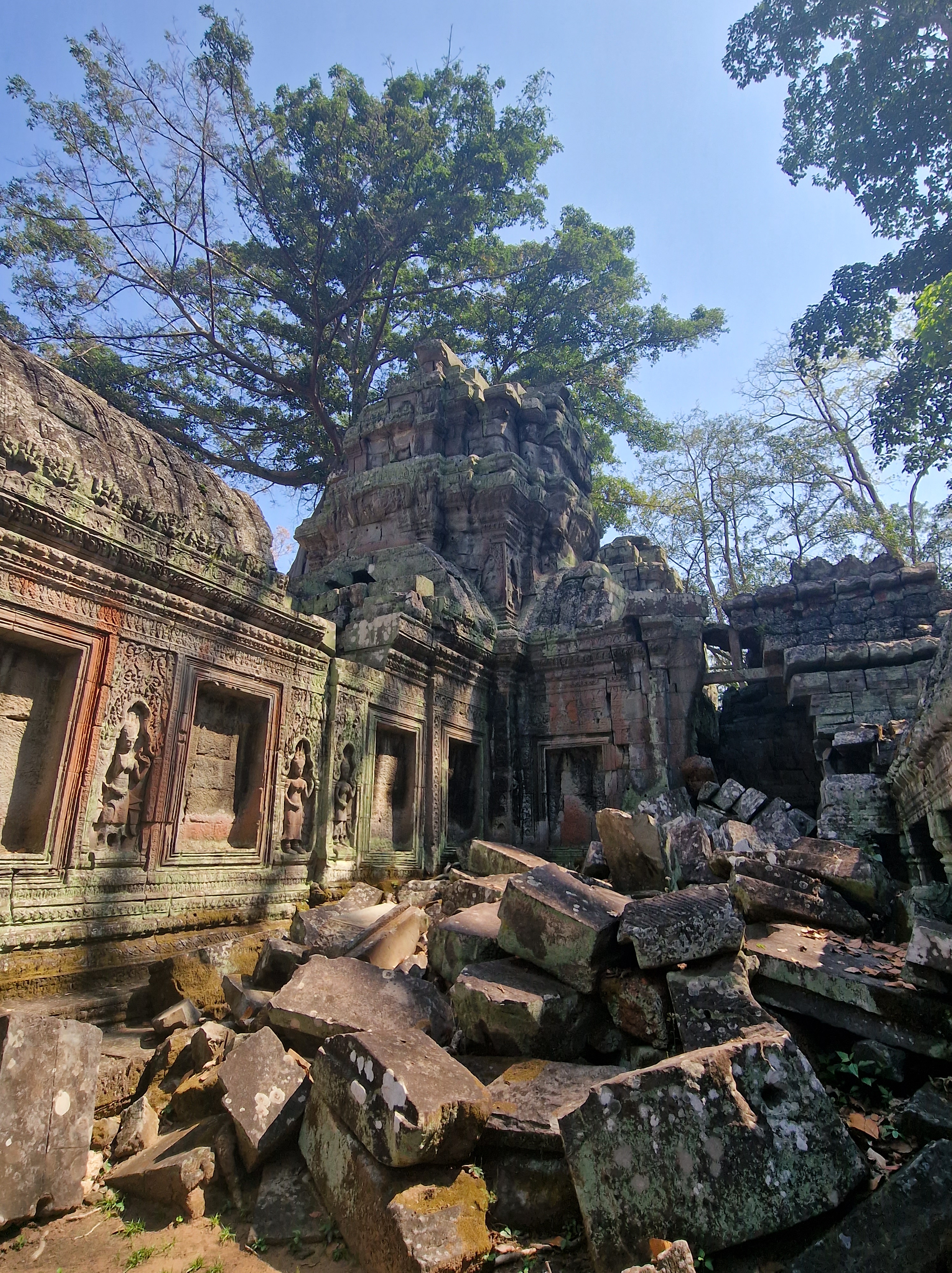
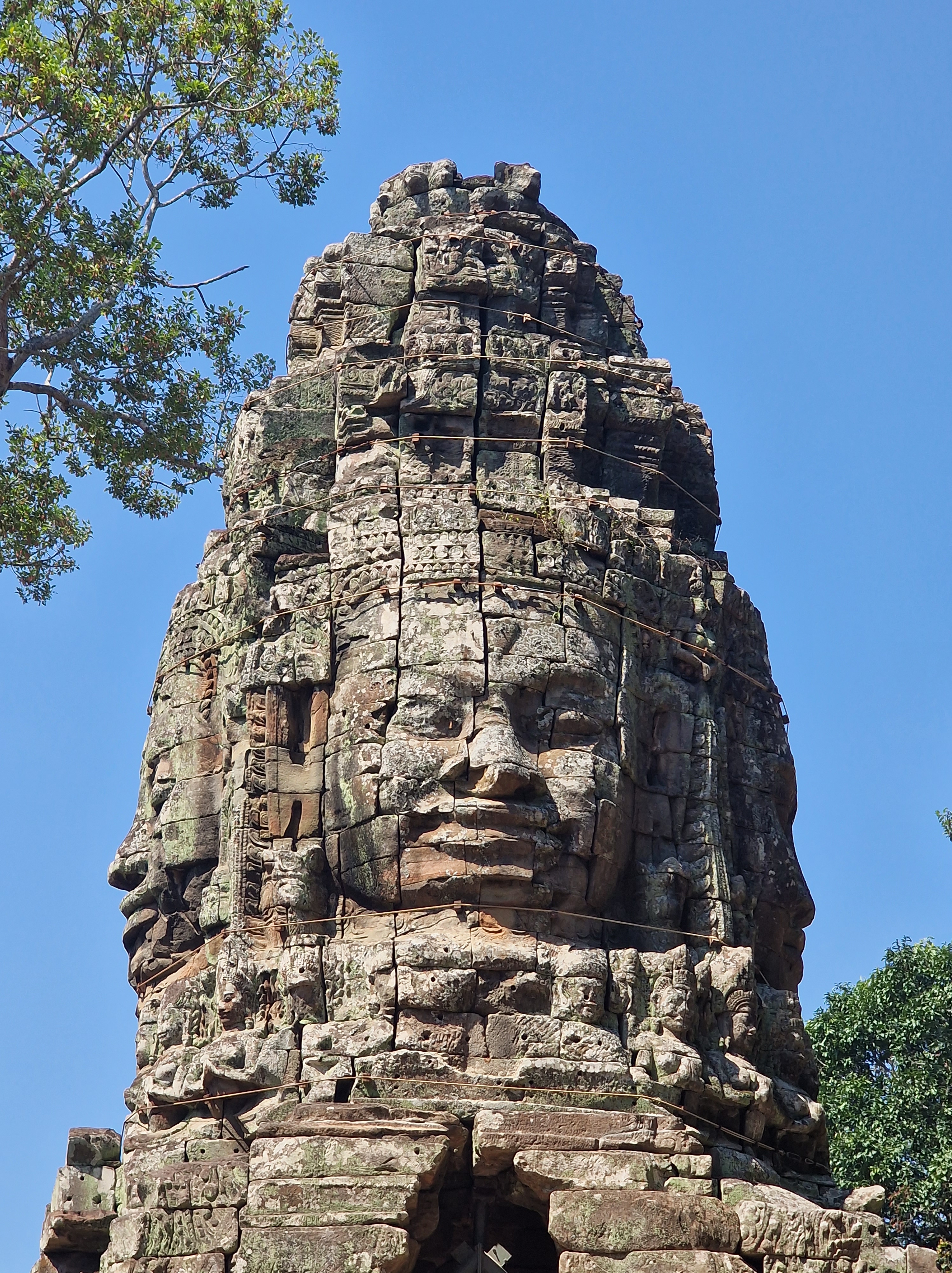
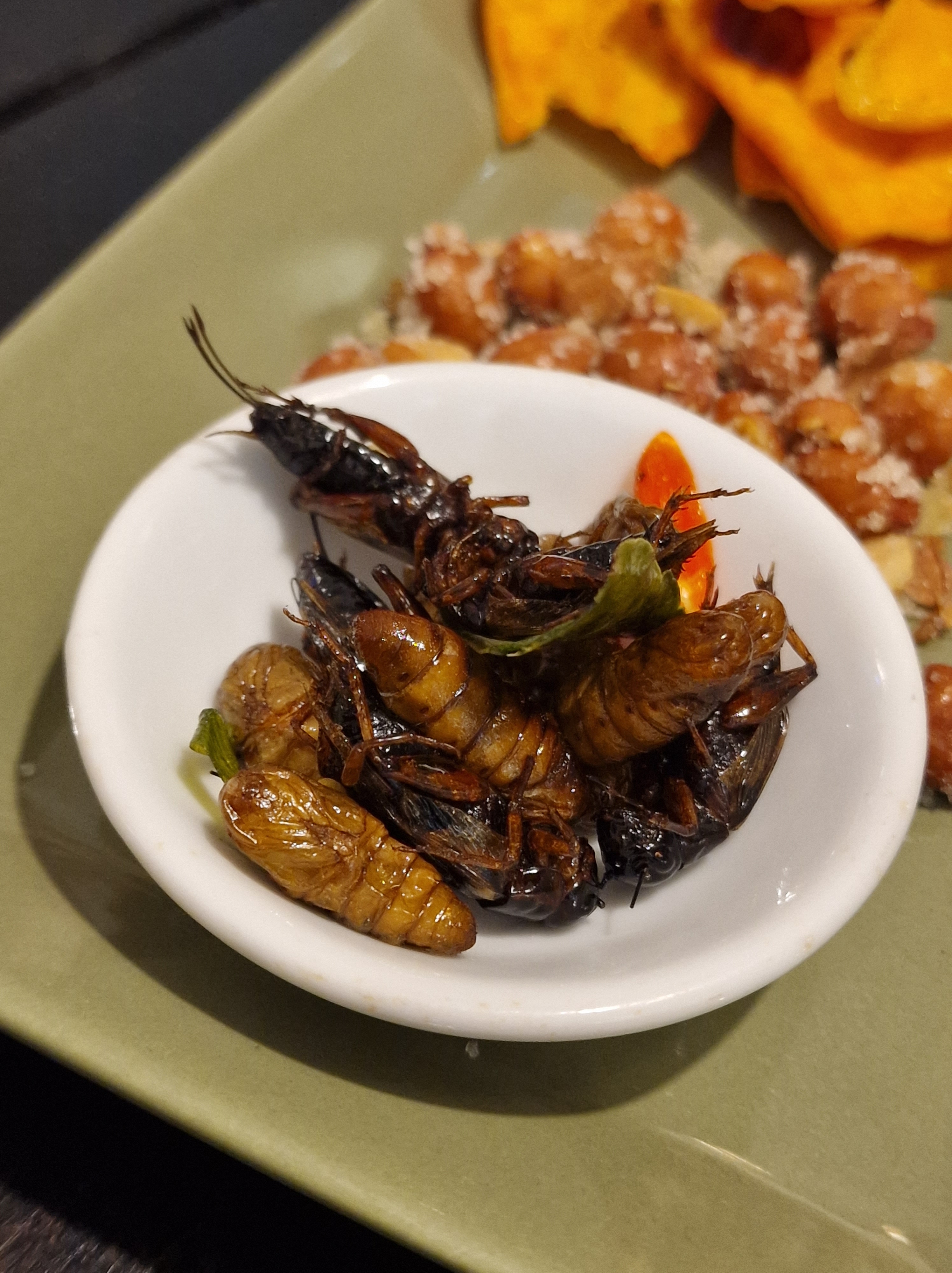
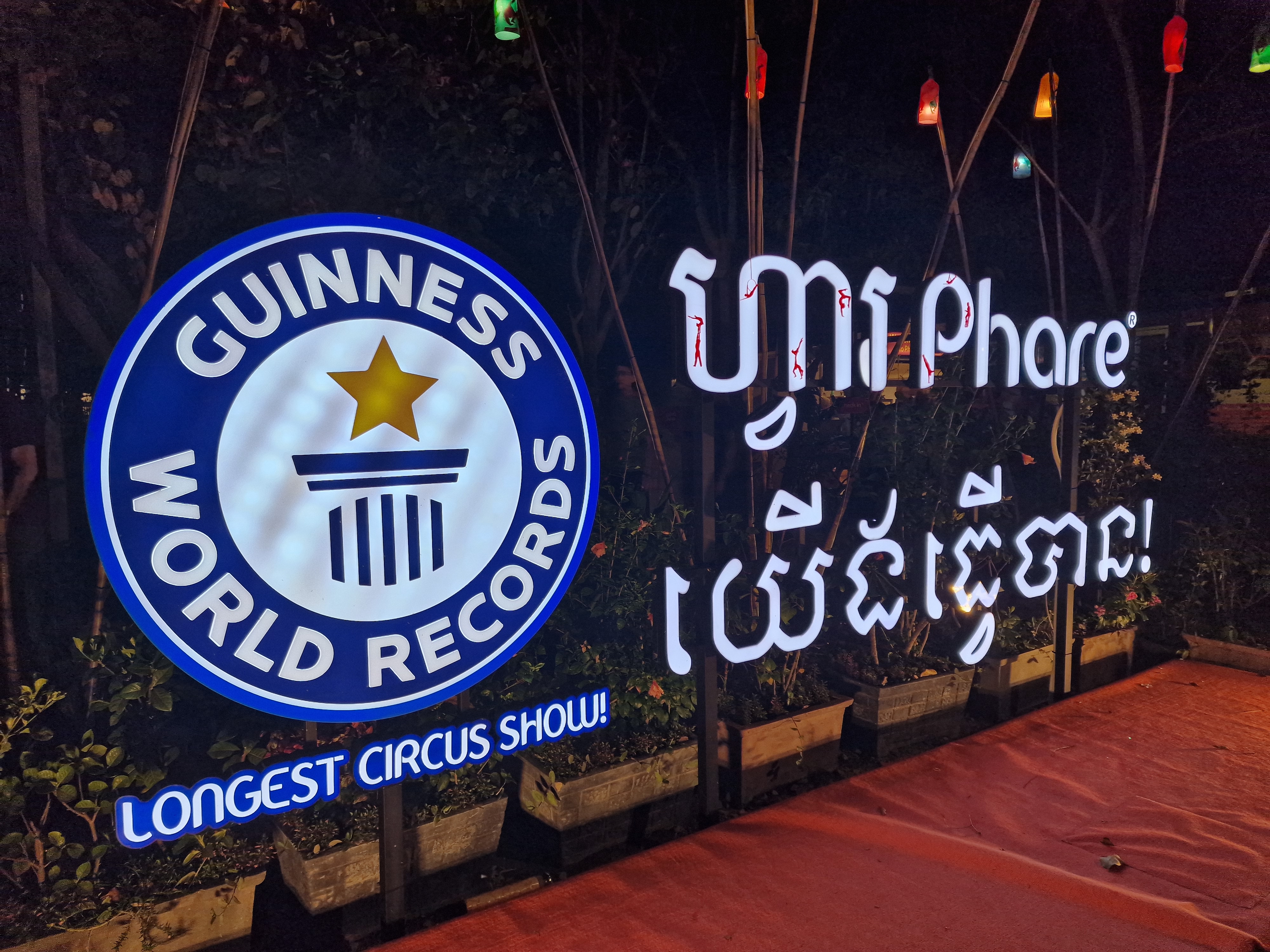
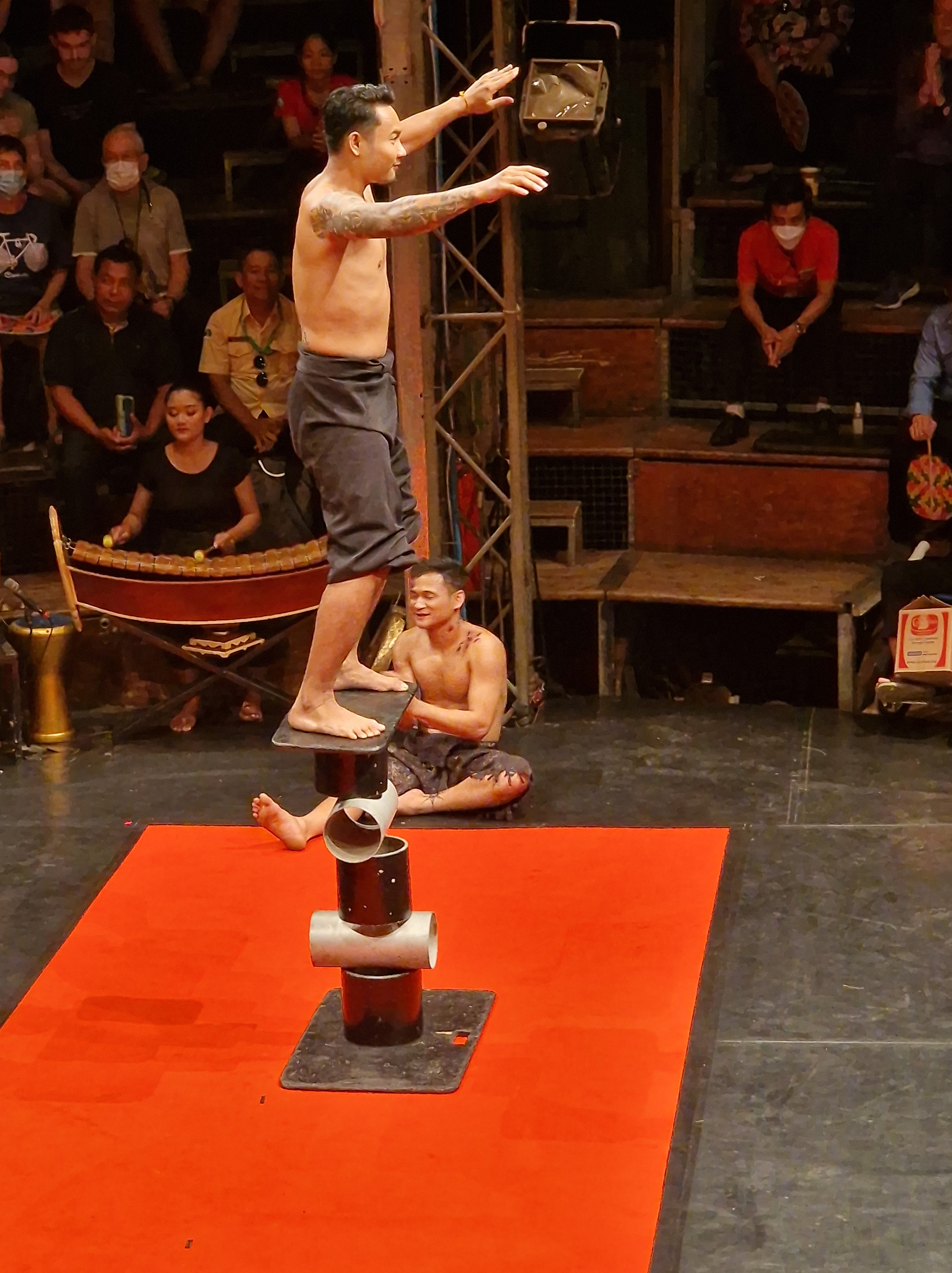
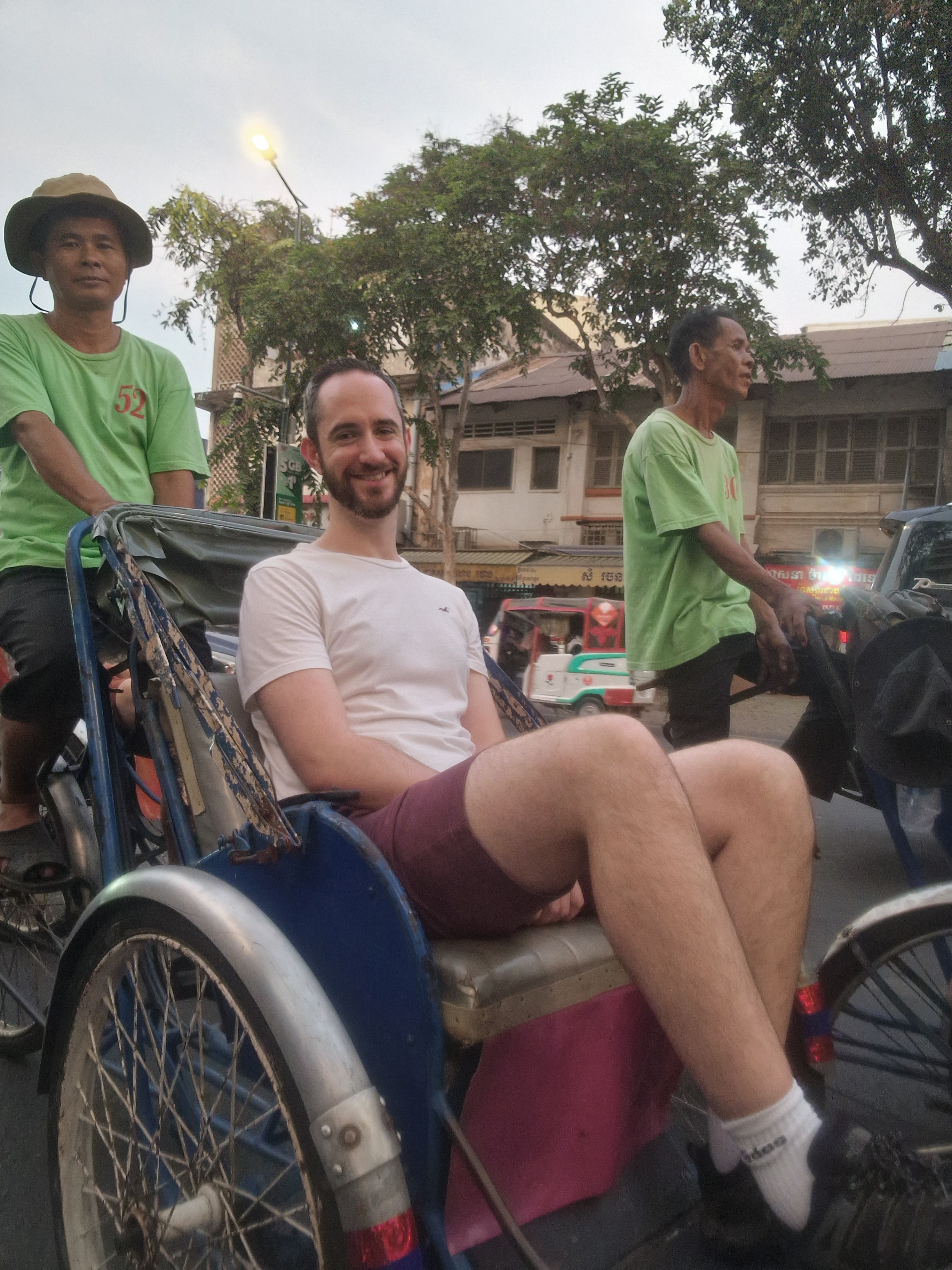
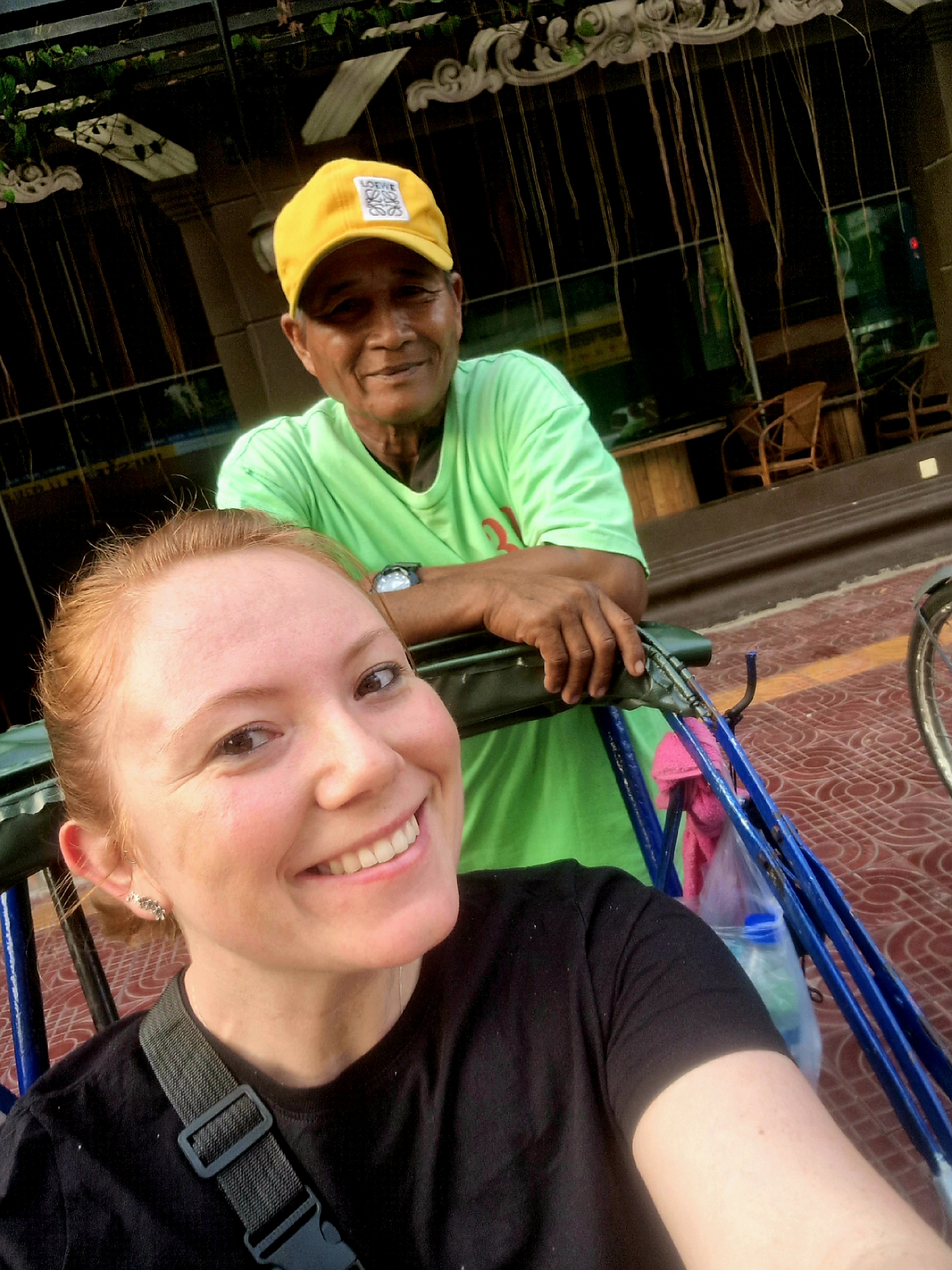
We got back to the hotel, and it was time for one thing, and one thing only.. a nap. Mark really needed his hair and beard cutting, so he needed to be a quick one as we were having dinner as a group again tonight. G Adventures support local businesses and projects, so tonight’s dinner was held at New Hope Cambodia (who’s mission is free education for all) and we were taken there by a group of women TukTuk drivers, who have set up a business to make females feel safer at night on this very popular mode of transport. We watched a video on their project and was then served one of the most delicious meals we have had since being here. The flavours were incredible. We also got the chance to try some insects.. one was by far enough. It was crispy on the outside, but the absolute opposite on the inside 🤮 I have no idea how they do it on. I’m a celebrity, or even in Cambodian life in general. A few of us had opted to see Phare Circus, which has won a Guinness World Record for the longest circus show. It tells the story of rejection, revenge, spirit possession and eventual forgiveness, and community acceptance. The story is set to original music and told through a dramatic mix of theatre, traditional dance, and modern circus arts. We really enjoyed it!
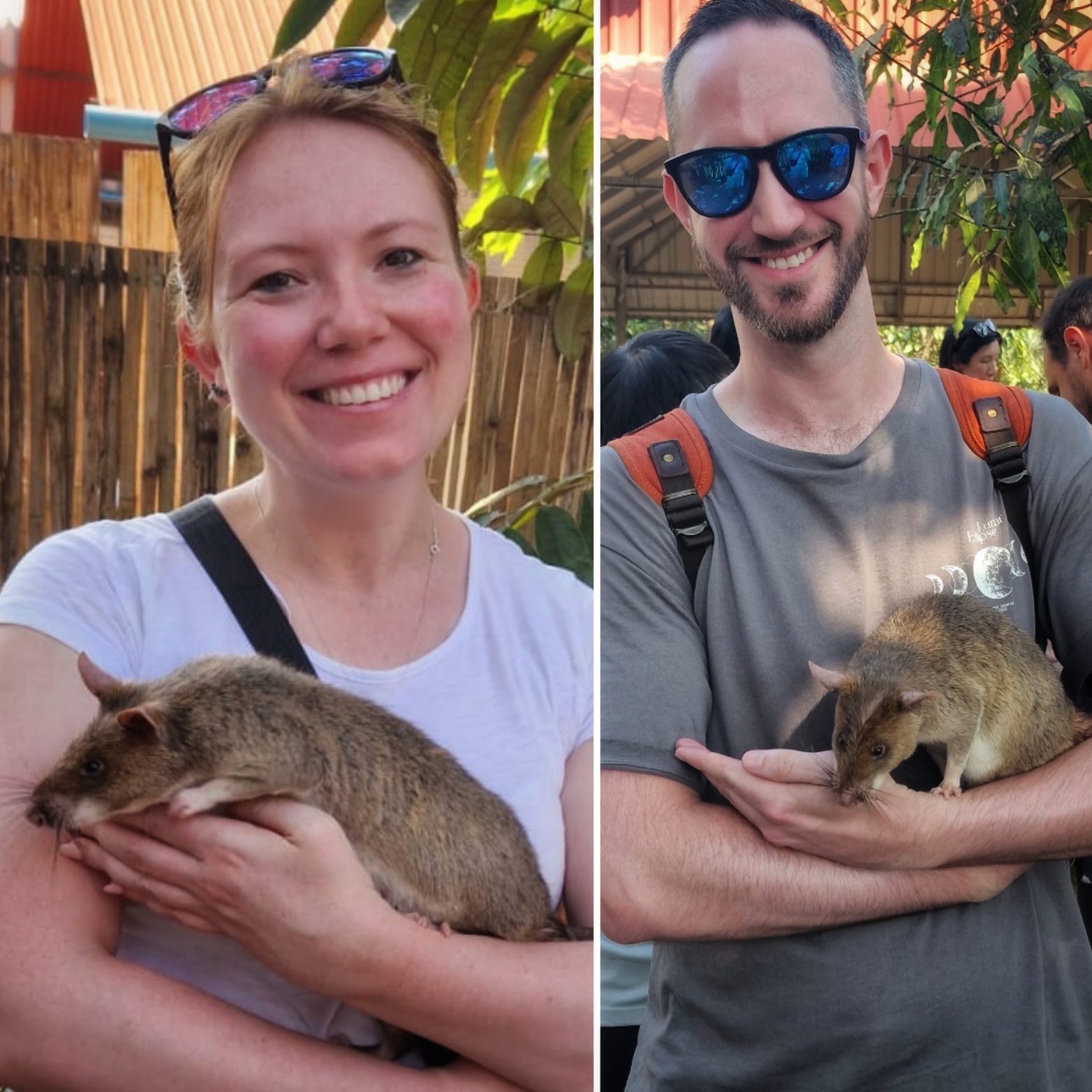
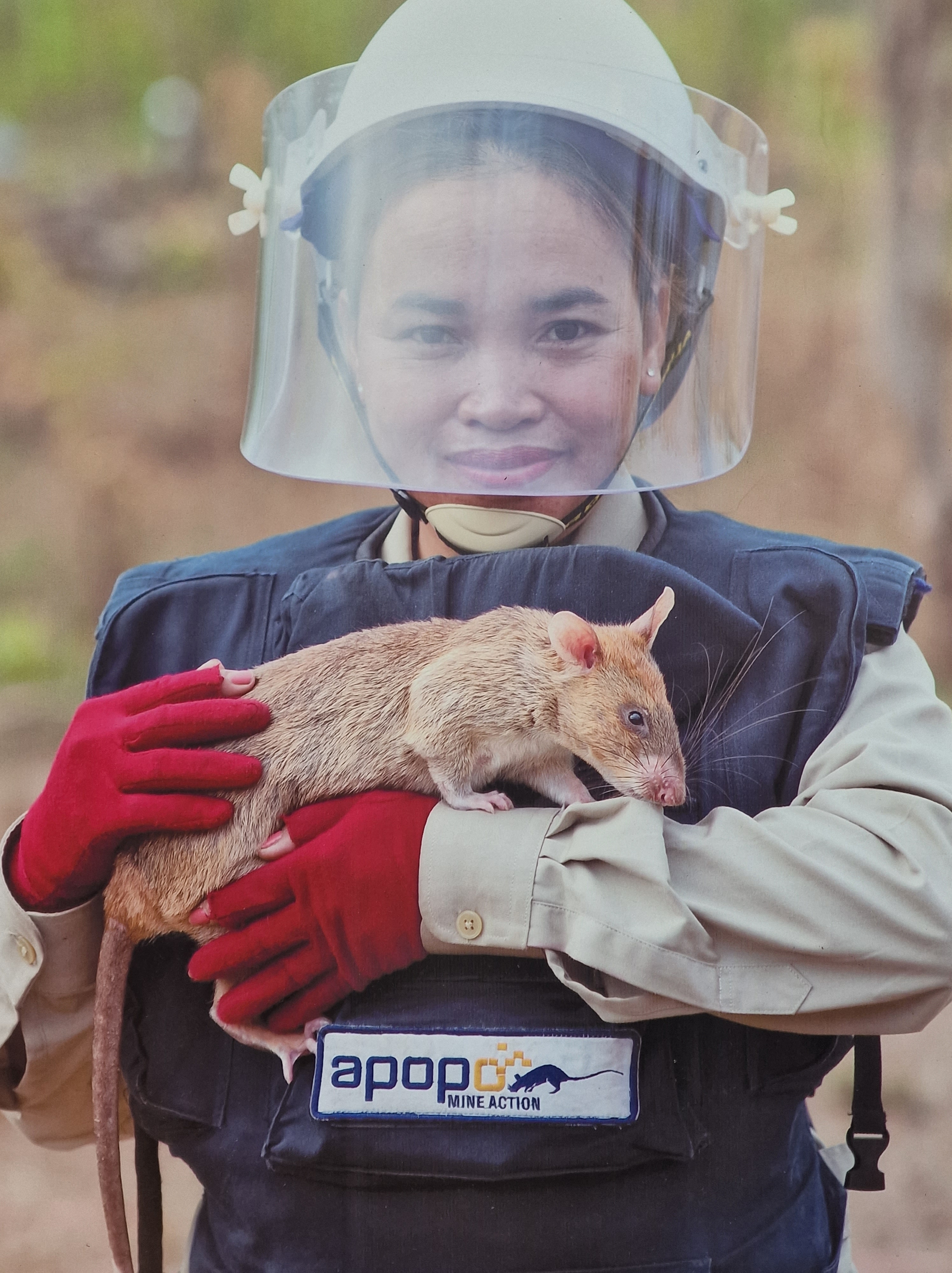
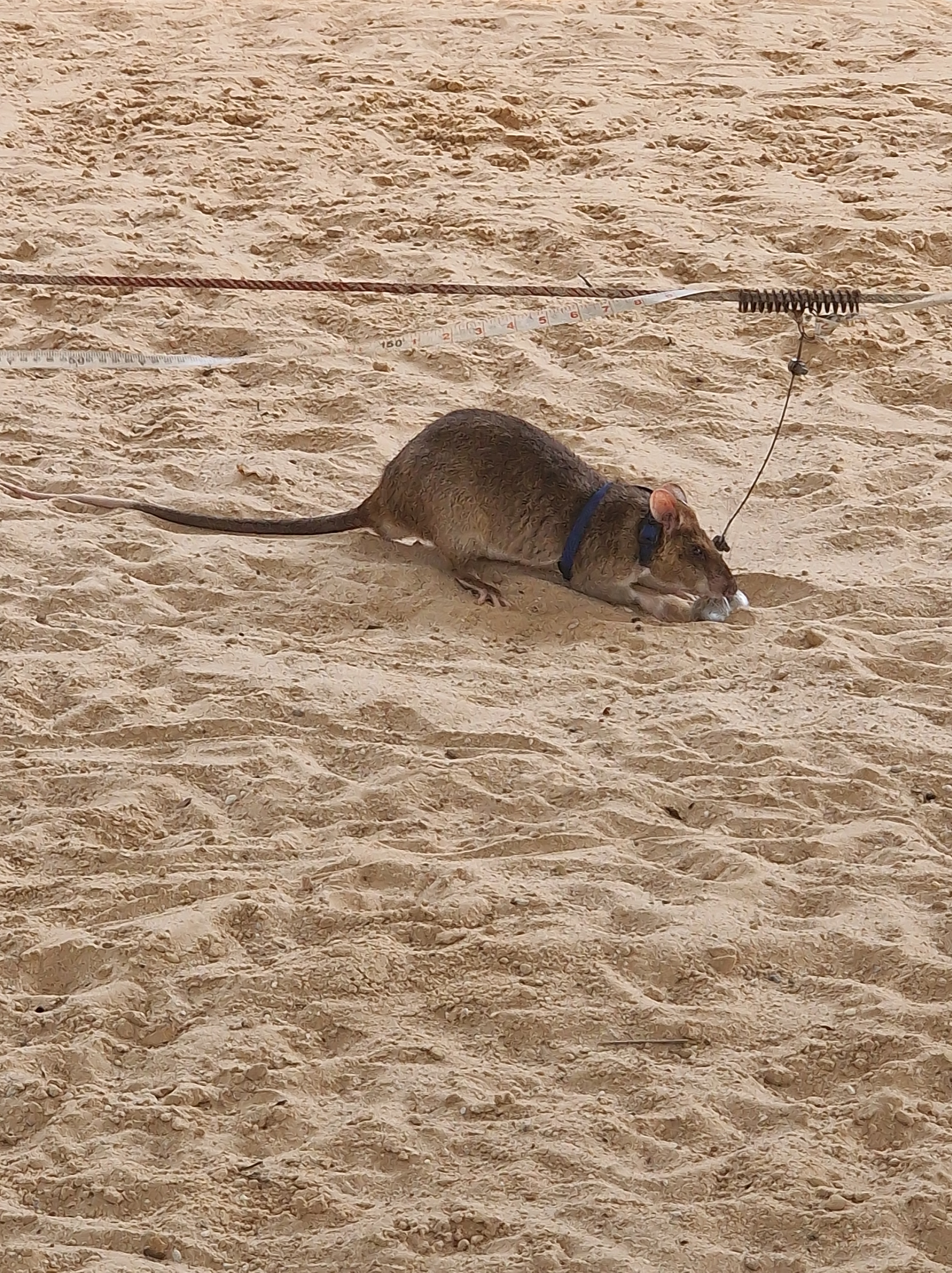
Our next day was a free day to ourselves, and we desperately needed a lie in. We sacked off the hotel breakfast and went for a smashed avo and eggs beni brunch instead, which was lovely. We stopped at a cafe run by a husband and wife team to get some smoothies, which were delicious, and had a stroll around the river. Siem Reap is a much more settled place and even has some greenery! We’ve been recommended by a few people to visit the APOPO HeroRat centre, so we bartered with the TukTuk man and headed there for a tour. We absolutely loved it! These African giant pouched rats are special because of their incredible sense of smell. They come from Tanzania and go through a year of training before they’re allowed out ‘in the field’. Their aim is to sniff out unexploded mines in Cambodia and other countries and people with TB in African countries! We had a demonstration from Sophea who quickly found what she was looking for. She was rewarded with some banana. Because the rats are so light (1.5kg), they don’t set off any landmines as this requires at least 3kg of weight. What they can do in half an hour would take someone with a metal detector around 4 days. They have helped to save thousands of lives and get communities back into the areas where they belong. We were then able to hold one – we are holding Dora. It was a great little tour, and I would 100% recommend this to anyone.
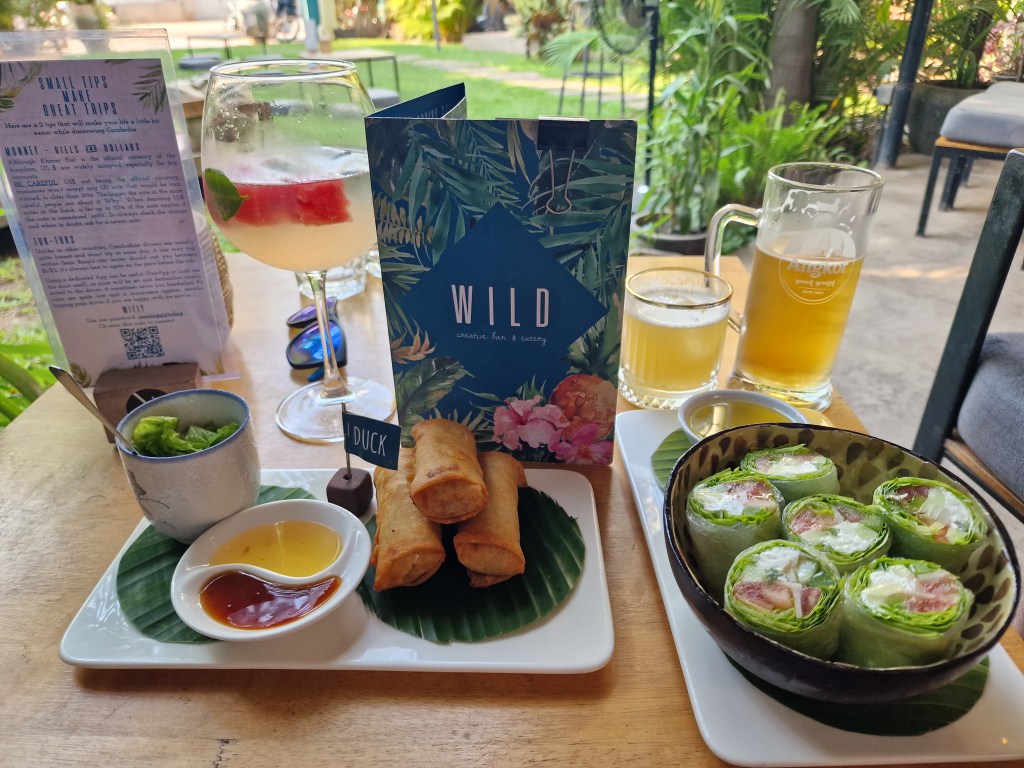
We were getting peckish so decided to pay ‘Wild’ a visit – a cute cafe that specialises in spring rolls. We tried a traditional deep fried duck Cambodian spring roll, and a fresh Mediterranean style one. They were both so so tasty, and with cheap cocktails and even cheaper beer, we decided to stay here a while and just watch the world go by.
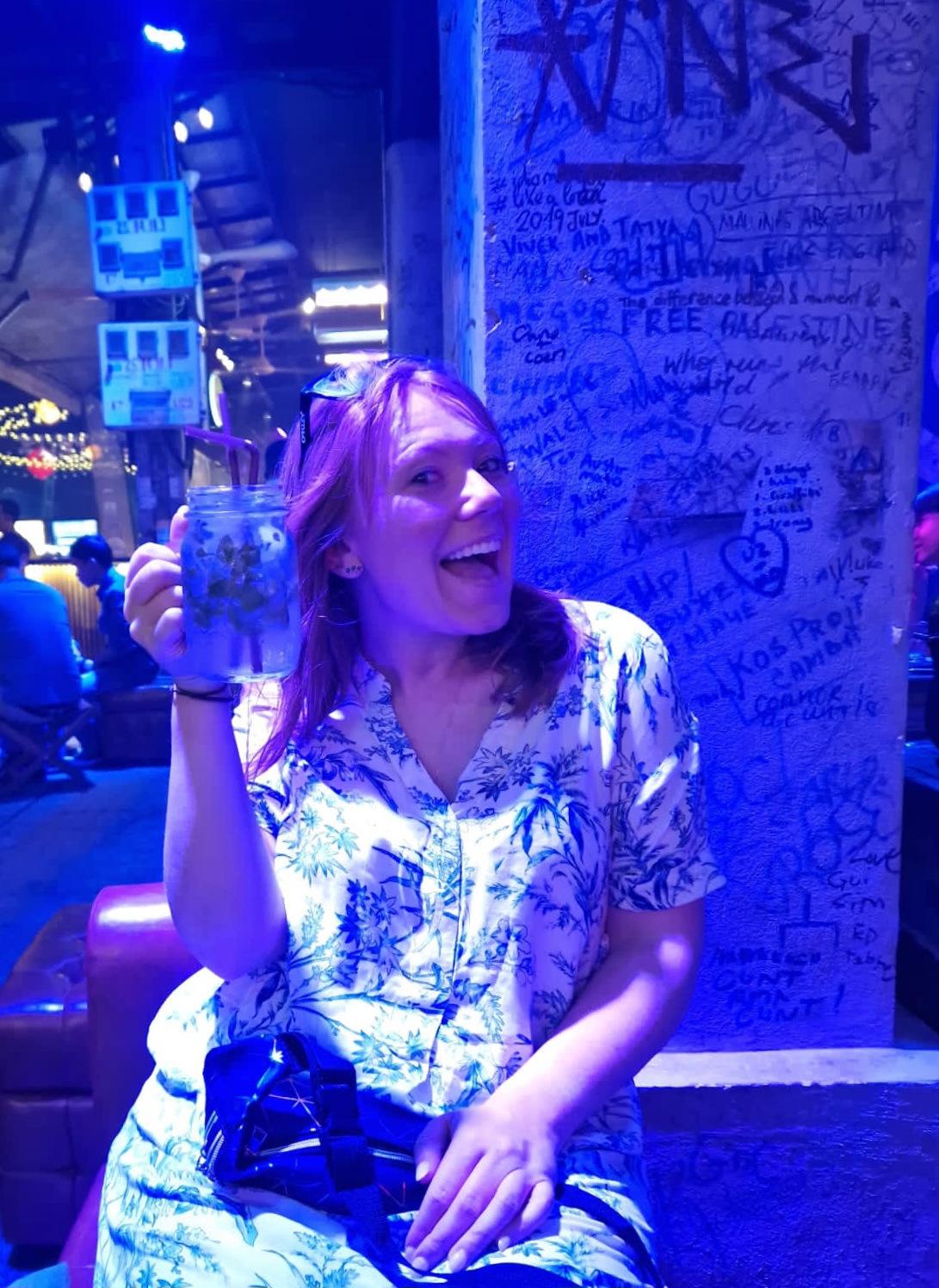
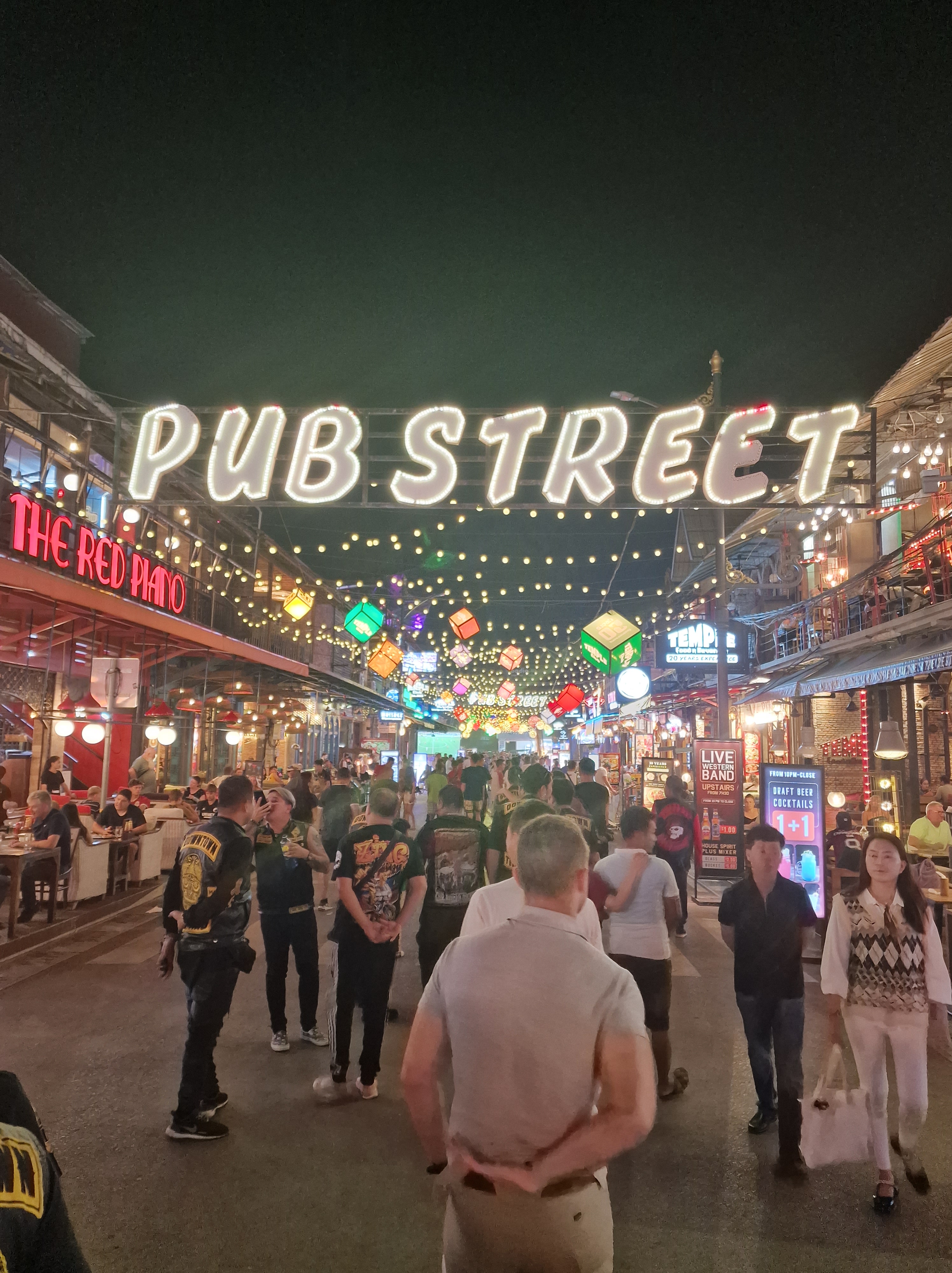
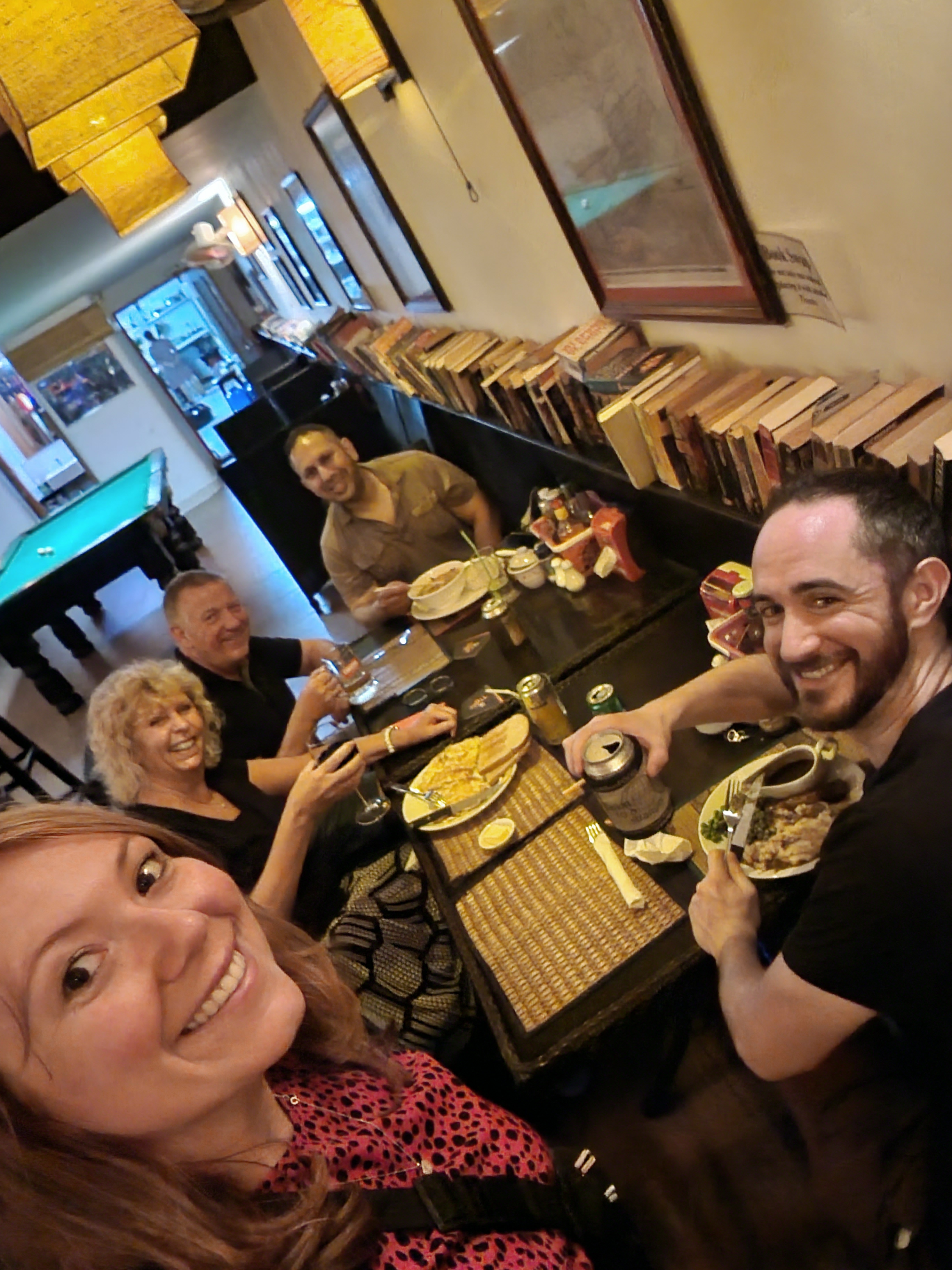
For our last night in Siem Reap we decided to hit Pub Street, and obviously had to pick a place that was showing the football. We had buffalo burger and crocodile burger, washed down with more beer and a very cheap tasting wine 🤣 I’d recommend doing a couple of laps of pub street just to really soak up the atmosphere. Bright lights and thumping music, it’s an absolutely buzzing place to be at night. We weren’t sure what to expect from Cambodia, but we’ve both absolutely loved it and are gutted we don’t have more time here. From what people have said that have been here before, it’s changed a lot over the past few years and has had a lot of money put in to improve the roads and the country as a whole. They are all so so welcoming and friendly and anyone coming to SEA should absolutely add it to the list.
This morning, we had another early start as we headed to the Cambodia/Thailand border for the final leg of our trip. The queue at the border was enormous and took around 2 hours to get through. Luckily, there was no pushing in like in Vietnam. However, there was a ninja Granny who managed to get past about 50 people! She then got escorted out by border control 🤷🏼♀️


 The Travelling Ginger